

Why Cleanroom Pressure Cascades Collapse At Door Openings

Cleanroom pressure cascades usually collapse at door openings because the door creates a sudden leakage path between spaces, and the HVAC and control system cannot replace, exhaust, or stabilise air quickly enough to maintain the intended pressure difference. The root cause may be door leakage, poor closer timing, undersized airlocks, supply and exhaust imbalance, sensor placement, weak alarm logic, or staff using doors in ways the room was never designed to handle. If your pressure alarms spike every time a door opens, we treat the room, HVAC, controls, workflow, and the cleanroom doors themselves as one connected system.
A short pressure dip during a normal door event may be expected. A repeated collapse, slow recovery, pressure reversal, or nuisance alarm pattern is different. That pattern means the door, airlock, airflow balance, pressure control sequence, or operating practice needs investigation before anyone raises setpoints or suppresses alarms.
At A Glance
- Door openings create a temporary connection between pressure zones.
- The problem is usually a system issue, not only a door issue.
- Fixes may involve seals, closers, interlocks, vestibule timing, HVAC balancing, controls, or workflow.
- Trend data and door-event correlation should come before setpoint changes.
What A Cleanroom Pressure Cascade Is
A cleanroom pressure cascade is the planned pressure relationship between adjacent rooms. It helps control which way air moves when rooms connect through doors, pass-throughs, airlocks, or leakage paths. In many cleanrooms, cleaner spaces are kept at higher pressure than less-clean spaces so air tends to move outward. In containment applications, the strategy may be reversed or modified so air moves inward to protect staff or adjacent areas.
Pressure cascade stability is not created by one component. It comes from supply air, exhaust air, return paths, room leakage, door behaviour, sensor feedback, and the control sequence working together.
What A Pressure Cascade Is
A pressure cascade is the pressure step between one room and the next. For example, a higher-control room may be held at a positive pressure relative to a lower-control corridor so that air moves out of the cleaner room when small leakage paths exist. In hazardous or containment-driven spaces, the direction may be intentionally negative so air moves inward.
The pressure value on a display is only one signal. A cleanroom may show the right number with doors closed, then fail during real use because the door openings, airlock traffic, or controls were never tested against actual workflow. A pressure cascade must work as an operating system, not only as a static reading.
Why Doors Are The Stress Test
A door opening is a stress test because it removes part of the separation between two pressure zones. Even a well-designed room can show a short dip when the door opens. The question is whether the room recovers quickly and whether airflow direction remains suitable for the room’s intended use.
If the same door event repeatedly causes a long pressure loss, a pressure reversal, or an alarm pattern, the door is revealing a control problem. Knowing how differential pressure behaves between adjacent spaces makes it easier to read what the door event is actually telling you.
Why “More Pressure” Is Not Always The Right Fix
Increasing pressure setpoints may look like the fastest solution, but it can create new problems. Higher pressure can make doors harder to open, increase leakage through gaps, create noise, raise fan energy, and push control loops into unstable behaviour. It can also hide the real issue if the root cause is a poor seal, simultaneous airlock door opening, airflow imbalance, or slow control response.
A better first step is diagnosis. The goal is a stable and defensible cascade that matches the room’s intended use, traffic, and risk profile. The highest pressure reading is not the same as the best-controlled room.
Why Door Openings Make Pressure Cascades Collapse
Door openings make pressure cascades collapse because they change the room’s leakage profile instantly. A wall that was separating two zones suddenly becomes a large opening, and air follows the easiest path. The HVAC system then has to recover the intended relationship while people, carts, and materials are still moving through the opening.
When this happens once and recovers quickly, it may be normal. When it happens repeatedly or takes too long to recover, it points to a design, control, or workflow issue.
The Door Creates A Temporary Airflow Shortcut
When a door opens, air moves across the pressure boundary through the open doorway. If the pressure difference is high, the air rush may be stronger. If the door stays open too long, the pressure disturbance lasts longer. If an airlock connects two areas and both doors open at the same time, the cleanroom may be temporarily connected to a lower-grade or uncontrolled space.
This temporary shortcut can overwhelm the intended pressure relationship. The HVAC system needs enough airflow response and control stability to recover without overshoot, nuisance alarms, or airflow reversal.
Room Volume And Airlock Size Matter
Small rooms and small airlocks can lose pressure faster because the door opening represents a larger disturbance relative to the room volume. A large transfer cart, slow door closure, or frequent personnel movement can make an airlock behave less like a buffer and more like a repeating leakage path.
Airlock size should match real traffic. If a room was designed around personnel movement but now supports large carts, bulky equipment, or frequent material transfer, the original pressure strategy may no longer match the way the space is used.
Supply And Exhaust Systems May Not Recover Together
Pressure cascades can collapse when supply, return, exhaust, and make-up air do not recover together. A supply fan may respond slowly. An exhaust damper may overshoot. A shared air handler may correct one room while disturbing another. A control loop may chase the pressure dip too aggressively, causing the room to bounce between low pressure and high pressure.
This is why pressure failures at doors are often misdiagnosed. The visible event is the door opening, but the root issue may be fan response, airflow balance, damper tuning, exhaust control, or sensor logic.
The Door May Not Be The Only Leak Path
Door openings often expose leakage that already exists. Gaps at thresholds, unsealed penetrations, poor ceiling interfaces, weak pass-through seals, and uncontrolled return paths can make the cascade fragile before the door ever moves. The door event simply makes the weakness visible.
This is why door replacement alone does not always solve the problem. Door performance matters, but so do the envelope, HVAC balance, airlock use, and control sequence around it.
Door-Opening Pressure Failure Causes At A Glance
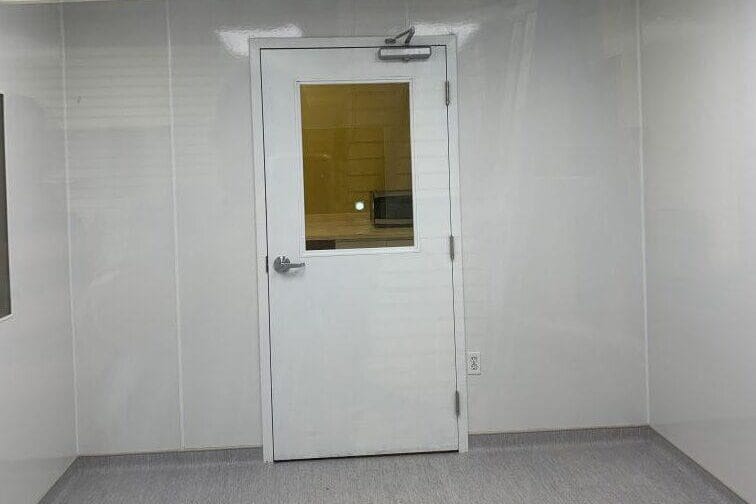
The table below helps teams sort likely causes before changing setpoints. Use it to compare what the pressure event looks like with the first checks that should happen in the field.
| Cause | What It Looks Like | Likely Root Issue | What To Check First |
| Door Left Open Too Long | Pressure drops and stays low until the door closes | Workflow, traffic, or closer timing | Door hold time, cart movement, operator behaviour |
| Both Airlock Doors Open Together | Rapid pressure collapse across multiple spaces | No interlock, failed interlock, or poor procedure | Interlock status, door events, alarm history |
| Poor Door Sealing | Pressure is unstable even when doors are closed | Gaskets, thresholds, frame alignment, room leakage | Smoke check, seal inspection, door fit |
| Slow Or Aggressive Controls | Pressure dips, overshoots, then alarms | PID tuning, damper/fan response, sensor logic | BMS trends, fan/damper command, sensor placement |
| Undersized Airlock | Pressure swings with routine traffic | Airlock volume or traffic load mismatch | Airlock use pattern, cart size, occupancy |
| Supply/Exhaust Imbalance | One room recovers, another destabilises | Air balance or shared system interaction | Airflow readings, balancing report, fan response |
| Alarm Delay Too Short | Alarms occur during normal short door events | Alarm logic not matched to room behaviour | Door status trend, alarm delay, risk basis |
| Poor Sensor Reference | Pressure reading jumps or behaves inconsistently | Sensor placement, tubing, reference point | Sensor install, calibration, tubing path |
How To Use This Table During Troubleshooting
Use the table to sort the issue before changing pressure setpoints. If the pressure drop only happens when both airlock doors open, the first review should focus on interlocks, timing, and behaviour. If the pressure is unstable even with doors closed, the first review should focus on leakage, balancing, or control logic.
The table also helps facilities, QA, operations, and engineering discuss the same event with the same language. A clean diagnosis saves time and reduces the risk of overcorrecting the room.
Door And Airlock Design Factors That Affect Pressure Stability
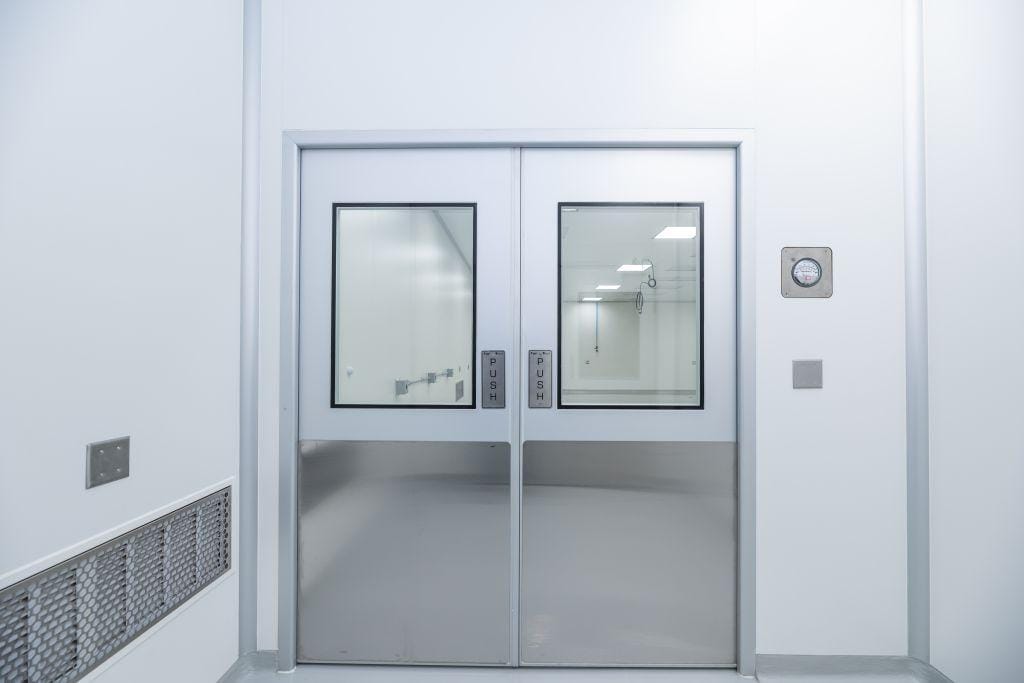
Door and airlock design have a direct effect on pressure stability. A cleanroom door is not just a partition. It is part of the pressure boundary, contamination control strategy, cleaning strategy, workflow, and emergency access path. When the door assembly or airlock does not match the room’s traffic, the pressure cascade becomes fragile.
The goal is not to make the door “perfect.” The goal is to make door behaviour predictable enough that the HVAC and controls can maintain the intended cascade during real use.
Door Seals, Gaskets, Thresholds, And Frames
Door leakage affects pressure stability before and after the door opens. Worn gaskets, poor frame alignment, uneven thresholds, missing sweeps, damaged seals, or hardware that prevents full closure can create a continuous leakage path. That leakage may be small enough to miss during a quick walk-through but large enough to destabilise a low-pressure cascade.
Inspect the full assembly, not only the leaf. Hinges, latches, closers, thresholds, frames, sweeps, and seals all contribute to whether the door closes consistently. The role cleanroom doors play in controlled environments extends well beyond separation, shaping cleanability and workflow alongside pressure control.
Door Closers, Hold-Open Time, And Traffic
Door closer speed and hold-open time can turn a normal pressure dip into sustained pressure loss. A door that closes quickly during testing may stay open much longer when staff move carts, transfer materials, or handle awkward equipment. The cleanroom experiences the real door event, not the test assumption.
Traffic matters too. A door used once per hour creates a different load than a door used repeatedly during material staging or shift change. If traffic has changed since the room was designed or qualified, the pressure cascade may need a workflow review, not only a hardware adjustment.
Airlock Volume And Interlocked Doors
Airlocks provide a buffer between pressure zones, but only when they are sized, controlled, and used correctly. If an airlock is too small, too busy, or used for storage, it may not provide enough separation during routine movement. If both doors open together, the buffer can disappear.
The airlock provisions in Health Canada’s Annex 1 guidance call for airlocks to provide physical separation, for the entry and exit doors of pass-through hatches and airlocks not to be opened at the same time, and for interlocking systems on airlocks leading to Grade A and B areas. The same guidance gives 10 Pa as a guidance value for adjacent rooms of different grades.
Pass-Throughs, Carts, And Material Flow
Pass-throughs and material movement can disturb pressure as much as personnel doors. A pass-through door left open, a large cart blocking closure, or repeated transfer between grades can create pressure events that look like HVAC faults.
Map how people, materials, waste, samples, and equipment actually move through the suite. If material flow requires long door-open periods or repeated openings through the same airlock, the fix may involve transfer sequencing, pass-through design, or staging changes.
HVAC And Controls Factors Behind Door-Related Pressure Failures
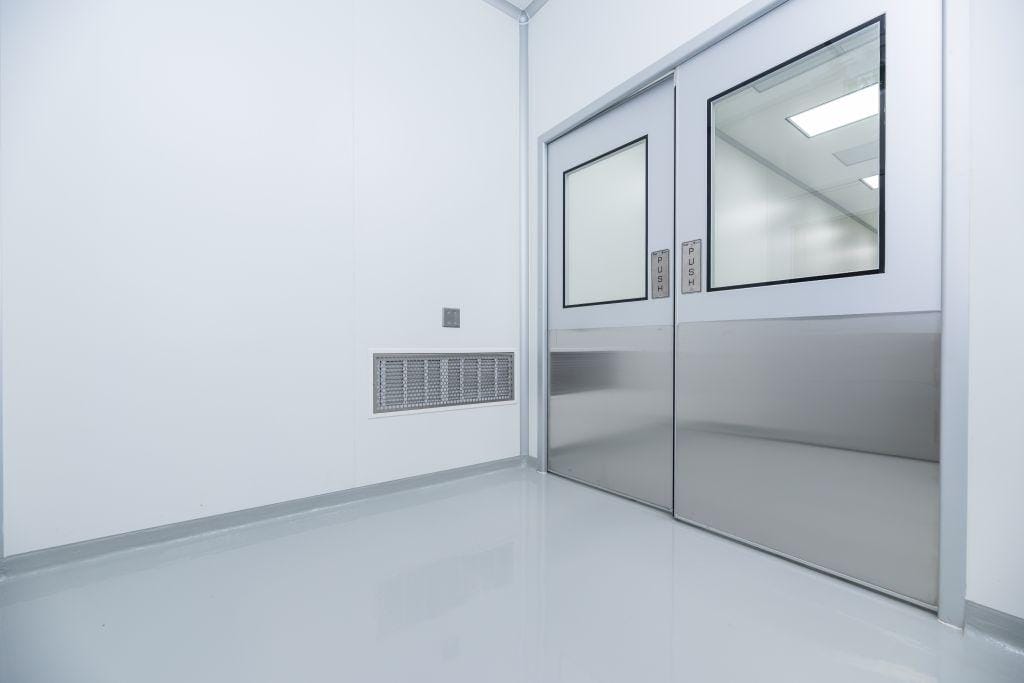
Door-related pressure failures often point to the interaction between architecture and HVAC. A room may be balanced under static conditions, then fail during traffic because the system cannot recover quickly enough or because one room’s correction affects another room.
Controls also matter. A pressure sensor in a poor location, a short alarm delay, or a control loop that overreacts to door openings can make a manageable disturbance look like a persistent failure.
Supply, Return, Exhaust, And Make-Up Air Imbalance
Pressure cascade stability depends on supply, exhaust, return, and make-up air balance. If those airflows are close to the edge, a door opening can push the room out of control. If the air balance is correct only when doors are closed, the cascade may not support routine operation.
Review the balance under realistic conditions. A room that performs at rest but fails during transfers may need updated airflow balancing, revised airlock strategy, or changes to how the suite handles traffic.
Sensor Placement And Reference Problems
Pressure sensors can create false alarms or hide real problems if they are placed poorly, referenced incorrectly, or connected with tubing that does not represent the intended pressure relationship. A sensor near a door, supply jet, return path, or unstable reference area can make the pressure reading behave differently than the actual room relationship.
Before retuning controls, confirm the signal. A bad signal leads to bad control. Check sensor calibration, tubing condition, reference point, display scaling, and whether the sensor location is appropriate for the room’s pressure strategy.
Alarm Delays, Door Status, And Event Correlation
A short pressure alarm delay can create nuisance alarms during normal door use. A delay that is too long can hide true loss of control. Door status trends help separate a short, expected door event from a sustained cascade failure.
BMS points, alarm hierarchy, door status, and trend review help teams understand whether the pressure issue is mechanical, operational, or control-related. Well-integrated cleanroom BMS controls, sensors, and alarms are what let those trends point to the real cause instead of just flagging the symptom.
Control Loop Tuning And Recovery Behaviour
Control loop tuning can make door events worse if fans, dampers, or valves overreact. The room may dip when the door opens, overshoot when it closes, then alarm because the control loop is chasing a short disturbance too aggressively.
Recovery behaviour matters more than one instant pressure reading. Review what happens before, during, and after the event. A good control sequence should allow short disturbances without turning them into sustained instability.
How To Troubleshoot A Door-Related Pressure Collapse
Troubleshooting should start with the event pattern, not the presumed solution. A door-related pressure alarm can be caused by hardware, workflow, leakage, balancing, sensor placement, control tuning, or alarm logic. The right fix depends on which pattern the data shows.
The sequence below keeps the investigation practical and avoids the common mistake of raising setpoints before the root cause is understood.
Step 1: Confirm The Pattern
Start by confirming whether the event happens at one door, one airlock, one room, one shift, or one process step. Compare pressure trends, door status, alarms, operator notes, BMS data, and timing. A pressure event during material transfer may have a different cause than a pressure event during routine personnel entry.
“Pressure alarms at doors” is not enough detail to fix the issue. The investigation should identify which door, how long it stays open, who uses it, what room modes are active, and how quickly pressure recovers.
Step 2: Inspect Door Hardware And Leakage Points
Inspect door seals, gaskets, hinges, closers, thresholds, latches, frames, interlocks, and pass-throughs. Confirm the door closes fully and consistently under real use. Look for damage, misalignment, worn seals, improper closer speed, or hardware that prevents full closure.
Also inspect adjacent leakage points such as ceiling penetrations, utility penetrations, wall interfaces, pass-through frames, and return paths. A pressure cascade can fail through the easiest leak path, and that path may not be the main door.
Step 3: Review HVAC Balance And Control Response
Review recent balancing data, supply and exhaust airflow readings, fan speed, damper position, control loop behaviour, and room pressure trends. Compare at-rest behaviour with operational behaviour. If the room performs with no traffic but fails during use, the design or controls may not match the operational load.
This review should also look at shared systems. One room’s pressure correction can destabilise another room when rooms share air handlers, exhaust systems, or make-up air paths.
Step 4: Use Airflow Visualization When Direction Matters
If the concern is ingress from a lower-grade area, smoke studies can show whether air moves in the intended direction during door or airlock events. This is useful when pressure readings show a problem but do not explain the contamination risk clearly.
Running smoke studies and airflow visualization can confirm whether door openings create backflow, short-circuiting, or air movement from less-clean areas into higher-control zones, and that evidence supports corrective actions and retesting.
Practical Fixes That Stabilize Pressure Cascades At Doors
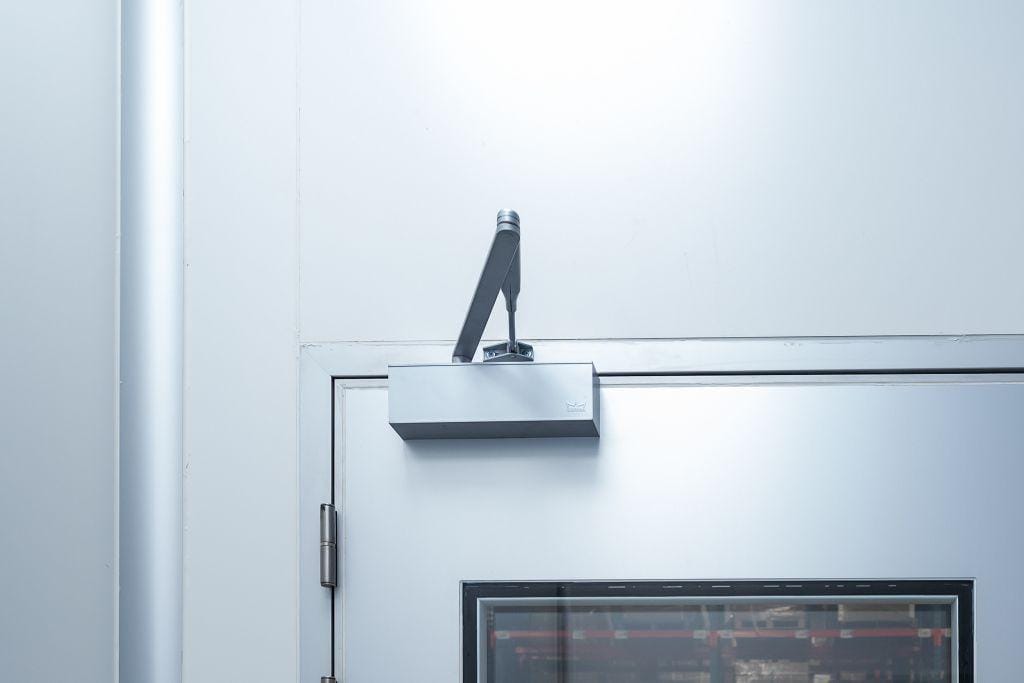
Pressure cascade fixes should match the diagnosis. If the issue is a worn gasket, balancing alone will not solve it. If the issue is slow fan response, a new door may not solve it. If the issue is workflow, both the door and the HVAC system may be performing correctly, but the process is exceeding the design assumption.
The strongest fixes usually combine door, airlock, HVAC, controls, and operating changes.
Architectural And Door Hardware Fixes
Architectural and door hardware fixes may include replacing worn gaskets, adjusting seals, improving thresholds, correcting frame alignment, tuning closer speed, adding door position switches, improving pass-through sealing, or reducing uncontrolled leakage. In some cases, the fix may involve replacing a door assembly, but that should follow diagnosis.
Small fixes can have large effects when they reduce constant leakage or shorten door-open time. The important point is to confirm the improvement with trends or targeted testing after the change.
Airlock And Workflow Fixes
Airlock and workflow fixes may include interlocks, time delays, one-way movement rules, separate personnel and material flows, staging changes, or traffic scheduling. If carts or materials keep doors open too long, the fix may be workflow design rather than HVAC adjustment.
Operator behaviour is often a system design issue. If the route is awkward, the airlock is too small, or the transfer procedure takes too long, staff will create workarounds. A stable cascade needs a workflow that people can follow during normal production.
HVAC And Balancing Fixes
HVAC fixes may include rebalancing supply and exhaust relationships, improving make-up air response, checking VAV or damper function, correcting fan response, or adding airflow capacity where justified. In some cases, a suite-level balance review is required because one room’s correction affects neighbouring spaces.
Increasing airflow or pressure may help, but only after leakage, workflow, and control behaviour are understood. Otherwise, the project may increase energy use and door force without solving the event pattern.
Controls And Alarm Logic Fixes
Controls fixes may include adjusting alarm delays, adding door status correlation, refining pressure control sequences, improving trend retention, and tuning recovery response. These changes should be documented and reviewed against the room’s risk and intended use.
Alarm suppression is not a fix. Alarm logic should reflect real room behaviour while still warning operators when critical pressure relationships are lost. A good alarm strategy reduces noise without masking risk.
Monitoring, Qualification, And Change Control Considerations
After a fix, the room needs evidence that the pressure cascade is stable during the events that caused the problem. A quiet room with closed doors is not enough if the original failure happened during material transfer, airlock use, or shift change.
Monitoring and change control should connect the event, root cause, corrective action, and verification. This makes the fix easier to defend and easier to maintain.
What To Trend After Fixes
After corrective action, trend differential pressure, door status, alarm events, supply airflow, exhaust airflow, damper position, fan output, and recovery time. Trend during normal operations, not only during a quiet test window. The goal is to show the cascade remains stable during real door events.
Trend review should answer practical questions. Did the pressure recover faster? Did alarms stop repeating? Did the room overshoot less after the door closed? Did the same shift or process step still create instability?
When Door-Related Pressure Issues Need Requalification
Requalification or targeted verification may be needed after changes that affect pressure relationships, airflow, door hardware, airlocks, pass-throughs, controls, or room use. The decision should be risk-based and tied to the room’s intended function and quality system.
Annex 1 guidance includes air pressure difference testing, airflow direction testing, and airflow visualization among the cleanroom qualification activities that apply here, so the decision to requalify should be tied to which of those relationships a change actually affects.
How To Document The Investigation
Documentation should include the event pattern, door or airlock involved, pressure trends, alarm history, door status, inspection findings, airflow or smoke study evidence where applicable, corrective actions, and post-change verification. It should also note any changes to setpoints, alarm delays, door hardware, interlocks, balancing, or workflow.
Good documentation is practical, not bureaucratic. It reduces repeat troubleshooting, helps QA review the decision, and gives facilities a baseline if the same door or room begins to drift again.
Common Mistakes That Make Door Pressure Problems Worse
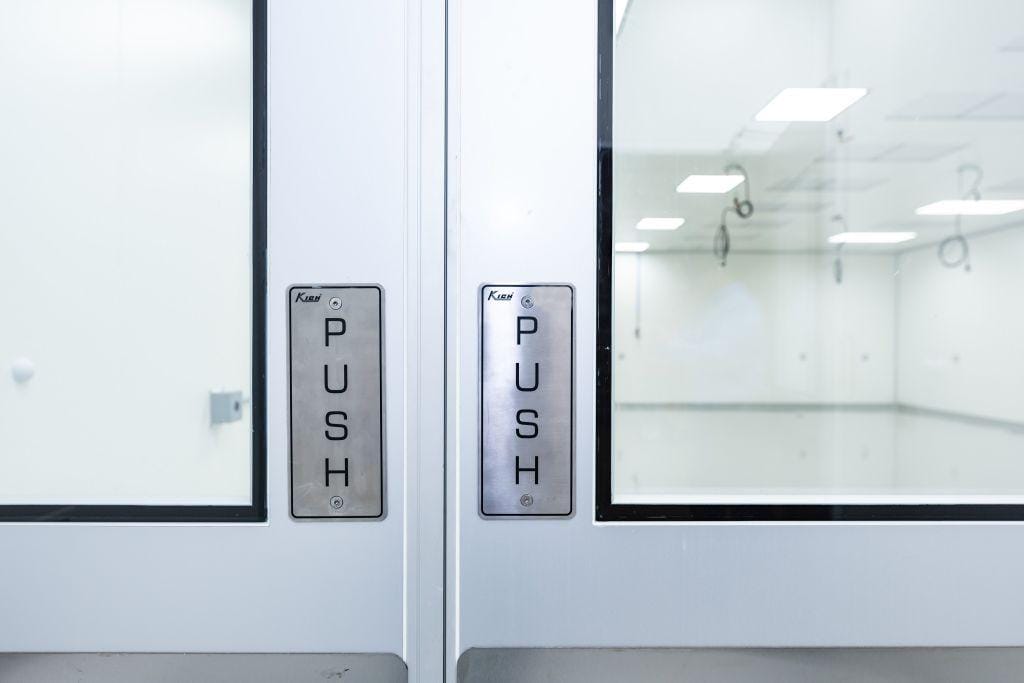
Door-related pressure problems often get worse when teams treat symptoms instead of causes. Raising pressure, suppressing alarms, or blaming the door without checking airflow balance can create new issues and leave the real failure in place.
The best response is disciplined troubleshooting. Confirm the pattern, inspect the boundary, check controls, and verify the fix under real use.
Raising Pressure Setpoints Without Finding The Leak
Raising setpoints may reduce alarms temporarily, but it can increase leakage, door force, fan energy, noise, and control instability. It can also hide the fact that the room envelope or door assembly is not holding pressure.
Setpoint changes should be the result of an investigation, not the first reaction. If the room has poor seals, weak interlocks, or uncontrolled leakage, more pressure usually means more wasted airflow through the same weak points.
Ignoring Door Behaviour During Qualification
If qualification only confirms pressure at rest, it may miss the operational door behaviour that causes the cascade to fail. Door events, cart transfers, airlock use, and shift patterns can create the exact conditions where the pressure relationship is most vulnerable.
Where door behaviour matters to contamination control or containment, test or observe the room under realistic operating conditions. That evidence is more useful than a pressure snapshot taken when the room is quiet and empty.
Treating Nuisance Alarms As A BMS Problem Only
Nuisance pressure alarms may be caused by short alarm delays, but they may also reflect real instability, poor airflow balance, bad sensor placement, or door behaviour. Simply delaying or disabling alarms can reduce noise while increasing risk.
Start with trend review. If the pressure dip is short, predictable, and harmless, alarm logic may need refinement. If the pressure dip is long, repeated, or causes reversal, the room needs root-cause investigation.
Using Airlocks For Storage Or Staging
Airlocks lose their buffering function when they become storage areas or staging zones. Stored items can slow movement, block airflow, hold doors open longer, and complicate cleaning. This creates avoidable pressure instability and contamination risk.
Keep airlocks clear and used for their intended purpose. If operations need staging space, the solution is usually a workflow or layout change, not using the airlock as a convenient buffer room.
Overlooking Pass-Through Doors And Small Openings
Small openings can create repeated pressure events. Pass-through doors, gaps under frames, service penetrations, transfer hatches, and unsealed interfaces can all contribute to pressure instability. A small path used many times per shift can be more disruptive than a large door used rarely.
Pressure cascades fail through the easiest path. Investigations should include the full room boundary, not only the main personnel door.
Stabilize Door Pressure Cascades With The Right Door, HVAC, And Controls Strategy
Door-related pressure failures are rarely fixed by one adjustment. Stable performance usually comes from matching door hardware, airlock design, HVAC balancing, controls logic, and workflow to the room’s intended use. When those pieces work together, teams get fewer nuisance alarms, faster recovery after door events, and clearer evidence that the cleanroom is maintaining control.
Door-related pressure failures are rarely fixed by one adjustment, which is where ACH Engineering tends to help most. We bring integrated in-house engineering across architectural, mechanical, HVAC, and electrical disciplines, turnkey cleanroom design, supply, and installation, and experience delivering ISO- and GMP-aligned environments. If you are troubleshooting a cascade that keeps collapsing at the door, the fastest place to start is a closer look at your cleanroom doors and how they sit within the wider pressure strategy. Send us the room layout, the pressure trend, the door event pattern, and the alarms you are seeing, and we will review door performance, airflow balance, and controls logic with you to map out practical corrective actions.
Frequently Asked Questions
A door opening creates a temporary airflow path between rooms. If the HVAC system, door hardware, airlock, or control logic cannot recover quickly, the pressure differential may drop, reverse, or trigger alarms.
Not always. A short, expected dip may be acceptable if airflow direction remains suitable and the room recovers quickly. Repeated collapse, slow recovery, pressure reversal, or recurring alarms should be investigated.
Airlocks create a buffer between pressure zones. They reduce direct connection between spaces, limit simultaneous door openings, and help protect higher-control areas during personnel or material movement.
Common causes include short alarm delays, no door-event correlation, poor sealing, undersized airlocks, high traffic, slow closers, unstable HVAC control, or pressure sensors placed in poor reference locations.
Not until the root cause is understood. Raising pressure can create door force, leakage, noise, energy use, and control instability without fixing poor seals, workflow, air balance, or alarm logic.
Start with door event trends, pressure recovery time, door seals and closers, interlock status, operator behaviour, supply/exhaust balance, and sensor placement.
Requalification or targeted verification may be needed after changes to door hardware, airlocks, pressure setpoints, HVAC balancing, controls logic, room use, or any condition that could affect the qualified state of the cleanroom.
GET IN TOUCH
Complete the form below to get in touch with our team.