

What Is a Metabolic Testing Chamber?
A metabolic testing chamber is a sealed, environmentally controlled room in which a subject stays while the airflow through the room and the composition of the air leaving it are measured continuously. The difference between oxygen consumed and carbon dioxide produced gives energy expenditure, with nothing attached to the subject. The same chamber type also imposes controlled heat, cold or altitude for physiological research.
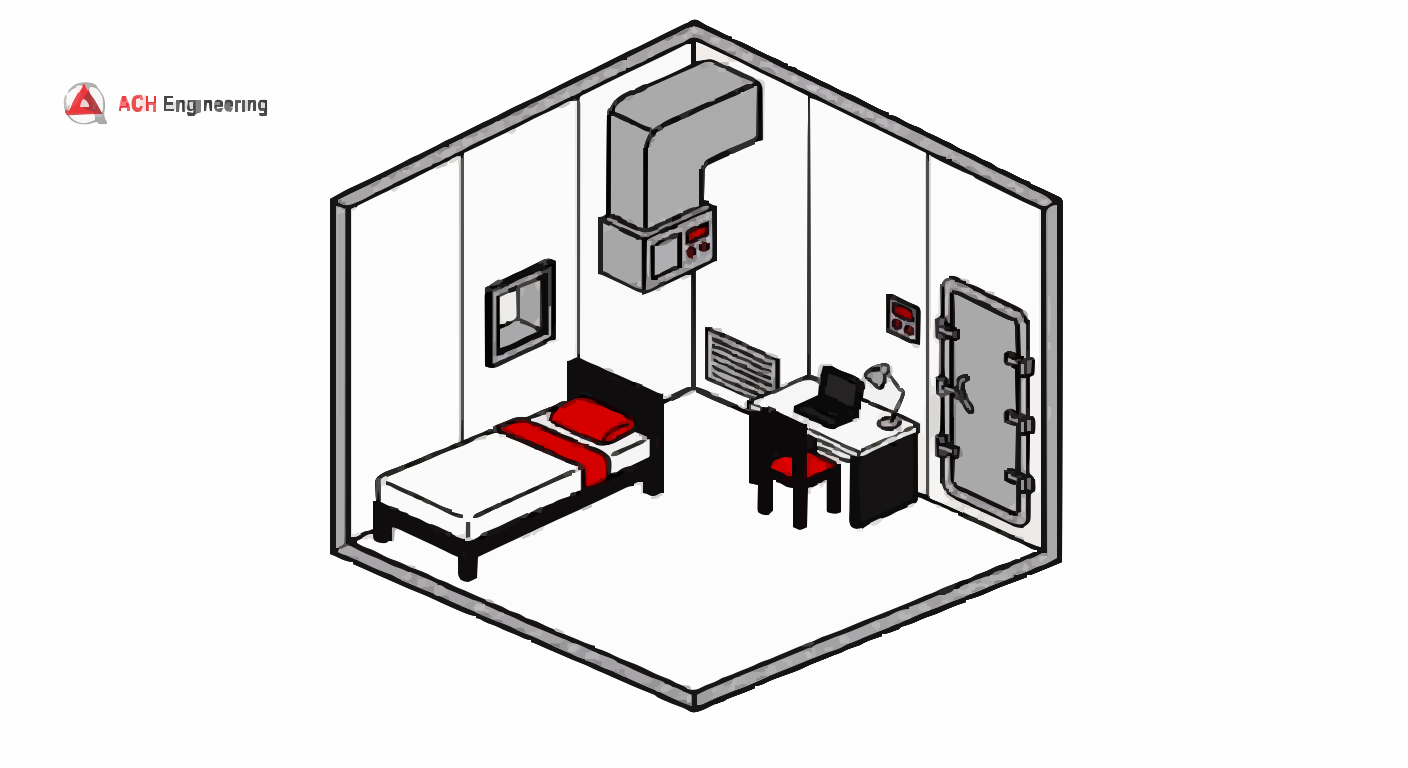
Metabolic testing chamber - cutaway showing envelope, air path and interior
Airflow rate × gas concentration difference = O₂ consumed and CO₂ produced
Why measure at room level
- Nothing attached to the subject - no mask, hood or mouthpiece
- Subjects move, sleep, eat and exercise freely for 24 hours or longer
- Captures the full daily energy expenditure profile, including sleep
Who uses these chambers
- University physiology and nutrition research units
- Hospital metabolic wards and obesity research programmes
- Sports science, occupational health and government laboratories
Whole-Room Calorimetry vs Environmental Testing Chambers
These two are often confused during procurement, but they are engineered around different requirements and that changes the specification, the cost and the validation path.
| Whole-Room Calorimeter | Environmental Chamber | |
|---|---|---|
| Purpose | Measures energy expenditure from respiratory gas exchange | Imposes a thermal or altitude condition and measures the subject's response |
| Critical spec | Airtightness, airflow measurement, analyser accuracy | Temperature, humidity and airflow uniformity |
| Envelope | Gas-tight, leak rate measured and accounted for | Well sealed and insulated; absolute airtightness not required |
| Session length | 24 hours or longer, including overnight | One to four hour exposure sessions |
| Validation | Combustion recovery test using propane or ethanol | Temperature and humidity mapping, empty and loaded |
Which one do you need?
If the chamber is the measuring instrument, it is a calorimeter and airtightness governs the design. If it creates the condition while your instruments measure the subject, it is an environmental chamber and uniformity governs the design. Settle this before an RFP is written.
Sealed Envelope & Environmental Control Engineering

A metabolic measurement is a mass balance: airflow rate multiplied by the gas concentration difference. Every element below exists to keep that equation honest and to keep a person comfortable inside a sealed room for a day at a time.
Keeping the measurement honest
- Airtightness and leak rate: air leaving without passing the analysers is data you never see, so the residual leak rate is measured rather than assumed
- Airflow measurement:energy expenditure scales directly with flow, so flow error becomes result error
- Mixing and response time: air distribution designed so the washout characteristic is short and predictable
- Sealed penetrations : cable and sample line ports engineered as assemblies, not cut on site
Keeping the subject comfortable
- Heat load: a resting adult adds roughly 100 watts, a hard-exercising subject over 800; cooling is sized for the peak
- Temperature and humidity: tight, uniform control across the occupied volume, humidifying and dehumidifying as the season demands
- Pass-through hatch: meals and samples move in and out without breaking the seal
- Liveability: bed, work surface, sanitary facilities and lighting control; an uncomfortable subject sleeps badly and skews the data
Safety Systems for Human-Subject Research
A research ethics board examines safety first. Settle it at design stage, not during approval.
Occupant protection
- Egress: the door releases from inside under any power condition
- Gas monitoring: oxygen and carbon dioxide alarms with automatic fresh air purge
- Thermal limits: enforced independently of the control system
- Medical access: door and clear path sized for stretcher entry

Observation and communication
- Line of sight: observation window or camera giving continuous view of the subject
- Two-way intercom: direct voice contact between subject and study staff
- Subject controls: call button and emergency stop operable from inside
- Remote alarms: annunciation to staffed locations for overnight studies
The rule everything else is built on
The occupant must be able to leave at any moment, without assistance, regardless of what the control system, the power supply or the protocol is doing.
Validation & Commissioning of Metabolic Chambers
A chamber is not finished when it reaches setpoint. It is finished when there is documented evidence that it holds its condition, that the envelope is sound, and that the measurement recovers a known quantity.
Seal
Leak Rate Testing
Envelope airtightness measured, establishing the residual leak rate the mass balance must account for.
Map
Uniformity Mapping
Temperature and humidity mapped across the occupied volume, empty and loaded, identifying worst-case sensor positions.
Flow
Airflow Verification
Flow measurement checked against calibrated references across the operating range.
Recover
Combustion Recovery
A known mass of propane or ethanol is burned and the recovered carbon dioxide compared against theoretical values, the standard proof of accuracy.
Protect
Safety Testing
Egress, gas alarms, emergency stop and power-failure response tested and witnessed for ethics submission.
Single-Source Chamber Construction with Integrated Instrumentation
These projects are procured in two parts: the controlled environment, and the measurement instrumentation. Research groups usually own their analyzers already. We build the room around them.
Metabolic Testing Chamber FAQs
A sealed, environmentally controlled room in which a subject stays while the airflow through the room and the composition of the air leaving it are measured continuously. The difference between oxygen consumed and carbon dioxide produced gives energy expenditure, with nothing attached to the subject.
A cart measures gas exchange through a mask or mouthpiece over a short session. A whole-room chamber measures at room level, so the subject moves, eats and sleeps freely across 24 hours or longer. Carts suit short measurements; chambers suit full-day energy expenditure studies.
The measurement is a mass balance, so air leaving without passing the analysers is unmeasured and corrupts the result. The envelope is detailed for airtightness and the residual leak rate measured and accounted for, not assumed to be zero.
The occupant must be able to open the door from inside at any moment regardless of power or control state. Beyond that: oxygen and carbon dioxide alarms, independent temperature limits, continuous observation, two-way intercom, a subject-operated emergency stop, and door access sized for a stretcher.
Through leak rate testing, temperature and humidity mapping, airflow verification against calibrated references, and a combustion recovery test in which a known mass of propane or ethanol is burned and the recovered carbon dioxide compared against theoretical values.
No. We design and build the controlled environment: the sealed envelope, temperature and humidity control, airflow system, penetrations, pass-through hatch, safety systems and monitoring. Analysers, flow instrumentation and calorimetry software come from you or your instrumentation partner, and we coordinate with them from design stage.