

Cleanroom Energy Efficiency: Practical Engineering Levers To Reduce Operating Cost
Cleanroom energy efficiency is about lowering fan, filtration, and conditioning cost without weakening airflow, pressure control, or required cleanliness. The biggest savings usually come from rational airflow rates, lower system resistance, better control logic, and better matching of outside air, exhaust, and room states to real operations. Each of these levers sits inside the broader discipline of controlled environment engineering, where any energy change has to be checked against the room’s intended performance before it is locked in.
Cleanrooms cost more to run than conventional spaces because the HVAC system is doing more work, more often, and with less room for uncontrolled variation. Air has to be moved continuously, filtered through high-resistance components, and conditioned tightly enough to support the process. That means the best energy strategy is rarely “turn things down.” It is usually a design and controls exercise that removes waste while preserving the room’s intended function.
Quick Takeaways
- The largest operating-cost drivers are usually fan energy, outside air conditioning, exhaust replacement, filtration pressure drop, and poorly coordinated control logic.
- The safest savings usually come from airflow rationalisation, lower system resistance, better fan control, and more disciplined operating modes.
- Every energy-saving change should be tied to intended use, baseline data, and post-change verification.
Measuring Cleanroom Energy Efficiency Against Real Requirements
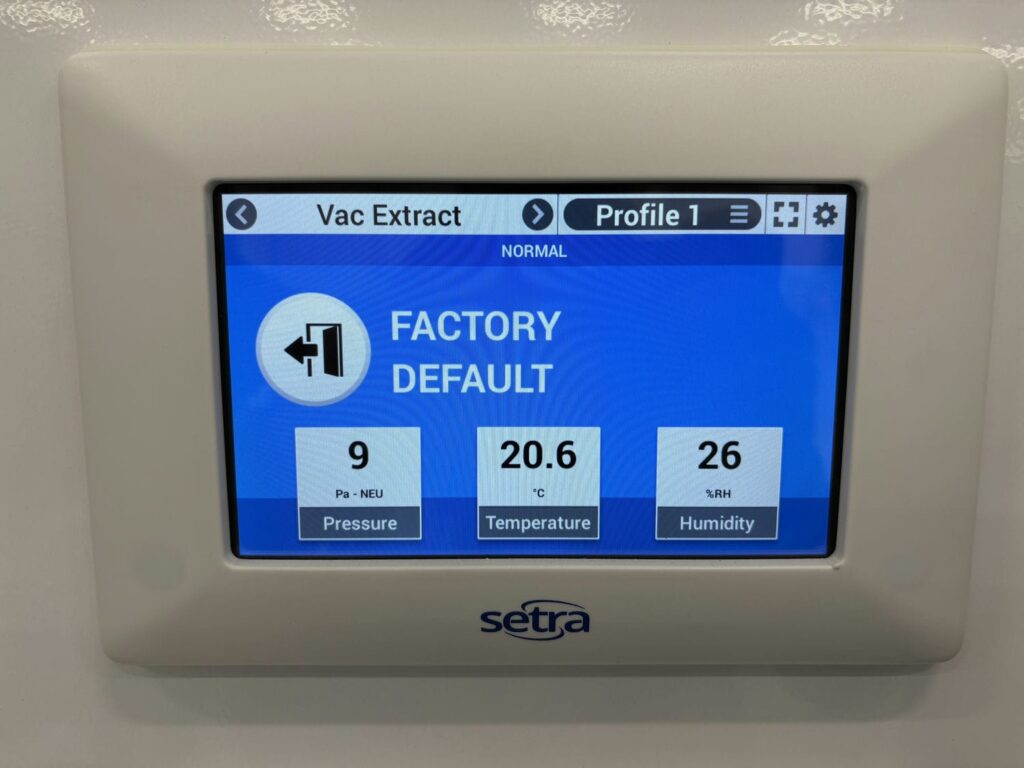
Cleanroom energy efficiency should be measured against the environmental control you actually need, not against an office or warehouse benchmark. The target is not the lowest possible utility bill. The target is the lowest practical operating cost that still supports cleanliness, pressure stability, airflow behaviour, temperature control, and the way the space is used.
This matters because energy-saving ideas can look good in isolation and still be wrong for the room. A change that reduces fan speed or widens a temperature band may save money in one application and create instability in another. The right question is always the same: can the room still perform as intended after the change?
What “Energy Efficiency” Means In A Cleanroom
In a cleanroom, energy efficiency means delivering the required environmental control with less wasted air movement, less wasted pressure, and less unnecessary heating, cooling, humidification, dehumidification, or reheat. It is a performance-led definition, not a generic sustainability slogan.
That framing keeps the conversation practical. You are not trying to make the cleanroom “green” in a vague sense. You are trying to remove avoidable operating cost while protecting product, process, people, and qualification outcomes.
Why Cleanrooms Use More Energy Than Conventional Spaces
Cleanrooms use more energy because the HVAC system works continuously to maintain controlled conditions. Fans often run around the clock. Air change rates are higher than in conventional spaces. Filtration resistance is higher. Pressure differentials must stay stable. In some facilities, large volumes of outside air or make-up air must also be heated, cooled, dried, humidified, or reheated.
The cost is not only in how much air you move. It is also in how hard the system must work to move it. A cleanroom with high-resistance filters, long duct runs, tight control bands, and excessive pressure margins can consume more energy than a room of similar size with a more disciplined design.
Why “Just Reduce Airflow” Is Usually The Wrong Starting Point
Airflow is tied to more than particle dilution. It affects recovery after disturbances, temperature stability, pressure control, and how contaminants move within the room. Reducing airflow without understanding those relationships can create new problems that erase the savings.
A better starting point is to understand where energy is being spent and which levers affect the room most. In many cases, the answer is not “less air everywhere.” It is better control, better pressure management, lower resistance, and room-state logic that matches real operations.
Where Cleanroom Operating Cost Usually Comes From
If you want to reduce cleanroom operating cost, start by identifying the systems that run hardest and longest. In most facilities, that means fan systems, air conditioning loads tied to outside air and exhaust, and control sequences that create unnecessary simultaneous heating and cooling.
This section matters because many retrofit ideas fail for a simple reason: they attack the wrong cost driver. A room that looks “overventilated” may actually be spending more on filtration pressure drop or reheat than on the air volume itself.
Fan Energy And Static Pressure
Fan energy is often one of the largest ongoing costs in a cleanroom because fans run continuously and work against system resistance every hour the room operates. That resistance comes from filters, coils, dampers, ductwork, terminals, and pressure relationships that may be tighter than necessary.
The important point is that fan cost is driven by both airflow quantity and pressure. A system that moves moderate airflow through a high-resistance path can be just as expensive as one that moves more airflow through a better-designed path. That is why fan energy conversations should always include static pressure, filter loading, and control strategy, not only air changes per hour.
Outside Air, Exhaust, And Make-Up Air Conditioning
Outside air and exhaust can be among the most expensive air streams in the building because they must be conditioned from ambient conditions to indoor conditions before they are useful to the room. If the process requires high exhaust, hazardous handling, or once-through air strategies, the HVAC system may be carrying a much larger heating and cooling burden than operators realise.
This is also where seasonal cost can change dramatically. In cold weather, make-up air may create a large heating load. In warm or humid weather, the same air may drive cooling and dehumidification cost. A good efficiency strategy looks at these seasonal penalties, not just one operating snapshot.
Temperature, Humidity, And Reheat
Tight temperature and humidity control can become expensive when the sequence of operation is poorly coordinated. Some systems cool air aggressively, then reheat it to maintain space temperature or humidity relationships. When this happens more than necessary, the room effectively pays twice for the same control problem.
Reheat is not always wrong. It can be part of a stable, well-designed process. The problem appears when control loops are fighting each other, when setpoints are tighter than the process needs, or when the supply strategy forces the system into simultaneous cooling and reheating more often than intended.
Pressure Strategy And Leakage
Pressure control is essential in cleanrooms, but excessive pressure margins and leaky envelopes increase fan work without adding useful protection. A room that is stable at the right pressure is more efficient than a room that is “more positive” or “more negative” than it needs to be.
Leakage matters too. If the room envelope, doors, or interfaces leak more than expected, the system has to move extra air just to maintain the target relationship. That added air movement becomes a permanent operating cost unless the envelope and pressure strategy are corrected.
The Engineering Levers That Most Often Reduce Cost
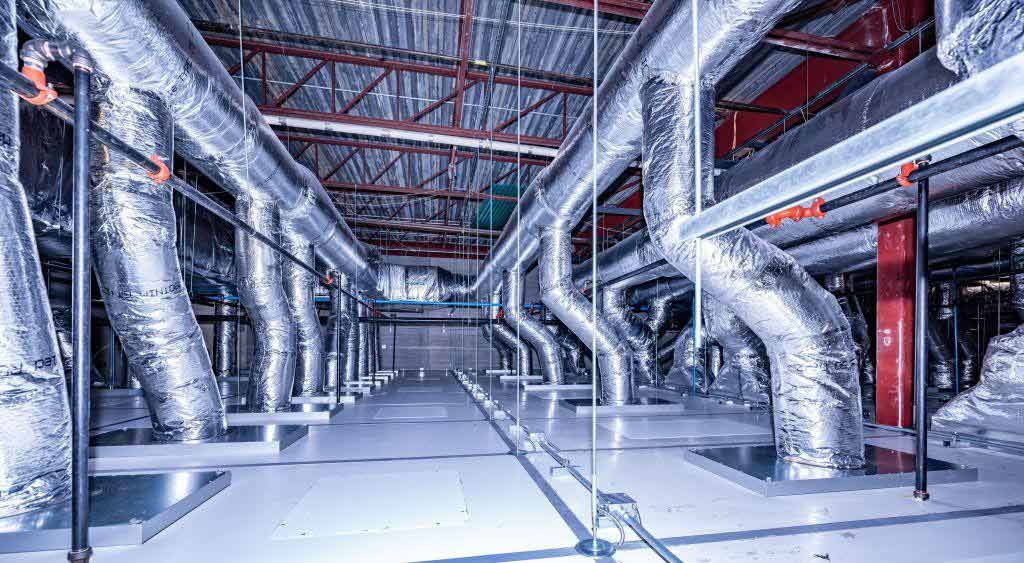
The best energy levers are the ones that reduce waste while leaving the room easier to control, not harder. In cleanrooms, that usually means looking at airflow rationalisation, fan control, resistance reduction, outdoor air and exhaust balance, and operating modes that reflect real occupancy.
The levers below are practical because they connect directly to the systems that drive cost. They also translate well into design reviews, retrofit screening, and change-control discussions.
Air Change Strategy And Airflow Rationalisation
Air change strategy is one of the first places to look, but it should be approached carefully. The question is not whether airflow can be lowered in theory. The question is whether the current airflow still matches intended use, occupancy, particle-generation risk, heat load, and recovery expectations. In some rooms, airflow has been carried forward from an early design assumption that no longer reflects how the space is used.
Rationalisation means proving what the room actually needs, not cutting air blindly. If you review airflow, also review recovery, pressure stability, room loading, and process sensitivity. When changes are considered, they should still preserve stable cleanroom airflow and protection at the locations that matter most.
Fan Control, Static Pressure, And System Resistance
Fan control is often a high-value lever because it affects cost every hour the room runs. Variable speed drives, better static pressure setpoints, reduced throttling, and lower system resistance can cut energy use without changing the room’s intended operating condition. The strongest results come when fan control is paired with duct and terminal balancing, sensible pressure targets, and reduced unnecessary resistance.
The U.S. Department of Energy’s Better Buildings guidance on industrial fan systems covers similar territory, including reducing unnecessary fan operation and applying variable speed control where it suits the system.
If you are reviewing static pressure, fan control logic, or how airside resistance affects operating cost, it helps to connect those decisions back to broader air handling and HVAC fundamentals. That makes it easier to separate a control problem from a system-design problem.
Filtration Selection, Filter Loading, And Pressure Drop
Filtration decisions affect more than particle control. They also affect fan energy, replacement intervals, and the pressure margin the system needs over time. Higher filter resistance, higher face velocity, or poor staging can push the fan to work harder from day one and harder again as the filters load.
Filtration should be treated as a lifecycle cost decision, not only a specification line item. The choice between HEPA and ULPA filters directly affects pressure drop, fan energy, and how the HVAC system behaves as filters load across their service life.
Outside Air, Exhaust, And Recirculation Balance
Outside air and exhaust are expensive because they add conditioning load. In some cleanrooms, the room can rely heavily on recirculation once cleanliness and code constraints are satisfied. In others, hazardous processes, containment requirements, or code obligations require larger outside air and exhaust volumes. The efficiency question is not “how little outside air can we use?” The question is “what balance supports the process without conditioning more air than necessary?”
This is also where heat recovery and make-up air strategy may deserve review. In some facilities, the best savings come from improving how outside air, exhaust, and recirculated air are coordinated rather than from making changes inside the cleanroom itself. The right answer depends on process risk, exhaust type, and whether contamination or code constraints limit recovery opportunities.
Temperature And Humidity Control Logic
Temperature and humidity control logic can create hidden waste when supply air temperature, reheat, and room setpoints are not coordinated. A room may be meeting its target, but doing so inefficiently because the control sequence forces unnecessary heating and cooling corrections throughout the day.
Where the process allows it, wider but still acceptable control bands and better sequence coordination can reduce energy use without reducing control. The key is to confirm what the process actually needs, then align the sequence of operation to that requirement instead of preserving unnecessarily tight settings by habit.
Setbacks, Unoccupied Modes, And Schedule-Based Operation
Setbacks can be highly effective in spaces that are not genuinely at full demand all the time. If a room has predictable unoccupied periods, off-shift windows, or campaign-based operation, it may be possible to reduce airflow or adjust control states during those periods while maintaining a safe restore path before occupancy or critical work resumes.
The success of setbacks depends on restore logic, alarms, and clear rules about when the room is considered ready again. A setback that saves energy but creates long recovery periods, nuisance alarms, or uncertain restart conditions is not a good operating strategy. Done well, however, room-state logic can be one of the most practical long-term savings tools in a cleanroom.
Energy Levers At A Glance
The table below compares common efficiency levers against the main risk each one introduces and the checks worth planning after making a change. It is useful in both new builds and retrofits because it keeps savings decisions tied to verification.
| Lever | Where Savings Come From | Main Risk To Watch | What To Verify After Change |
| Air Change Rationalisation | Lower fan energy and lower conditioning load | Reduced recovery or weaker pressure stability | Recovery, pressure stability, airflow behaviour |
| Fan Control / VFDs | Reduced fan power at lower demand | Poor control tuning or unstable room states | Trends, alarm response, stable pressure |
| Filter Pressure Drop Reduction | Lower fan resistance over time | Filtration or housing mismatch | Pressure drop, airflow, filter performance |
| Pressure Cascade Tuning | Less wasted air movement and less leakage burden | Loss of room separation intent | Differential pressure stability, door behaviour |
| Temperature / Humidity Reset | Less reheat and less simultaneous heating/cooling | Process or comfort drift | Space conditions, alarms, operator feedback |
| Setback Modes | Lower off-shift airflow and conditioning cost | Slow restore or uncertain readiness | Restore time, recovery, operating-state readiness |
| Outside Air / Exhaust Optimisation | Lower heating, cooling, and dehumidification load | Code, containment, or process-risk non-compliance | Air balance, make-up air, pressure relationships |
How To Use This Table In New Builds And Retrofits
In a new build, use the table during design review to make operating cost visible before the system is locked in. It helps the team compare “good enough to build” against “good enough to operate for years,” which are not always the same thing. Small early decisions around filters, fan control, and pressure margins can shape utility cost long after commissioning.
In a retrofit, use the table as a screening tool before committing to changes. It helps separate low-risk operating improvements from changes that affect room performance more deeply and therefore need broader verification, requalification review, or change-control planning.
How To Reduce Energy Use Without Creating Compliance Risk
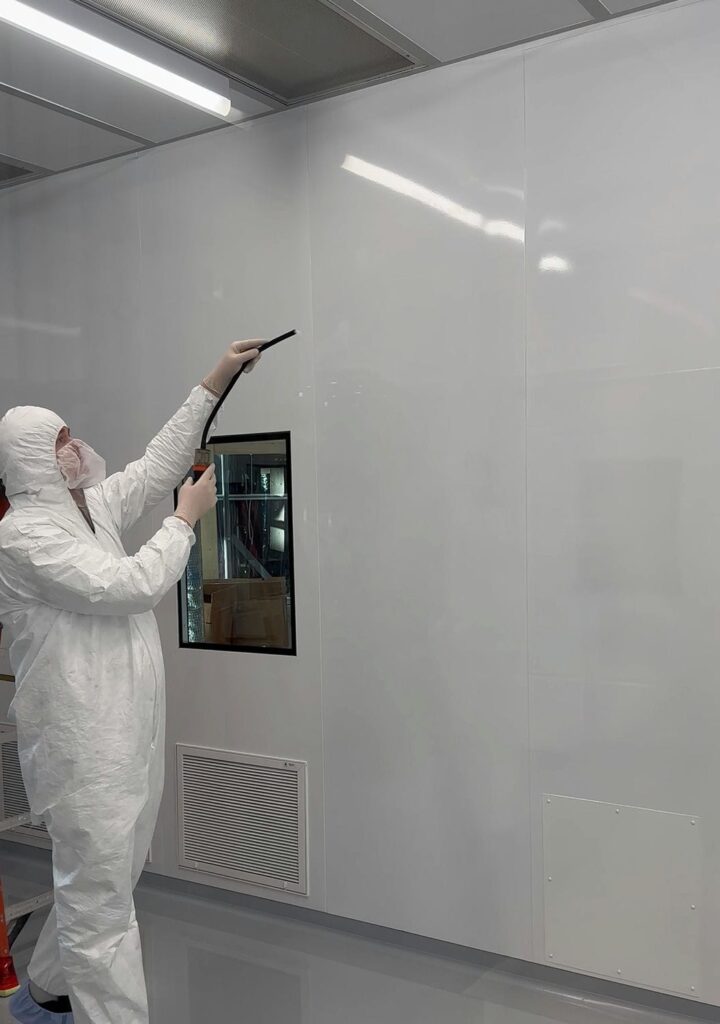
The safest energy projects begin with evidence. They define what the room is doing now, why the change is being proposed, and how performance will be checked afterward. That approach turns “cost saving” into an engineering change rather than an operating gamble.
This is especially important in controlled environments because the room’s value is not only in its utility bill. Its value is in the stable conditions it provides. That must stay intact after the change.
Start With Baseline Data, Not Assumptions
Before changing airflow, setpoints, or operating modes, establish a baseline. That baseline should include airflow conditions, fan behaviour, static pressure where relevant, room differentials, filter differential pressure, temperature, humidity, alarm history, and available utility or submeter information. Without this, it is hard to tell whether the change improved the system or simply moved the problem somewhere else.
A room that “feels overdesigned” is not enough evidence to justify change. What matters is how the room performs, what the process needs, and whether trend data shows excess margin or hidden instability. Baseline data makes that visible.
Tie Every Change To Intended Use And Risk
Every efficiency change should be checked against the room’s real purpose. Is the room protecting product? Supporting a sensitive process? Maintaining containment? Handling variable occupancy and high heat load? The answers determine how much flexibility exists and where it exists.
This step prevents blunt cost cutting. If a change lowers cost but weakens pressure control during door events or reduces recovery in a critical zone, it is not a successful cleanroom change. It is only a delayed corrective action.
Before You Reduce Airflow Or Reset Setpoints, Ask
- What function is the room protecting, and where is the highest-risk location?
- Which room states matter most: at rest, in operation, or both?
- What current data shows unused margin, rather than assumed margin?
- What verification will confirm the room still performs as intended after the change?
Verify Performance After The Change
Post-change verification should match the size of the change. Some adjustments need only targeted trend review and functional checks. Others, especially those affecting airflow, pressure cascade, filtration resistance, or operating modes, may need broader review and requalification planning.
A good efficiency project includes lifecycle follow-up, not only a commissioning adjustment. If the change affects how the room behaves over time, tie it into an ISO 14644-2 monitoring and requalification framework so savings do not come at the cost of long-term drift.
What To Measure Before And After An Energy-Efficiency Change
The most useful measurements are the ones that show whether the room remained stable and whether the savings are real. That usually means combining operating-condition data with room-performance checks and then reviewing the results over time, not only on the day the change is made.
This also helps avoid a common trap: claiming savings based on one snapshot while missing the fact that alarms, recovery, or comfort have become worse. A cleanroom change should improve the operating profile, not just one utility trend.
Operating Data Worth Capturing
Before and after the change, capture fan speed or fan output, static pressure where available, filter differential pressure, room pressure differentials, temperature, humidity, alarm events, and utility data or submeter trends when possible. These measurements help show not only whether energy use changed, but why it changed.
It also helps to record room state and operating context. A trend taken during a quiet shift is not the same as a trend taken during full occupancy or frequent door activity. If you want meaningful before-and-after comparisons, define the operating conditions that matter.
Functional Checks After Changes
After an efficiency change, confirm that pressure relationships are stable, that the room recovers appropriately after door events or occupied transitions, and that BAS alarms and control responses still behave as intended. These are the checks most likely to reveal hidden side effects.
Occupant feedback also matters. If a change improves utility performance but creates comfort problems that cause behavioural workarounds, the room may become less stable over time. Practical usability is part of operational performance, especially in rooms with manual workflows.
When To Expand Testing Or Review Scope
Some changes are small on paper and large in practice. A filter change that increases pressure drop, a fan-control change that alters airflow response, or a room-use change that increases particle generation can all require more than routine follow-up.
If a change affects airflow paths, filtration resistance, pressure cascade, critical room-state logic, or intended use, expand the review scope early. That is usually less disruptive than discovering later that the room needs rework, retesting, or a broader investigation.
Common Mistakes That Erase Savings
Energy projects lose value when they save money in one place and create instability in another. The most common causes are premature airflow cuts, ignoring filter loading, weak setback logic, and poor trend review after changes. None of these are unusual. They are simply easier to avoid when the project is treated as a controlled engineering change.
The goal is not perfection. The goal is avoiding preventable mistakes that turn a good idea into an operating problem.
Cutting Airflow Without Proving Recovery Or Pressure Stability
Airflow cuts can create quick savings, but they can also reduce recovery performance and weaken room pressure control if they are not justified and tested. That usually shows up later as complaints, recurring control adjustments, or unexpected retesting.
The better approach is to prove that the room can still recover and still hold stable pressure under realistic conditions. That gives the savings a defensible basis and reduces the chance of slowly eroding the room’s operating margin.
Ignoring Filter Pressure Drop And Fan Capacity
Energy conversations often focus on air volume and miss the fact that filters and loading behaviour drive fan effort over time. A system may look efficient after a change, then become less efficient as resistance rises and the fan works harder to maintain performance.
That is why day-one savings are not enough. Review the filter path, the expected loading profile, and the fan’s available margin over the filter lifecycle. If that review is missing, cost and control may both drift in the wrong direction.
Using Setbacks Without Clear Restore Logic
Setbacks save energy only when the restore path is reliable. If the room takes too long to recover, if alarms are ambiguous, or if staff do not know when the room is ready again, the operating risk increases quickly. Rooms then end up running in full mode all the time because nobody trusts the setback sequence.
Treat setbacks as a controls project, not just a schedule setting. Define entry conditions, exit conditions, restore timing, and readiness criteria. When those pieces are clear, setbacks become predictable instead of disruptive.
Chasing Utility Savings Without Trend Review
A savings project should not end when the contractor leaves or the BAS point is changed. Without trend review, teams can miss gradual pressure drift, comfort issues, or growing filter resistance that erodes the benefit of the change.
Trend review is what tells you whether the room became more efficient and stayed stable. It is also what gives future projects a stronger baseline, because you learn which levers created durable savings and which only looked good in the first week.
Reduce Operating Cost Without Trading Away Cleanroom Control
The best cleanroom energy projects reduce operating cost by removing waste, not by reducing control margin blindly. When airflow, filtration, controls, and operating modes are reviewed as one system, you can usually find practical levers that lower utility spend while keeping the room stable, predictable, and easier to manage over time.
At ACH Engineering, controlled environment engineering is delivered with integrated in-house architectural, mechanical, HVAC, and electrical disciplines, turnkey cleanroom design, supply, and installation support, and experience on ISO- and GMP-aligned projects where lifecycle operating cost matters as much as day-one performance. Reach out if you want to evaluate practical energy levers for a new build or an existing cleanroom.
Frequently Asked Questions
Cleanrooms are energy intensive because they continuously move, filter, and condition large volumes of air while maintaining pressure control, cleanliness, and often tight temperature or humidity conditions.
Sometimes, yes, but only when the change is justified by intended use, risk, and post-change verification of airflow, pressure stability, and recovery performance.
Often they do, especially when they are paired with sound control logic, sensible static pressure targets, and lower system resistance rather than used as a workaround for poor design.
Yes. Filter selection affects pressure drop, fan energy, filter life, and replacement cost over time, which means it affects both utility cost and maintenance cost.
In some applications, yes. Suitability depends on process exhaust type, contamination risk, code requirements, and the overall airside design strategy.
Capture airflow conditions, fan behaviour, static pressure where available, filter differential pressure, room pressure differentials, temperature, humidity, alarm history, and energy data where available.
When the change can affect airflow, pressure control, filtration resistance, recovery, room classification risk, or the intended use of the cleanroom, it should trigger broader review, added monitoring, or requalification planning.
GET IN TOUCH
Complete the form below to get in touch with our team.