

What is Differential Pressure?
Differential pressure in a cleanroom is the difference in air pressure between two adjacent areas, measured in pascals (Pa) or inches of water column (inH₂O). It ensures that cleaner areas maintain positive pressure to prevent particle infiltration from less clean spaces.
Differential Pressure Unit Converter
Convert between Pascals (Pa) and Inches of Water Column (inH₂O):
Tip: Use this to verify readings from your Magnehelic Gauges or monitoring system.
What is Differential Pressure in Cleanrooms?
Differential pressure is the foundational element of any controlled environment. But what exactly does it mean?
Differential pressure in a cleanroom is the measurable difference in air pressure between two enclosed spaces. By manipulating the air supply and exhaust rates, engineers create a specific pressure gradient. This gradient acts as an invisible barrier. It forces air to move in an intentional direction, preventing microscopic particles and contaminants from entering highly controlled areas.
If you design, build, or operate a controlled environment, understanding air pressure dynamics is mandatory. In this guide, we will break down the mechanics of a differential pressure cleanroom. You will learn how pressure cascades work, what ISO standards require, and how to maintain compliance using modern HVAC controls. For more information about specialized cleanroom solutions, visit our Cleanroom Knowledge Center or explore our Air Handling & HVAC resources. Interested in advanced monitoring tools? See our page on Manometers and Magnehelic Gauges for details.
Positive vs Negative Pressure in Cleanrooms
Engineers design cleanrooms using two primary pressure strategies based on the facility’s application. Understanding the difference between a positive vs negative pressure cleanroom is critical for protecting both the product and the personnel.
- Positive Pressure Cleanrooms: In this setup, the air pressure inside the cleanroom is higher than the pressure in the surrounding corridors. When a door opens or a microscopic leak exists in the structural envelope, air rushes outward. This outgoing force prevents unconditioned, contaminated air from entering the cleanroom. Manufacturers use positive pressure for semiconductors, medical devices, and non-hazardous pharmaceuticals.
- Negative Pressure Cleanrooms: Here, the air pressure inside the room is lower than the surrounding areas. Air flows inward rather than outward. This setup contains hazardous airborne particles, preventing them from escaping into the rest of the facility. Pharmaceutical companies compounding toxic drugs, biosafety labs handling infectious agents, and facilities managing hazardous chemicals rely on negative pressure to protect their staff.
Pressure Cascade in Cleanrooms
A single pressurized room rarely exists in isolation. Most facilities utilize a pressure cascade cleanroom design.
A pressure cascade is a series of interconnected rooms with gradually decreasing or increasing pressure levels. The system creates a stepped pressure gradient from the cleanest area to the cleanest area.
For example, in a positive pressure cascade, the core manufacturing room (the cleanest zone) holds the highest pressure. The adjacent gowning room holds slightly lower pressure. The outer hallway holds an even lower pressure. This cascading effect guarantees that if air moves, it only flows outward from the most critical zone toward the uncontrolled zones. It serves as a multi-layered defense mechanism against particle migration.
Cleanroom Airflow Direction
Pressure directly dictates cleanroom airflow direction. Air inherently moves from areas of high pressure to areas of low pressure.
Engineers map the cleanroom airflow direction during the facility design phase. They ensure the airflow path continuously sweeps contaminants away from critical process areas. If a worker generates particles while walking, the directed airflow catches those particles and pushes them toward low-level exhaust grilles.
Proper airflow direction prevents stagnant air pockets. It ensures that HEPA-filtered supply air washes over the product first before interacting with personnel or equipment, effectively maintaining the required cleanliness classifications.
Differential Pressure Requirements (ISO Standards)
Regulatory bodies mandate strict cleanroom pressure requirements to guarantee environmental stability. The International Organization for Standardization (ISO) provides the most widely recognized guidelines under ISO 14644.
While specific requirements vary by industry and process, standard engineering practices adhere to the following cleanroom pressure requirements:
- Minimum Differential: The standard acceptable differential pressure between spaces of different cleanliness classifications is typically 10 to 15 Pascals (Pa), which translates to roughly 0.04 to 0.06 inches of water column (inH₂O).
- Door Openings: The HVAC system must supply enough air to maintain a measurable velocity (usually > 0.2 meters per second) flowing outward through an open doorway to prevent ingress of particles.
- Alarms: Pressure must remain stable. Systems must trigger alarms if the pressure drops below the validated setpoint for a specified duration.
ISO Class 5 environments (formerly Class 100) require tighter tolerances and more robust control systems than an ISO Class 8 environment.
How to Maintain Differential Pressure
Achieving the correct pressure is only the first step. Maintaining it requires a highly responsive mechanical infrastructure. Cleanroom HVAC pressure control relies on the constant balancing of supply, return, and exhaust air volumes.
To maintain differential pressure, engineers utilize several critical components:
- Variable Frequency Drives (VFDs): VFDs adjust the speed of the supply and exhaust fans in real-time. As HEPA filters load with dust over time, their resistance increases. VFDs ramp up the fan motor to overcome this resistance and maintain a constant volume of air.
- Active Pressure Controls: Dampers in the ductwork automatically open and close based on sensor feedback to regulate the exact amount of air entering or leaving a room.
- Airlocks and Pass-Throughs: These architectural features act as transition zones. They allow personnel and materials to enter the cleanroom without directly exposing the highly pressurized cleanroom to the unpressurized hallway.
- Structural Integrity: Even the best cleanroom HVAC pressure control system will fail if the room leaks. Sealing all penetrations around pipes, conduits, and light fixtures is mandatory for maintaining pressure.
Monitoring and Measurement Systems
You cannot control what you cannot measure. A robust differential pressure monitoring system is vital for regulatory compliance and daily operations. Operators must continuously log pressure data to prove the environment remains in a state of control.
Facilities use a combination of mechanical and digital instruments:
- Magnehelic Gauges: These analog dials mount directly into the cleanroom wall. They provide operators with an immediate, visual confirmation of the pressure difference between two rooms.
- Digital Pressure Transmitters: These highly accurate sensors measure the exact differential pressure and transmit the data electronically.
- Building Management Systems (BMS): The transmitters feed real-time data into a centralized BMS. The automation system records the data for compliance audits, adjusts HVAC dampers to correct deviations, and triggers visual and audible alarms if the pressure falls out of spec.
Investing in a high-quality differential pressure monitoring system reduces the risk of undetected system failures, preventing catastrophic product contamination.
Real-World Application of Differential Pressure in Cleanrooms
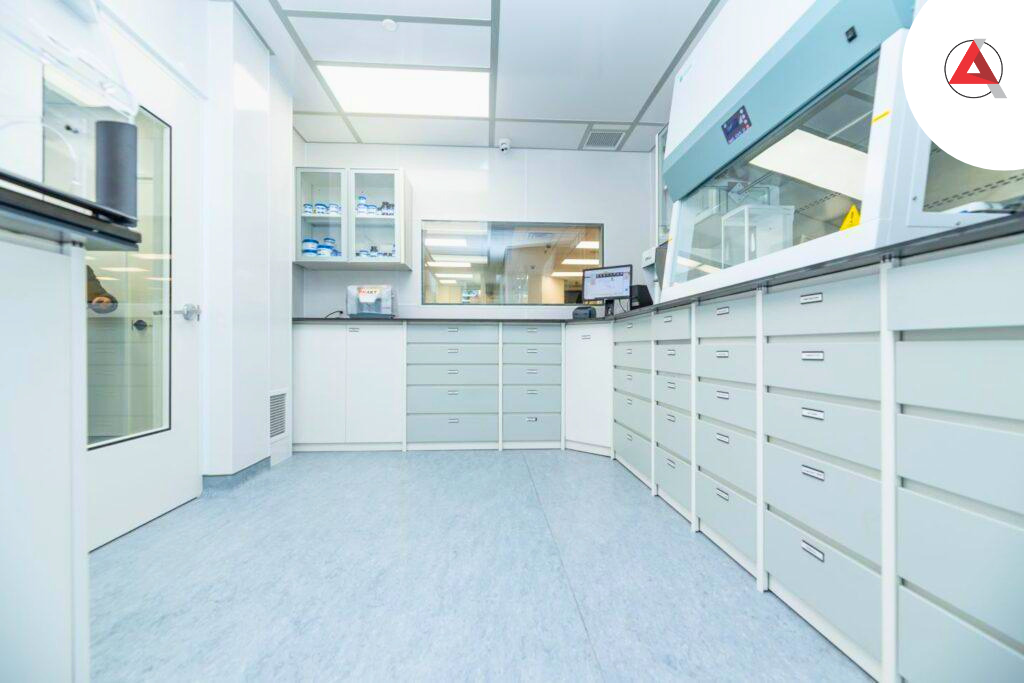
In a recent NAPRA-compliant pharmacy cleanroom project, maintaining a stable differential pressure cleanroom environment was critical to ensure regulatory compliance and contamination control. The project required precise pressure cascade implementation and continuous monitoring to meet strict pharmaceutical standards.
| Major Factor | Case Study Details |
| Criticality of Differential Pressure | Essential to prevent cross-contamination between hazardous and non-hazardous zones, meeting strict NAPRA guidelines for pharmaceutical compounding. |
| Pressure Cascade Maintenance | Implemented a pressure cascade cleanroom design, with higher pressure in sterile areas and lower in containment zones to direct airflow and control particle movement. |
| Role of HVAC Pressure Control | Advanced cleanroom HVAC pressure control used dedicated supply/exhaust, active balancing, and variable frequency drives to maintain set pressures for each zone at all times. |
| Monitoring Systems | Real-time differential pressure monitoring systems with integrated sensors and automated alarms ensured immediate response to any deviation. |
| Outcome | Achieved complete NAPRA compliance, robust contamination control, and enhanced product and patient safety, with zero contamination incidents throughout operations. |
Conclusion
Mastering differential pressure is essential for any successful cleanroom operation. By carefully designing pressure cascades, controlling cleanroom airflow direction, and utilizing responsive HVAC automation, you protect your critical processes from airborne contamination. Regular maintenance of your structural envelope and continuous monitoring through calibrated differential pressure monitoring systems will keep your facility compliant with stringent ISO standards. Looking for design or upgrade your cleanroom? Our engineering team specializes in advanced differential pressure cleanroom systems. Contact us to discuss your project requirements.
Frequently Asked Questions (FAQ)
What is the standard unit of measurement for cleanroom pressure?
Engineers measure cleanroom pressure in Pascals (Pa) or inches of water column (inH₂O). A standard differential between cleanroom classifications is typically 10 to 15 Pa (0.04 to 0.06 inH₂O).
How do doors affect a differential pressure cleanroom?
Opening a door momentarily breaks the pressure barrier between two rooms. The HVAC system must quickly supply additional air to maintain an outward airflow velocity through the open doorway, preventing contaminants from migrating inside.
Can a room be both positive and negative pressure?
No, a single room cannot be both simultaneously. However, complex facilities often use airlocks that can alternate pressure states, or they build negative pressure rooms inside a larger positive pressure facility to achieve dual containment goals.
What happens if the cleanroom pressure fails?
If pressure drops to zero, the invisible air barrier collapses. Contaminants from adjacent, dirtier spaces can easily drift into the cleanroom. This event usually triggers immediate alarms and requires a halt to manufacturing until operators restore the pressure and clean the environment.
How often should you calibrate differential pressure monitoring systems?
You should calibrate your digital sensors and analog gauges at least once a year, or more frequently depending on your specific industry regulations (such as GMP for pharmaceuticals). Regular calibration ensures the data driving your HVAC automation remains accurate.
GET IN TOUCH
Complete the form below to get in touch with our team.