

Cleanroom Doors & Hardware Considerations: Solving the #1 Source of Pressure Loss

Cleanroom Doors & Hardware are often the last component specified in a cleanroom, yet they are the only moving part in an otherwise sealed envelope and the first point where differential pressure integrity is lost. While fixed wall panels and ceiling grids establish a static pressure boundary, every door swing creates mechanical wear, frame gap expansion, and localized pressure drops.
An ACH Engineering industry poll confirmed what mechanical engineers and facility managers suspect from maintenance logs: seals and gaskets fail first, followed by hinges, closers, and handles. The failure sequence is predictable because every door cycle subjects hardware to physical compression, frictional wear, and aggressive cleaning chemicals.
When a door system fails, it leads to measurable operational risks:
- Static Pressure Loss: Worn perimeter seals bleed differential pressure between adjacent ISO zones.
- Dynamic Pressure Drops: Uncontrolled door swings disrupt airflow patterns and allow particles to cascade across thresholds.
- Cross-Contamination: A degraded bottom seal permits unfiltered air migration into classified clean space.
- Validation Delays: Pressure decay outside validated limits forces costly requalification downtime per ISO 14644-1 Cleanroom Standards.
Whether you are configuring flush cleanroom doors for a cGMP pharmaceutical suite or evaluating narrow stile cleanroom doors versus wide stile cleanroom doors for material airlocks, specifying the right hardware prevents audit failures before commissioning begins.
Real-World Hardware Failure Points and Engineering Solutions
Addressing Cleanroom Doors & Hardware failures requires evaluating each hardware component against its specific mechanical failure mode.
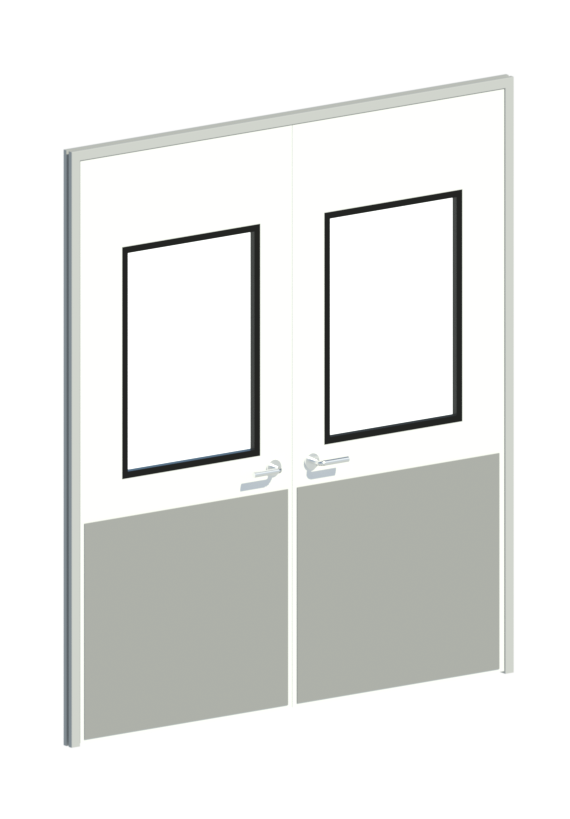
1. Seals & Gaskets
Seals carry the primary sealing load during every single door cycle. Over time, repeated compression sets, ozone exposure, and daily chemical wipe-downs (such as sporicidal agents and isopropyl alcohol) degrade seal memory. Once elasticity is lost, air bleeds past the frame.
- Perimeter Silicone or EPDM Gaskets: EPDM offers high resistance to ozone and general cleaning agents. Silicone accommodates broader thermal fluctuations and aggressive chemical sterilization.
- Automatic Drop Seals: Concealed bottom drop seals extend automatically upon door closure and retract upon opening. This eliminates bottom threshold gaps without dragging across delicate cleanroom flooring.
- Continuous Four-Side Contact: Sealing systems must maintain unbroken perimeter contact without gaps at corner joints to control pressure decay.
2. Hinges & Pivots
Standard butt hinges create point-load friction, generating microscopic wear debris directly inside classified spaces. Over time, worn hinges sag, causing misaligned strike plates and broken door seals.
- Flush Continuous Hinges: Full-height continuous hinges distribute door weight evenly along the entire frame edge, preventing sag.
- Sealed Pivot Systems: Enclosed bearing assemblies trap metallic wear particles internally rather than shedding them into room airflow.
- Corrosion-Resistant Stainless Steel: High-grade stainless steel withstands repeated wipe-downs without pitting or rusting.
3. Closers & Interlocks
Uncontrolled door closures create dynamic pressure spikes. Slamming door leaves strain perimeter gaskets, while doors left slightly ajar defeat the room’s directional pressure cascade.
- Adjustable Hydraulic Closers: Heavy-duty closers regulate closing speed to seat the door firmly against the seal without impact.
- Concealed Overhead Closers: Recessed closer housings remove horizontal surfaces that accumulate particulate matter.
- Airlock Interlock Cascades: Electromagnetic interlock systems prevent both airlock doors from opening simultaneously, safeguarding pressure differentials in full compliance with FDA cGMP Regulations.
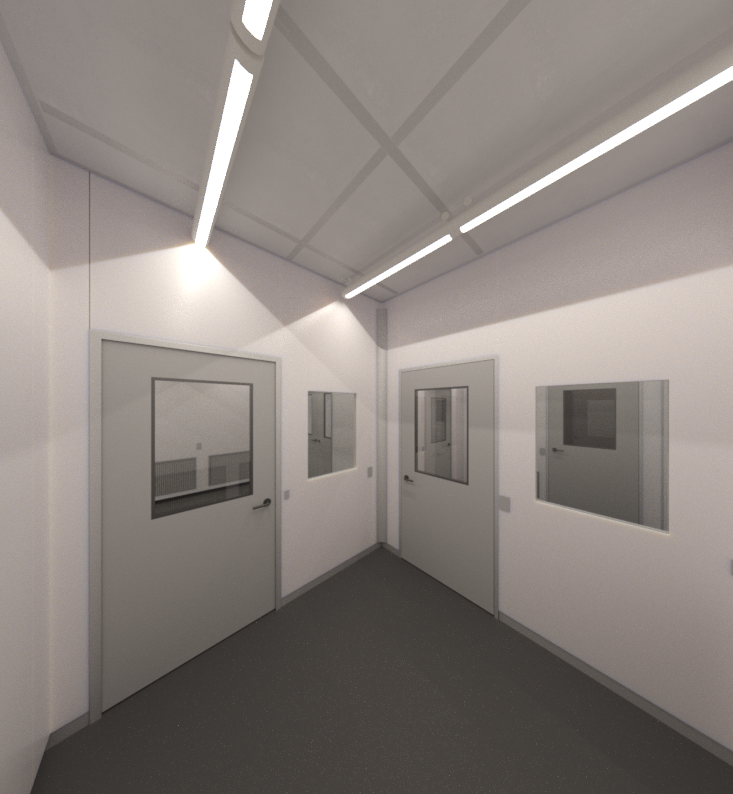
4. Handles & Latches
Door handles are both high-touch contamination vectors and frequent mechanical wear points. Protruding latches accumulate residue and create cleaning obstacles.
- Flush Latches: Recessed latch assemblies eliminate protrusions and wipe clean in a single pass.
- Antimicrobial & Smooth Finishes: Non-porous, treated surfaces inhibit microbial colonization between cleaning shifts.
- Hands-Free Wave Sensors: Touchless actuation removes physical hand contact entirely at high-traffic personnel entries.
Door Stile Selection: Narrow Stile vs. Wide Stile Cleanroom Doors
Stile width dictates a door leaf’s structural load capacity, hardware mounting depth, and glazing area.
| Feature / Parameter | Narrow Stile Cleanroom Doors | Wide Stile Cleanroom Doors |
|---|---|---|
| Primary Focus | Maximum glass visibility & natural light | Heavy hardware support & durability |
| Glazing Area | Expansive vision panels (high visibility) | Compact vision panels (standard sightlines) |
| Hardware Compatibility | Lightweight flush latches, magnetic locks | Heavy panic bars, mortise locks, power closers |
| Best Application | Personnel airlocks, gowning rooms, corridors | Equipment airlocks, high-cycle cart passes |
| Impact Resistance | Standard foot-traffic durability | High impact resistance against pallets & carts |
Narrow Stile Cleanroom Doors
Narrow stile doors maximize the glazed vision panel area within the door leaf. They are designed for openings where line-of-sight and light transfer are paramount.
- Large Vision Panels: Expands sightlines between adjacent processing zones.
- Personnel Airlocks: Allows operators to confirm room occupancy or adjacent door states before stepping through.
- High-Traffic Corridors: Maximizes visibility to prevent collisions in busy personnel pathways.

Wide Stile Cleanroom Doors
Wide stile doors provide heavy-duty perimeter framing engineered to support complex hardware and withstand frequent physical impact.
- Heavy Hardware Integration: Provides the frame depth necessary for panic hardware, mortise locks, and multi-point latching.
- Material & Equipment Access: Reinforced door stiles withstand accidental contact from carts, pallets, and mobile vessels.
- High-Cycle Demands: Added structural mass prevents frame twisting under continuous daily operations.
Integrated Design: Flush Cleanroom Doors and Windows Alignment
Cleanroom entryways should be designed as a unified barrier alongside cleanroom doors and windows. Specifying door leaves, window vision panels, and wall panels under a single system prevents sealing mismatches.
Double-Flush Glazing for Cleaning Efficiency
Ledges, frame lip protrusions, and recessed joints collect dust and resist cleaning. Flush cleanroom doors resolve particle traps by mounting glass vision panels completely level with both sides of the door leaf.
- Zero Horizontal Ledges: Prevents dust and sporicidal residue accumulation.
- Single-Pass Cleaning: Smooth, flat surfaces can be disinfected in one continuous motion.
- Aligned Surfaces: Matches window planes to wall panels for uniform gowning-side wiping.
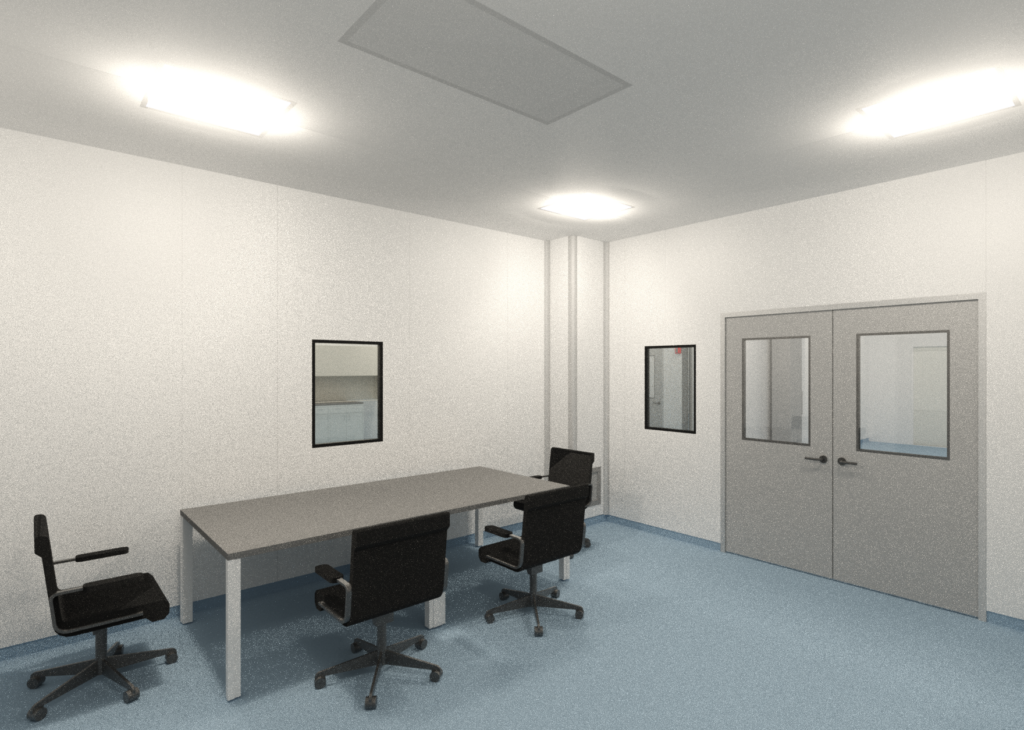
Environmental Isolation & Acoustic Barrier Integration
Environmental control extends beyond interior air pressure. While interior doors maintain clean zone pressure cascades, exterior building barriers protect against environmental sound and vibration.
- Interior Flush Enclosures: Maintain strict differential pressure cascades between classified rooms.
- Acoustic-Rated Assemblies: Dampen noise transmission into sensitive inspection, weighing, or metrology suites.
- Outdoor Sound Barriers: Integrating specialized exterior envelope panels – such as noise barrier walls outdoor isolates the facility from heavy mechanical plant yards and external traffic noise.
Frequently Asked Questions
Which door component fails first in a cleanroom?
Seals and gaskets fail first. They carry continuous mechanical compression loads and undergo chemical degradation from daily sporicidal disinfectants.
Do all airlock doors need interlocks?
Yes. Electromagnetic interlocks prevent simultaneous door openings, which protects directional pressure cascades and prevents unconditioned air ingress.
When should I choose narrow stile over wide stile cleanroom doors?
Choose narrow stile cleanroom doors for personnel airlocks and corridors where maximum vision panel size is required. Choose wide stile cleanroom doors for high-cycle equipment openings or doors requiring panic hardware and heavy-duty closers.
Why specify flush cleanroom doors and windows together?
Integrating flush doors and windows eliminates horizontal ledges, speeds up cleaning routines, and reduces particle accumulation on surrounding wall surfaces.
Partnering with ACH Engineering for Turnkey Cleanroom Doors & Systems
Your cleanroom envelope holds pressure only when its doors perform. ACH Engineering designs, manufactures, and installs complete modular cleanroom systems engineered to maintain pressure cascades across your facility’s full-service life.
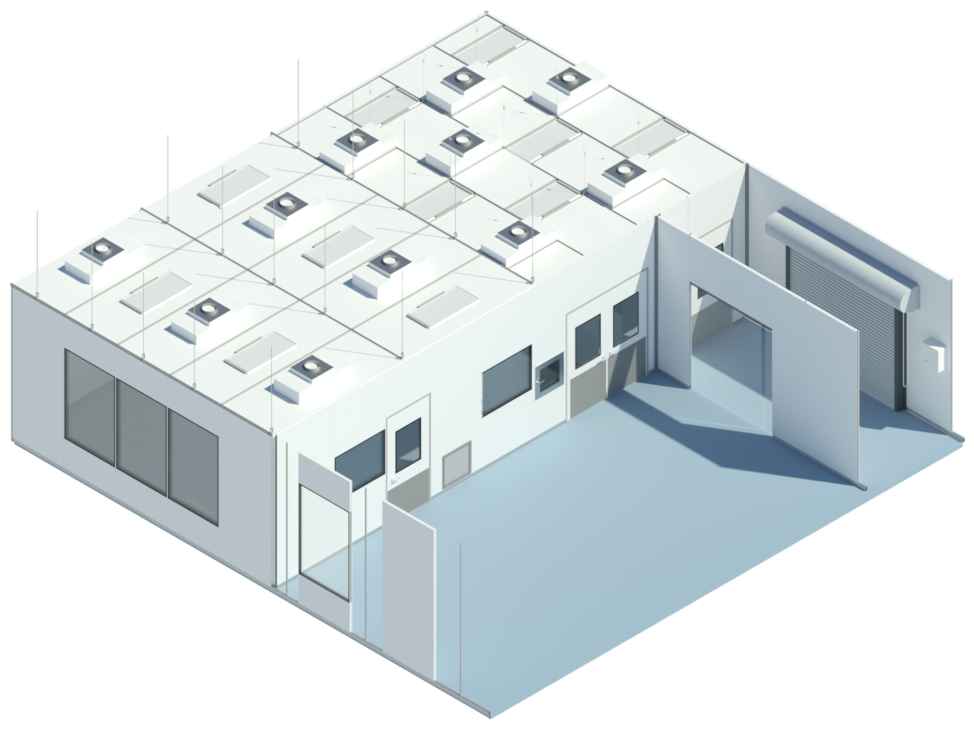
From selecting drop seals and continuous hinges to testing filter integrity per IEST Standards, our team manages the entire scope. Explore our full range of cleanroom validation support services or Contact ACH Engineering today to consult with an engineer.
GET IN TOUCH
Complete the form below to get in touch with our team.