
USP 797 And USP 800 Cleanroom Requirements For Compounding Pharmacies
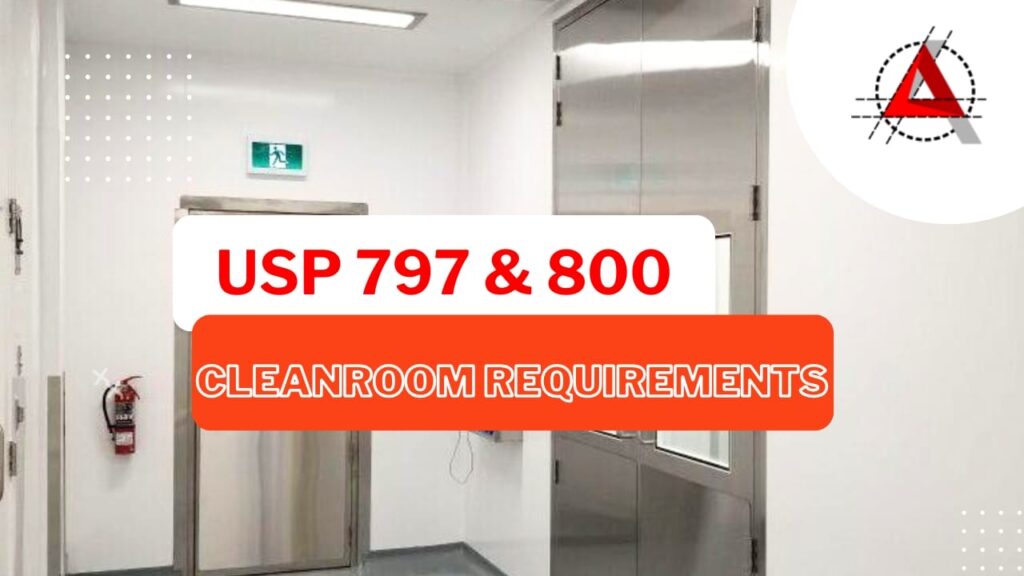
USP 797 sets facility and environmental controls for sterile compounding, while USP 800 adds containment requirements for hazardous drugs, including negative pressure strategies and exhaust planning. In practice, compliance comes down to how you design the compounding suite layout and how HVAC holds ISO air quality and pressure relationships during real operations. For a broader view of how we deliver compounding pharmacy cleanrooms, see our industry overview.
If you are planning a new build, upgrading a room under change control, or responding to inspection findings, focus on the pieces that most often drive redesign: room classification and separation, pressure direction, exhaust and make-up air capacity, and a certification plan you can repeat. Standards adoption and enforcement can vary by jurisdiction, so confirm requirements with your regulator and certifier before final decisions.
What Most Teams Need Answered Early
- What rooms do we need for sterile and hazardous compounding, and how should they connect?
- Which areas must be ISO-classified, and what does ISO 5 mean at the point of compounding?
- When should rooms be positive vs negative pressure?
- What HVAC design choices cause certification failures or unstable performance?
USP 797 And USP 800 Explained
USP 797 is about protecting the preparation so it remains sterile by controlling the environment where sterile compounding occurs. USP 800 is about containing hazardous drugs to reduce exposure to staff and prevent hazardous contamination from spreading to other areas. Many pharmacies need to meet both, which is why the layout and HVAC strategy should be planned as one system.
A helpful way to think about it is “product protection” versus “hazard containment.” Sterile compounding needs clean air delivered reliably to the point of work. Hazardous drug handling needs containment that limits what escapes the process and where that air goes next.
What USP 797 Covers For Sterile Compounding
USP 797 focuses on the minimum design and environmental controls for sterile compounding areas, including how spaces support aseptic technique and maintain clean air where sterile preparations are made. The facility goal is to reduce contamination risk by controlling particulates and microbes, limiting traffic and disruptions, and keeping the compounding environment predictable.
From a cleanroom standpoint, this usually translates to an ISO 5 primary engineering control for sterile compounding, supported by a room layout and HVAC strategy that maintains the surrounding environment at an appropriate level for the facility’s compounding model. The specifics depend on how your pharmacy compounds, the level of risk, and how the standard is applied by your authority having jurisdiction.
What USP 800 Adds For Hazardous Drugs
USP 800 adds requirements for hazardous drug handling and compounding that prioritize staff safety and environmental containment. The facility goal is to keep hazardous particles, aerosols, and residues from migrating into adjacent areas, and to support cleaning and decontamination workflows that reduce exposure.
In practice, this drives design choices like negative pressure rooms, dedicated exhaust planning, and workflow separation between hazardous and non-hazardous activities. Even small decisions, like where receiving occurs or where waste exits, can change exposure risk and inspection outcomes.
How ISO Cleanroom Classification Fits Into Compounding
ISO classification describes air cleanliness, and in compounding it is most often discussed at the point where sterile work occurs. ISO 5 is commonly associated with the primary engineering control where sterile compounding takes place, because that is the immediate environment protecting the sterile preparation.
However, ISO classification is not only about the device. The surrounding rooms, doors, pressure relationships, and HVAC stability affect whether the ISO 5 area stays protected during real work. If airflow is unstable or room transitions are poorly designed, a compliant device can still be surrounded by conditions that increase risk.
How USP Requirements Translate Into Physical Spaces
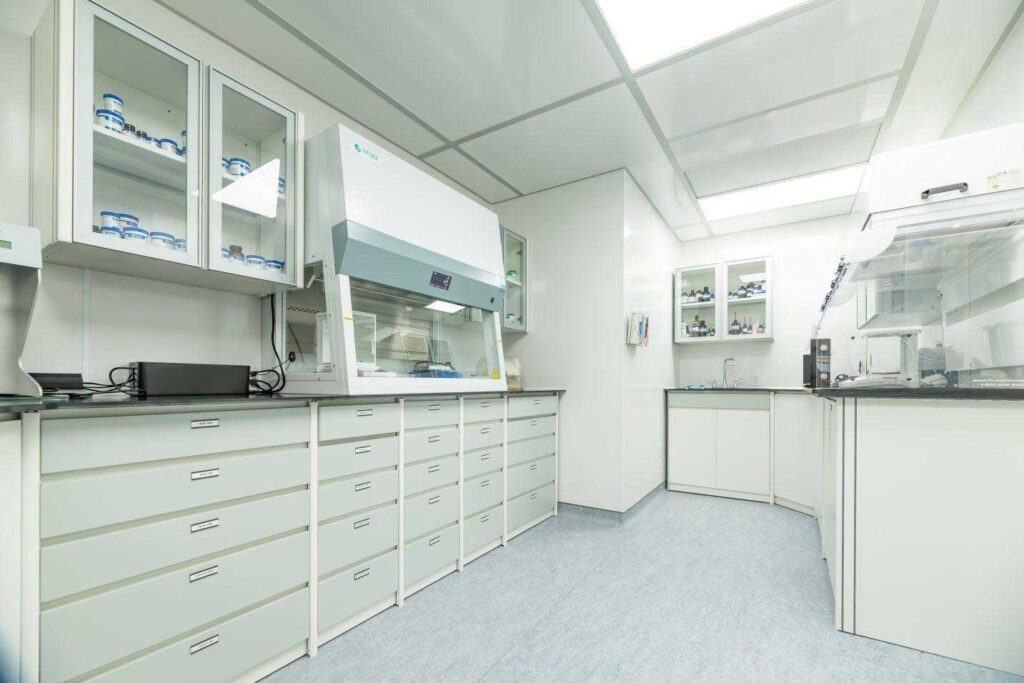
Most compounding pharmacies struggle when they treat room layout, HVAC, and workflow as separate decisions. USP 797 and USP 800 requirements touch all three at once. The fastest path to a workable design is to map the process first, then confirm the engineering controls that support it.
A clean layout gives you more control with less complexity. It supports consistent gowning, predictable material movement, and fewer door events near critical work. That also makes certification and ongoing monitoring easier to plan.
Primary Engineering Controls: PEC And C-PEC
A primary engineering control is the device where compounding work occurs, and for sterile compounding it is expected to provide an ISO 5 environment at the point of work. Where that device sits, how it is protected from traffic, and how operators work around it all affect performance.
For hazardous drugs, the containment primary engineering control is designed to limit hazardous exposure during handling and compounding. The device selection matters, but so does how the surrounding room supports containment, cleaning, and safe workflow. If the device is installed in a space that cannot hold stable pressure or exhaust, performance becomes difficult to maintain.
Secondary Engineering Controls: Buffer Rooms, Ante Rooms, And Containment Rooms
Secondary engineering controls are the rooms that support the primary device and define how people and materials approach the compounding work. In sterile compounding, this often includes an ante area for gowning and staging and a buffer area that supports the ISO 5 work zone with cleaner air and controlled access.
For hazardous drug compounding, the containment secondary engineering control is the room that supports the containment device and the containment strategy. These rooms often drive the most HVAC complexity because they may require negative pressure, dedicated exhaust, and careful make-up air design to maintain stable performance without creating comfort or door operation problems.
Hazardous Vs Non-Hazardous Suite Layouts
Non-hazardous sterile suites typically prioritize protecting the compounding environment from surrounding spaces. That often means controlling entry, reducing traffic, and maintaining pressure and airflow conditions that support the cleanest areas. Hazardous compounding adds a second objective: containment that limits outward migration and supports safe handling and cleaning.
In many pharmacies, the practical challenge is supporting both hazardous and non-hazardous workflows without cross-contamination. That usually calls for clear separation in space or time, supported by engineering controls that match the workflow. If you want examples of how sterile compounding suites are laid out and executed, see one of our sterile compounding pharmacy projects.
If your facility supports both sterile and non-sterile compounding, the layout and HVAC strategy must also support different risk profiles and cleaning regimes. A project example that includes both sterile and non-sterile pharmacy compounding can help you visualize separation and workflow planning.
Space And Engineering Controls At A Glance
The table below is a planning tool, not a substitute for your local interpretation and certification requirements. It is meant to help you connect the type of compounding you perform with the engineering controls that usually drive room layout and HVAC decisions.
Use this early in design, and revisit it before procurement and construction. Many compliance problems start when the device is selected first and the room systems are treated as an afterthought.
| Activity And Drug Type | Primary Control Expectation | Typical Pressure Direction Goal | Key HVAC Consideration | Common Design Pitfall |
| Non-hazardous sterile compounding | ISO 5 PEC at point of work | Protective approach that supports cleaner to less-clean transitions | Stable airflow and pressure control across doors | Excess traffic or door events near the PEC |
| Hazardous sterile compounding | ISO 5 C-PEC with containment intent | Containment approach using negative pressure strategy where required | Exhaust and make-up air capacity that holds containment | Undersized exhaust or unstable pressure control |
| Hazardous non-sterile compounding | C-PEC for containment, ISO 5 may not apply | Containment approach using negative pressure strategy where required | Dedicated exhaust paths and safe workflow | Mixing hazardous workflow with non-hazardous areas |
How To Use This Table During Planning
Start by identifying what you compound today and what you expect to compound over the next 3–5 years. Then map the highest-risk steps and where they occur. If hazardous and non-hazardous workflows share staff, doors, or staging areas, plan separation early so you do not rely on procedural controls alone.
Next, use the HVAC column as a scoping checklist. Ask whether you have adequate exhaust capacity, adequate make-up air, and a realistic plan to control pressure relationships during occupancy and door events. Those questions often determine whether a retrofit is simple, complex, or impractical without wider building changes.
Environmental And HVAC Requirements That Drive Compliance
In compounding facilities, HVAC is not only about comfort. It is a control system that holds air quality, pressure relationships, and recovery after disturbances. When HVAC cannot hold those conditions, the facility becomes difficult to certify and harder to operate without recurring deviations.
A practical HVAC plan starts with the pressure strategy, then confirms airflow delivery and exhaust paths, and finally addresses comfort. This order helps avoid designs that look compliant on paper but behave unpredictably in real use.
Pressure Relationships And Containment
Pressure direction matters because it determines where air wants to go when doors open, people move, or the system drifts. For sterile compounding areas, the common objective is to protect cleaner spaces from less-clean spaces through controlled transitions. For hazardous compounding, the objective shifts to containment so hazardous material does not migrate outward.
Pressure problems often show up as nuisance issues that are actually compliance issues, such as doors that are hard to open, rooms that feel drafty, or alarms that trigger during routine work. These are usually symptoms of an exhaust and make-up air imbalance or a control strategy that cannot handle real door cycles.
Air Change Strategy And Airflow Behaviour
Airflow supports dilution, recovery, and stability. Even without quoting specific targets, the design needs enough air to recover after normal activity while holding pressure relationships and protecting the work zone. Airflow behaviour also depends on layout, as equipment and people can create turbulence and dead zones.
A good design anticipates real movement. It considers where staff gown, how supplies enter, where waste exits, and how often doors open. When airflow and workflow align, the suite stays stable and certification is easier to repeat.
Filtration, Terminal HEPA, And Exhaust Planning
Sterile compounding relies on high-efficiency filtration at the point of work, and the rest of the suite needs to support that with predictable airflow and clean transitions. Hazardous compounding adds an exhaust requirement that can change the entire mechanical approach, especially when external venting and make-up air must be coordinated with building constraints.
Exhaust planning is often where retrofits fail. If the roof discharge path is not feasible, or if the building cannot supply enough make-up air without destabilizing adjacent areas, containment becomes hard to maintain. Address exhaust routing, intake separation, and balancing early, before construction begins.
Temperature And Comfort Without Compromising Control
Compounding suites can run cold because high airflow rates and exhaust demands can pull the space away from comfortable conditions. If staff are uncomfortable, they tend to adjust behaviour, open doors longer, or improvise with fans and heaters, which can create compliance risk.
A better approach is to design comfort into the system from the start. That may include careful air distribution, load calculations that match actual equipment and occupancy, and control tuning that keeps the suite stable while maintaining workable conditions for staff.
Segregated Compounding Areas And Where They Create Risk
Segregated compounding areas exist because some pharmacies face space, budget, or schedule limits that make a full cleanroom suite difficult in the near term. They are often treated as an “interim” step, but they carry real planning implications because the surrounding environment may not provide the same level of control as a dedicated suite.
If you are considering a segregated approach, define its purpose clearly. Decide what work will be done there, what the limits are, and what conditions would trigger a move to a full suite. This keeps the facility from getting stuck in a higher-risk operating model indefinitely.
What An SCA Or C-SCA Means In Real Facilities
A segregated compounding area is typically an arrangement where the primary engineering control is placed in a space that is not a full ISO-classified cleanroom suite. The idea is to create a controlled zone around the device, often with tighter workflow controls and cleaning, even if the surrounding space is not classified like a buffer and ante arrangement.
For hazardous drugs, a containment segregated compounding area introduces additional complexity because containment is not optional. If the space cannot hold negative pressure or support exhaust planning, risk increases quickly. In both cases, the facility must treat segregated areas as a deliberate design and operational decision, not a convenience.
Regulatory Risk Signals For Unclassified Or Segregated Setups
Regulators have raised concerns about sterile compounding performed in ISO 5 areas located within unclassified spaces, because surrounding conditions can undermine sterility assurance and increase risk. If your plan relies on a segregated model, expect scrutiny and plan documentation that clearly defines what you do, how you control it, and what limits apply.
This is not only about the room. It is also about workflow, traffic, cleaning, staging, and how often the device is exposed to disturbances from adjacent activity. If the area cannot be controlled in practice, the risk is difficult to manage with policy alone.
If You Must Use An SCA, What To Clarify Up Front
Start by clarifying scope and limits. Define which preparations are permitted, how beyond-use and workflow controls will be managed, and what conditions are required for operation. Align those decisions with your regulator and certifier before build-out so you do not invest in a space that cannot be approved.
Then plan the path forward. If the segregated model is temporary, document the upgrade plan, budget triggers, and timeline. This helps your team avoid “temporary” solutions that become permanent sources of operational risk.
Hazardous Drug Compounding Requirements Under USP 800
Hazardous drug requirements tend to drive the largest mechanical and architectural impacts because they touch containment, exhaust, storage, and cleaning. Many pharmacies discover late that a hazardous build-out is not only a room question but also a building capacity question. If the building cannot support exhaust and make-up air needs, containment will be unstable.
A strong hazardous plan maps the entire lifecycle of the drug in the facility: receiving, storage, compounding, cleaning, waste, and exits. That flow determines where containment needs to be strongest and where separation is required.
Containment Engineering Controls And Negative Pressure Rooms
Containment engineering controls aim to reduce exposure and prevent migration of hazardous material. Negative pressure strategies often play a role because they pull air inward rather than pushing air out toward adjacent areas. However, negative pressure only works when the HVAC system can hold it during real door cycles and occupancy.
The design also needs to account for what happens to the exhausted air. Containment typically requires a deliberate exhaust approach, and that can require coordination with roof discharge locations, intake separation, and the building’s make-up air capacity.
Hazardous Drug Storage And Receiving Areas
Hazardous drug exposure risk does not start at the hood. It can start at receiving, unpacking, and storage, especially when packaging is contaminated or damaged. A facility plan that ignores receiving often shifts risk to uncontrolled areas and increases the chance of residue tracking.
OSHA’s hazardous drug guidance discusses engineering controls used to prevent exposure, including ventilation practices and negative-pressure room concepts used in healthcare environments. Use that guidance as a baseline conversation starter when defining storage and handling controls in your facility.
Cleaning, Decontamination, And Workflow Separation
Cleaning and decontamination are easier when the facility is designed for them. Smooth, cleanable surfaces, clear transitions between spaces, and dedicated areas for hazardous workflows reduce the chance that residues migrate into non-hazardous areas. This also supports staff confidence and consistent behaviour.
Workflow separation is a practical control. When hazardous and non-hazardous activities share staging, carts, or pass-throughs, cross-contamination risk increases. A clear path for hazardous drugs, including waste exit routes, reduces uncertainty and helps you document a defensible system.
Certification, Monitoring, And Documentation Expectations
Certification and documentation are where good designs prove they work. A compounding suite that cannot be tested easily, or that changes behaviour whenever filters load or doors open, becomes difficult to keep compliant. Planning certification early reduces redesign and helps avoid downtime surprises.
Monitoring and documentation should support day-to-day operations. The goal is repeatable control that stays stable between certifications, not a design that only works under perfect conditions.
Certification And Re-Certification Planning
Certification typically verifies that the rooms and devices meet the intended performance, including airflow-related conditions, pressure relationships, and other environmental controls. Re-certification is often required on a schedule and after meaningful changes such as equipment moves, HVAC modifications, or major maintenance.
Design for certifiability. That means providing access for testing, planning for downtime windows, and ensuring your mechanical design can hold stable conditions during the tests your certifier performs. A facility that is hard to test tends to be hard to operate.
Environmental Monitoring And Sampling Strategy Basics
Monitoring is most useful when it aligns with risk points. In compounding, those risk points often sit around workflow transitions, staging areas, and the point of compounding work itself. A monitoring plan should reflect how the space is actually used, including routine interventions and cleaning schedules.
Treat monitoring as feedback. If trends show issues at a particular transition or during specific workflows, that is often a sign to adjust either the engineering controls, the workflow, or both. This approach is more effective than adding more samples without changing the underlying cause.
Documentation That Makes Inspections Easier
Inspections go more smoothly when documentation tells a clear story: what the facility is designed to do, how it is maintained, what changed, and what was verified. Keep current as-builts, HVAC sequences, pressure monitoring records, maintenance logs, and certification reports organised and accessible.
Change control matters. When you move a device, change a room function, or modify HVAC, document what changed, why it changed, and how you verified performance afterward. This makes your compliance posture more defensible and reduces time spent explaining gaps.
Common Design And Retrofit Mistakes For USP 797 And USP 800 Pharmacies
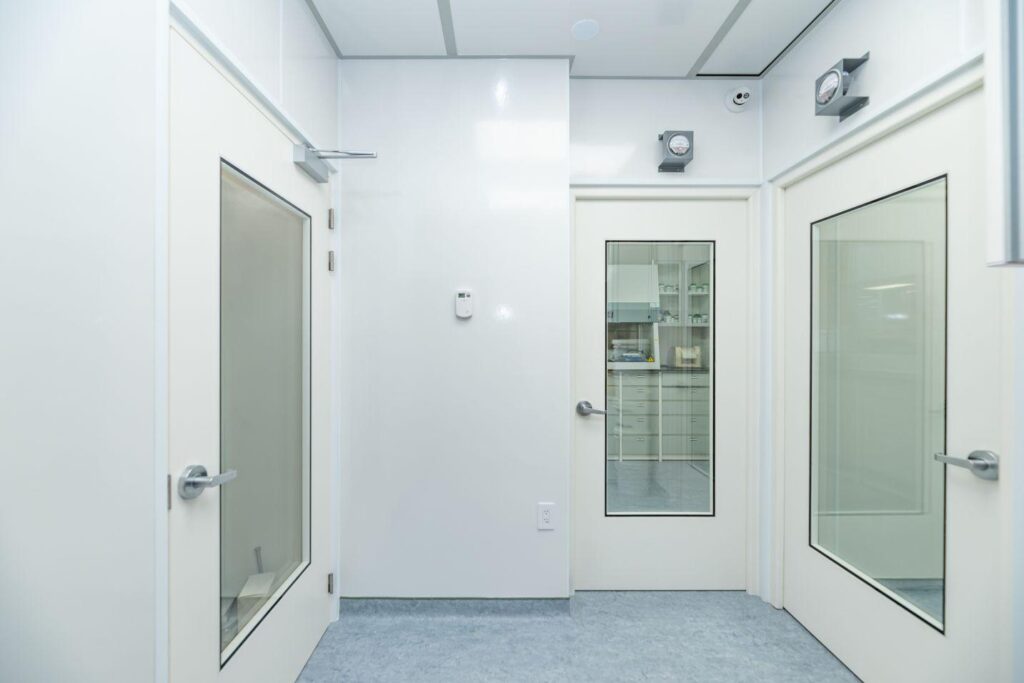
Many compounding facilities fail compliance not because the team lacks effort, but because the design does not match real workflow and building constraints. The most common mistakes cluster around separation, exhaust and make-up air, and transitions between rooms. These are fixable, but they can be expensive if discovered late.
A practical way to reduce rework is to run a design review that includes operations, QA, and facilities engineering. That review should stress-test the suite under realistic use: traffic, door cycles, cleaning, and maintenance access.
Mixing Hazardous And Non-Hazardous Workflows In Shared Spaces
Shared staging areas, shared carts, and shared pass-throughs are common sources of cross-contamination risk. Even if the primary engineering controls are appropriate, shared workflow paths can undermine the intent of separation and increase exposure risk.
If you must share spaces, define strict scheduling and cleaning controls, and document how you prevent crossover. In many cases, physical separation is simpler and more reliable than procedural controls, especially as staff turnover and workload change.
Underestimating Exhaust And Make-Up Air Needs
Hazardous designs often require more exhaust capacity and more make-up air than teams expect. If the building cannot provide the make-up air, negative pressure becomes unstable and can affect adjacent spaces. If exhaust routing is not feasible, the project can stall late in design.
Confirm building constraints early. Check roof discharge feasibility, intake separation, and mechanical capacity before committing to a layout. This is one of the highest-leverage steps for avoiding costly redesign.
Poor Transitions Between Rooms
Room transitions are where cleanroom performance often breaks down. Door placement, door swing, pass-through usage, and airlock logic affect both pressure stability and cleanliness control. When transitions are poorly planned, the suite becomes sensitive to routine movement.
Design for real movement, not ideal movement. That means aligning doors and staging with workflow, minimising unnecessary crossings near critical areas, and making it easy for staff to follow the intended path without workarounds.
Treating Compliance As A One-Time Build Instead Of An Operating System
A compounding cleanroom is not a static asset. Filters load, equipment moves, repairs happen, and workflows evolve. If the design does not support maintenance access, safe filter changes, and predictable certification, the facility will drift over time.
Build for lifecycle. Provide serviceable housings, accessible monitoring points, and layouts that can accommodate future equipment without blocking airflow or creating new risk points. This approach reduces long-term cost and keeps compliance more stable.
Canada And USA Requirements: USP And NAPRA Alignment For Compounding Pharmacies
Compounding requirements can look different across jurisdictions even when the contamination control principles are similar. In the United States, USP 797 and USP 800 are widely referenced and are often enforced through boards of pharmacy, accreditation bodies, and inspection frameworks. In Canada, requirements are often guided by NAPRA model standards and provincial regulators, with facility expectations shaped by local enforcement.
If you operate across Canada and the USA, the safest strategy is to design to the strictest realistic interpretation that applies to your practice, then document how the facility meets those expectations. This reduces the chance of rework when oversight changes or service lines expand.
How USP And NAPRA Relate In Practice
USP and NAPRA both aim to reduce patient risk and staff exposure by setting expectations for environmental controls, workflow separation, and verification. While terminology and enforcement differ, the design themes are consistent: control the environment where compounding happens, reduce disturbance, and prove performance through certification and records.
For Canadian pharmacies that need a NAPRA-focused view of cleanroom and compounding requirements, see our overview of NAPRA compounding standards and how they influence facility design and verification.
How To Avoid Rework When You Operate Across Jurisdictions
Start with design principles that travel well. Use clear separation for hazardous and non-hazardous workflows, plan a stable pressure strategy, and engineer exhaust and make-up air capacity that can hold conditions during real operations. These choices reduce the chance that a facility passes in one jurisdiction and struggles in another.
Documentation is the other half of rework prevention. Maintain current as-builts, certification records, and a change control trail that is consistent across sites. A facility that is well documented is easier to defend, even when enforcement expectations shift.
Modular Options For Pharmacy Cleanrooms
Modular cleanrooms can be a practical option when you need speed, reduced disruption, or phased upgrades in an active pharmacy. A modular approach can also help when space constraints make a traditional build difficult, because modular systems can be planned around existing services and workflow paths.
If you want to see how modular cleanrooms can support pharmacy compounding requirements in practice, review this modular cleanroom project example.
Plan A USP-Compliant Cleanroom For Your Compounding Pharmacy
USP 797 and USP 800 compliance is easier to maintain when the facility is designed as a system: rooms, devices, HVAC, workflow, and certification planning all aligned from day one. If you are building new, retrofitting, or responding to inspection findings, the highest-impact work is clarifying your compounding scope, mapping hazardous and sterile workflows, and confirming that HVAC can hold ISO air quality and pressure relationships under real operating conditions.
ACH Engineering supports compounding pharmacy cleanrooms with turnkey design, supply, and installation, integrated in-house engineering across architectural, mechanical, HVAC, and electrical disciplines, and experience delivering ISO- and GMP-aligned environments adapted to pharmacy operations. To discuss your suite layout, containment strategy, and certification planning, start with our compounding pharmacy cleanroom team.
Frequently Asked Questions
USP 797 focuses on sterile compounding controls to reduce contamination risk and protect patient safety. USP 800 focuses on hazardous drug containment to reduce staff exposure and prevent hazardous contamination from spreading to other areas.
Sterile compounding is commonly performed in an ISO 5 environment at the primary engineering control. Supporting room requirements depend on the compounding model, workflow, and how the standard is applied by your regulator and certifier.
Many compliant sterile compounding designs use a suite approach that includes an ante area supporting a buffer area that houses the primary engineering control. The exact configuration depends on risk, scope of compounding, and jurisdictional enforcement.
Hazardous drug compounding commonly relies on a containment strategy that includes negative pressure in the appropriate room(s), supported by exhaust and make-up air design that keeps pressures stable during real operations.
Some facilities use segregated compounding areas, but they can increase risk and regulatory scrutiny if the surrounding environment is unclassified or difficult to control. If you consider this approach, define limits clearly and confirm expectations with your authority having jurisdiction.
Certification is typically performed on a regular schedule and after meaningful changes such as equipment moves, HVAC adjustments, or major maintenance. Your certifier and regulator will guide the cadence and triggers that apply to your facility.
The safest approach is clear separation of workflows and spaces, supported by containment controls for hazardous drugs and protective controls for sterile compounding. When separation is limited, the facility needs strong procedural controls and documentation to manage crossover risk.
Canadian compounding requirements are typically guided by NAPRA model standards and provincial regulators. Many design principles align with USP-based contamination control and containment concepts, but you should confirm requirements with your provincial authority and certifier.
GET IN TOUCH
Complete the form below to get in touch with our team.