

ISO 7 Cleanroom Requirements and Classification: Compliance Guide for Pharma and Medical Device Facilities

What Is an ISO 7 Cleanroom?
An ISO 7 cleanroom (ISO Class 7) is a controlled environment that holds airborne particles at or below 352,000 particles per cubic metre at 0.5 µm and larger, as defined by ISO 14644-1. It is the modern equivalent of the old FS 209E Class 10,000 cleanroom and matches EU GMP Grade C in the at-rest state.
ISO 7 is one of the most widely specified cleanroom classes in pharmaceutical manufacturing, sterile compounding, biotech and medical device production. It is clean enough to protect sensitive processes and to serve as the buffer around ISO 5 work zones, yet far more economical to build and run than ISO 5 or ISO 6 space.
Why ISO 7 matters: many manufacturers struggle with contamination during non-sterile processing, buffer zone operations and material preparation. ISO 7 gives these support areas the contamination control they need without the cost of an ISO 5 environment.
This guide covers:
- The ISO 14644-1 particle limits that define ISO 7
- ISO 7 cleanroom requirements for HVAC, air changes per hour (ACPH), pressure, materials and monitoring
- How ISO 7 compares with ISO 5, ISO 6, ISO 8, EU GMP Grade C and Class 10,000
- Where ISO 7 is used, and how to validate it and keep it certified
ISO 7 Cleanroom Requirements at a Glance
| Requirement | ISO 7 Value | Reference |
|---|---|---|
| Particles ≥ 0.5 µm | 352,000 per m³ (about 10,000 per ft³) | ISO 14644-1:2015 |
| Particles ≥ 5.0 µm | 2,930 per m³ | ISO 14644-1:2015 |
| Air changes per hour | 30–60 ACPH typical; minimum 30 ACPH for compounding rooms | Industry practiceUSP <797> |
| HEPA filtration | H13 or H14 terminal filters | EN 1822 |
| Pressure differential | +10 to +15 Pa to the lower-class room | EU GMP Annex 1Guidance value |
| Airflow pattern | Non-unidirectional (turbulent, mixing) | ISO 14644-4 |
| Temperature and humidity | Usually 18–22 °C, RH 30–60% (USP <797>: 20 °C or cooler, RH below 60%) | Project specificationUSP <797> |
| Classification test | At least once a year | ISO 14644-2:2015 |
| GMP requalification | Every 12 months (Grade C) | EU GMP Annex 1 |
| Equivalents | FS 209E Class 10,000; EU GMP Grade C (at rest) |
TLDR
- ISO 7 limits particles to 352,000/m³ (≥0.5 µm), equivalent to FS 209E Class 10,000 and EU GMP Grade C at rest
- Requires HEPA filtration, typically 30-60 air changes per hour, and +10-15 Pa pressure to adjacent lower-class areas
- Serves as the buffer room around ISO 5 work zones in sterile compounding and aseptic support areas
- Modular construction can cut cost and build time compared with stick-built rooms
- Validation follows IQ, OQ and PQ, with recertification at least once a year
ISO 7 Cleanroom Classification Explained
ISO Class 7 Particle Count Limits
ISO 14644-1:2015 defines ISO Class 7 by the maximum number of airborne particles allowed per cubic metre of air at three particle sizes:
| Particle Size | Maximum Particles Per m³ | Approx. Per ft³ |
|---|---|---|
| ≥ 0.5 µm | 352,000 | 10,000 |
| ≥ 1.0 µm | 83,200 | 2,356 |
| ≥ 5.0 µm | 2,930 | 83 |
ISO 14644-1 lets the owner classify a room in one of three occupancy states: as-built (empty, systems running), at rest (equipment installed and running, no people) or operational (normal work under way). The state must be stated with the class. EU GMP Grade C uses ISO 7 for the at-rest state, while USP <797> requires ISO 7 to be met under dynamic operating conditions.
ISO 7 and Class 10,000: The FS 209E Relationship
ISO 7 corresponds to Class 10,000 under US Federal Standard 209E, which was cancelled in 2001 and replaced by ISO 14644-1. Many North American specifications, drawings and older facilities still say “Class 10,000 cleanroom”, so it helps to know both names when upgrading a legacy room or reading an old URS.
Air Changes per Hour (ACPH) for ISO 7
ACPH, short for air changes per hour, is how many times the full volume of room air is replaced with HEPA-filtered supply air every hour. ISO 7 rooms typically run at 30-60 ACPH, which dilutes and removes particles fast enough to hold the class limits.
For sterile compounding, USP <797> sets a minimum of 30 HEPA-filtered ACPH for ISO 7 buffer rooms, with at least 15 of those coming from the HVAC system. The right figure for a manufacturing room depends on the heat load, the number of people, the processes and the recovery time you must prove. ISO 14644-16 recommends designing airflow from these factors rather than defaulting to a high fixed rate, because fan energy is one of the largest running costs of any cleanroom.
Airflow characteristics:
- Non-unidirectional (turbulent) flow is standard for ISO 7, relying on mixing and dilution rather than displacement
- Unidirectional (laminar) flow is only needed in local ISO 5 zones inside the ISO 7 room, such as a laminar flow hood or biological safety cabinet
- Good air distribution prevents dead zones where particles accumulate
How to Calculate ACPH (ACPH Formula)
The ACPH formula in imperial units is:
Where ISO 7 Sits in the ISO Class Hierarchy
ISO 14644-1 has nine classes, from ISO 1 (cleanest) to ISO 9. Each step is a tenfold change in the allowed particle count:
- 10x cleaner than ISO 8 (3,520,000 particles/m³), which often serves as gowning or ante-room space
- 10x less stringent than ISO 6 (35,200 particles/m³), used for sensitive device assembly
- 100x less stringent than ISO 5 (3,520 particles/m³), the standard for aseptic processing zones
This middle position makes ISO 7 ideal as a buffer or background environment that protects more critical ISO 5 zones from contamination.
ISO 7 vs. Other Cleanroom Classifications
ISO 5, ISO 6, ISO 7 and ISO 8 Compared
Comparing ISO 7 with the classes on either side helps match the room to the process:
| Factor | ISO 5 | ISO 6 | ISO 7 | ISO 8 |
|---|---|---|---|---|
| Max particles ≥ 0.5 µm per m³ISO 14644-1:2015 | 3,520 | 35,200 | 352,000 | 3,520,000 |
| Cleanliness vs. ISO 7 | 100× cleaner | 10× cleaner | Baseline | 10× less clean |
| FS 209E equivalent | Class 100 | Class 1,000 | Class 10,000 | Class 100,000 |
| Typical ACPH | 240–480Unidirectional flow | 90–180 | 30–60 | 10–25 |
| Airflow patternISO 14644-4:2022 | Unidirectional | Non-unidirectional | Non-unidirectional | Non-unidirectional |
| Typical HEPA ceiling coverage | 80–100% | 25–40% | 15–25% | 5–15% |
| Typical gowning | Sterile coverall, hood, mask, goggles, sterile gloves, boots | Coverall, hood, boots, gloves | Protective suit or coverall, hair and beard cover, dedicated shoes or overshoes, gloves | Lab coat or coverall, hair cover, shoe covers |
| Typical applications | Aseptic filling, sterile compounding hoods | Optical assembly, implantable devices | Buffer rooms, solution prep, compounding, device assembly | Gowning rooms, non-sterile packaging |
Particle limits and airflow classification are set by ISO 14644, linked above. Air change rates, HEPA ceiling coverage, gowning and applications are typical design practice, not values fixed by a standard, and are confirmed per project.
ISO 7 vs. ISO 8 Cleanrooms
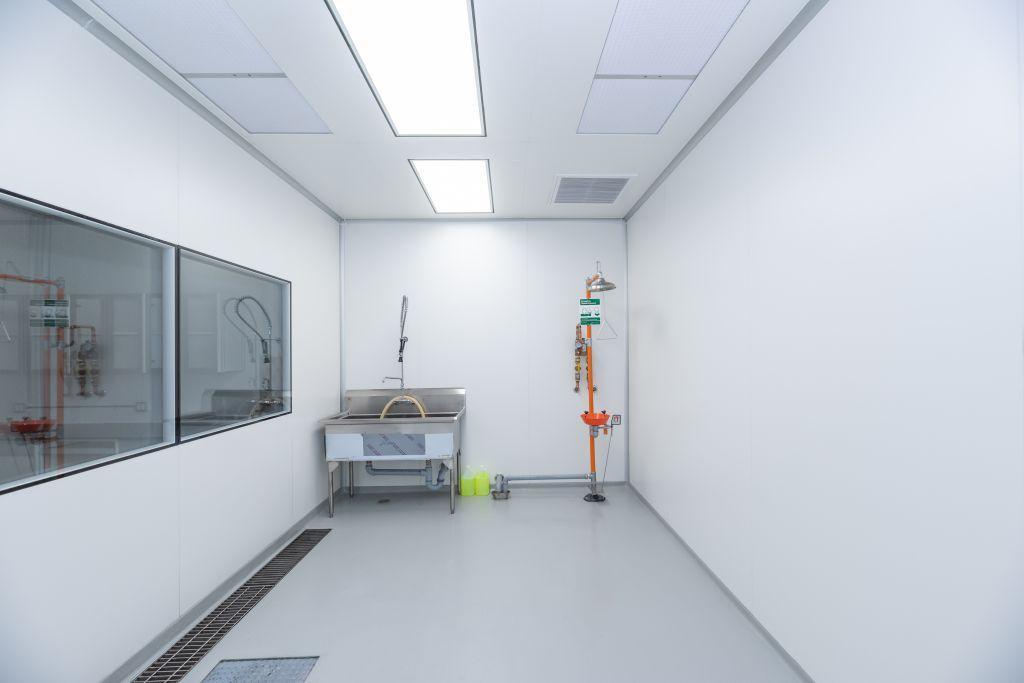
ISO 8 (Class 100,000) allows ten times more particles than ISO 7 and needs fewer air changes, typically 10-25 ACPH, with USP <797> setting a 20 ACPH minimum for ISO 8 compounding anterooms. ISO 8 is used for gowning rooms, anterooms, warehouse-side packaging and other lower-risk steps. ISO 7 is chosen when product or components are more exposed, or when the room directly surrounds ISO 5 work. Most ISO 7 suites are entered through an ISO 8 gowning room or airlock.
ISO 7 and EU GMP Grade C
For pharmaceutical facilities working under EU GMP Annex 1 (or Health Canada and PIC/S GMP, which follow the same annex), ISO 7 corresponds to Grade C in the at-rest state. This lets a manufacturer use one classification approach across North American and European markets.
Critical distinction: in operation, Grade C is allowed to rise to ISO 8 levels (3,520,000 particles/m³ at ≥0.5 µm). Annex 1 gives a guidance clean-up period of 15-20 minutes for the room to return to its at-rest limits after activity stops.
Key operational requirements:
- Recovery time drives HVAC airflow and filter layout
- Air change rates must support rapid particle clearance
- Monitoring systems track excursions and recovery
Note that under EU GMP, the background for Grade A aseptic filling is Grade B, not Grade C. Grade C is used for less critical steps such as solution preparation, component handling and filling of terminally sterilized products.
ISO 7 as a Buffer Environment
In sterile compounding and in the support areas of aseptic manufacturing, ISO 7 serves a protective function:
- Creates a contamination barrier around ISO 5 work zones
- Maintains pressure differentials that push air outward, away from the critical zone
- Provides a controlled space for people and materials to move in and out
FDA’s aseptic processing guidance expects the area immediately next to an aseptic processing line to meet at least ISO 7 under dynamic conditions. USP <797> requires the ISO 5 primary engineering control (laminar flow hood or biological safety cabinet) to sit inside an ISO 7 buffer room.
Typical positive pressure cascade:
Unclassified corridor → ISO 8 gowning (+10-15 Pa) → ISO 7 buffer room (+10-15 Pa) → ISO 5 work zone
Each step up in pressure keeps air flowing from cleaner to less clean areas, so contamination cannot drift back in when a door opens.
ISO 7 Cleanroom Design and Technical Requirements
Cleanroom HVAC System Requirements
HEPA filtration:
- Terminal filters rated H13 (≥99.95% efficiency) or H14 (≥99.995% efficiency) per EN 1822
- Typically 15-25% of the ceiling covered by HEPA filters or fan filter units (FFUs) to give even air distribution
- Installed filters leak-tested at commissioning and then at regular intervals, using the methods in ISO 14644-3
Air distribution:
- Supply air through ceiling-mounted HEPA filters
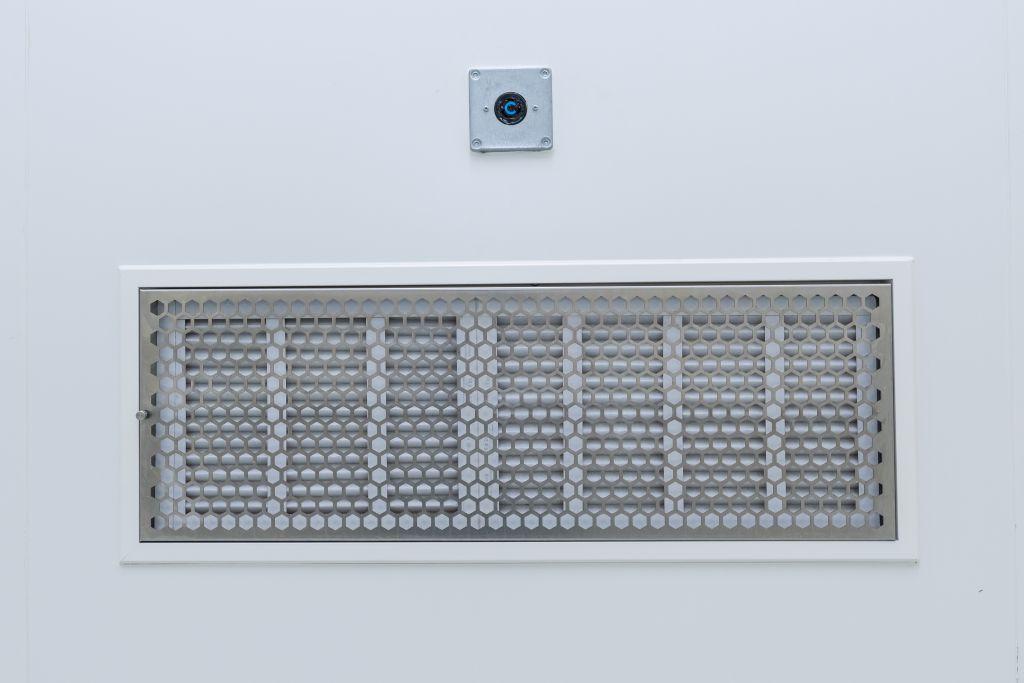
- Low-level return air grilles to promote top-to-bottom airflow and sweep particles down and out
- Computational fluid dynamics (CFD) modelling during design to avoid dead zones
- Supply and return balanced to hold the design pressure in every room
For more on integrating the air handling system with the room envelope, see Turnkey Cleanroom Construction & HVAC Integration and Cleanroom Plenum Design Guidelines.
Pressure Differential Requirements
An ISO 7 room must stay at a higher pressure than the less clean spaces around it (or lower, for hazardous drug and containment rooms), so air always moves in the right direction.
| Application | Pressure Requirement | Approx. Equivalent |
|---|---|---|
| EU GMP / Health Canada (between grades)EU GMP Annex 1 · Health Canada GUI-0119 | 10–15 Pa (guidance value) | 0.04–0.06 in. w.c. |
| USP <797> non-hazardous compoundingUSP General Chapter <797> | At least +0.020 in. w.c. between ISO classified areas | +5 Pa |
| USP <800> hazardous drug buffer roomUSP General Chapter <800> | −0.01 to −0.03 in. w.c. to adjacent spaces | −2.5 to −7.5 Pa |
Good practice for pressure control:
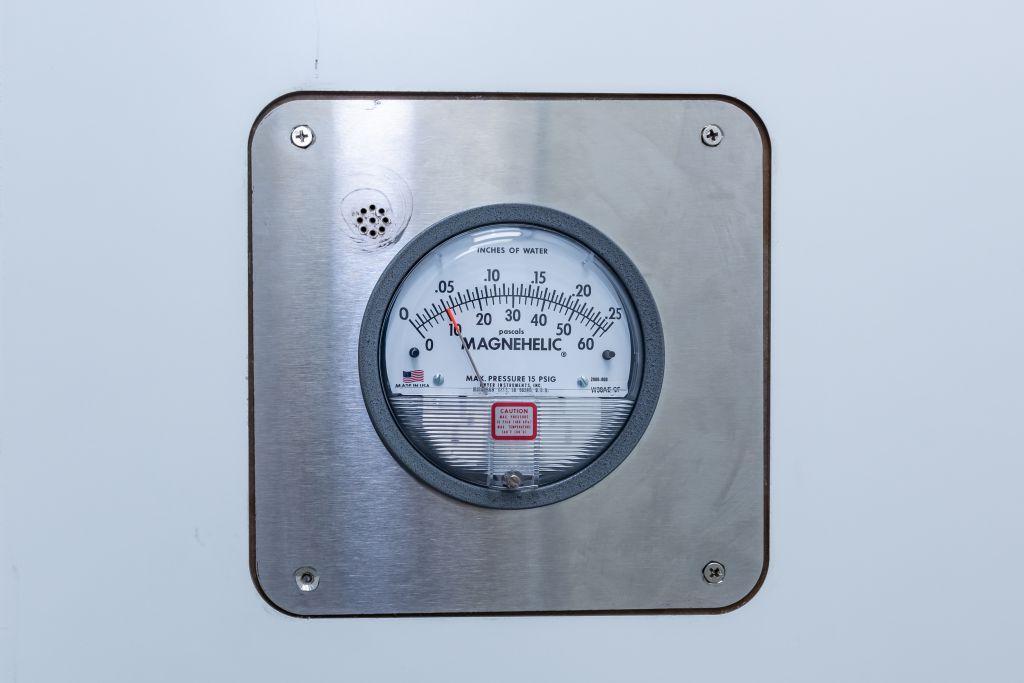
- Monitor pressure continuously and alarm when it drifts out of range
- Set control loops near the bottom of the range (around +10 Pa) to save energy while staying compliant
- Size airlocks so pressure recovers quickly after a door opens
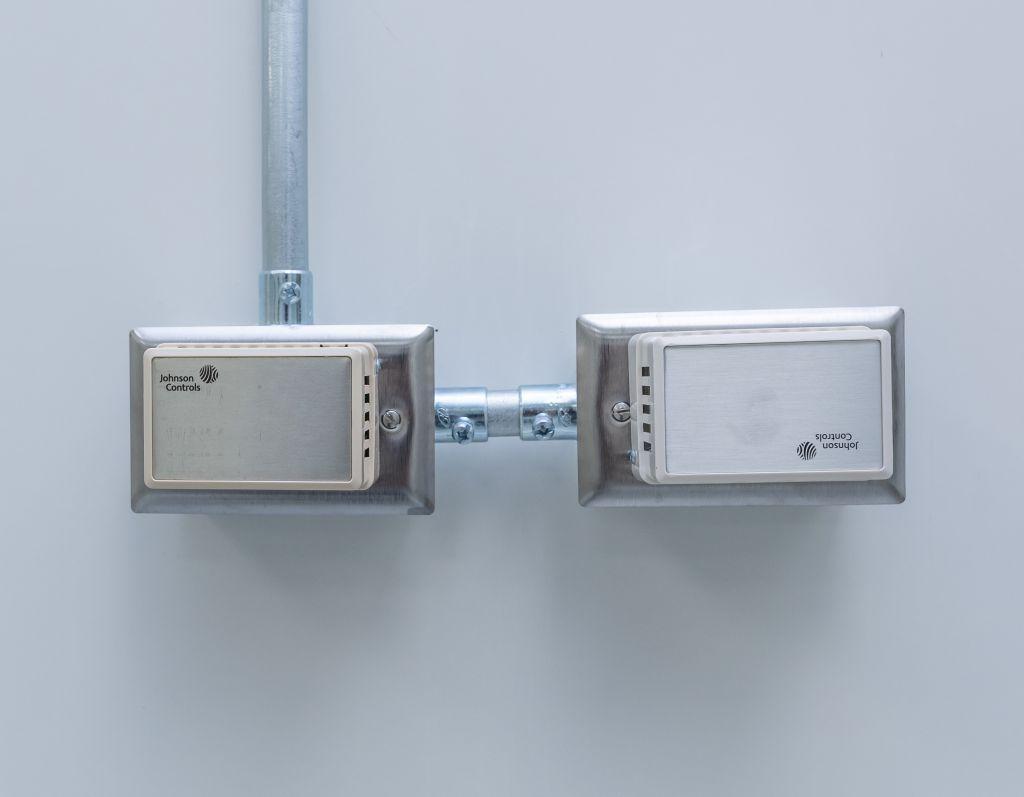
A Magnehelic gauge or manometer mounted outside each room gives operators an instant visual check of the differential. For the theory behind pressure cascades, see What is Differential Pressure?
Gowning Rooms and Airlock Requirements
ISO 7 rooms are usually entered through an ISO 8 gowning room and an airlock. Because these spaces are the last barrier before the clean zone, their layout matters as much as the HVAC.
Gowning room features:
- Clean and dirty sides separated by a bench or step-over line
- Enough room to put on coveralls, hoods, shoe covers and gloves without touching walls
- Often classified ISO 8, stepping up to ISO 7 through the airlock
Airlock design principles:
- Door interlocks, or at least a visual or audible warning, so both doors are not open at once (Annex 1 requires at least a warning system for Grade C and D airlocks)
- Enough space for a person or a material cart
- The right airlock type for the process: cascade, bubble or sink, as explained in Bubble vs. Cascade vs. Sink Airlocks
- Air showers are optional and not required for ISO 7 entry
Learn more in What Is an Airlock? Why Cleanrooms Need Airlock Rooms.
Walls, Doors, Ceilings, Coving and Flooring
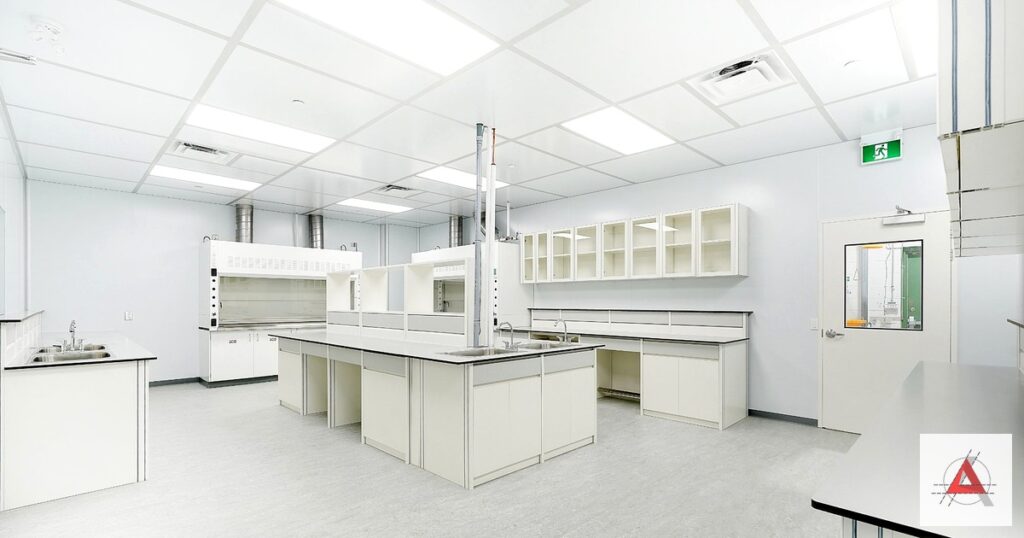
Every surface in an ISO 7 cleanroom must be smooth, non-shedding, non-porous and able to withstand repeated cleaning with disinfectants. That rules out standard painted drywall with open joints, acoustic ceiling tiles and wood finishes.
Wall systems:
- Modular metal-faced cleanroom wall panels, or epoxy-coated drywall with sealed joints
- Flush, sealed joints with no ledges where dust can settle
- Finishes that resist sporicides, hydrogen peroxide and alcohol
Cleanroom doors and windows:
- Flush-mounted cleanroom doors and vision panels with no horizontal ledges
- Door seals and drop-down bottom sweeps to hold the pressure differential
- Interlock-ready hardware for airlocks
Ceiling systems:
- Walkable ceilings let technicians service HEPA filters, lights and sprinklers from above, without entering the clean space
- Integrated, gasketed HEPA filter housings
- Smooth, sealed surfaces between filters and light fixtures
Coving:
- Radiused coving at every wall-to-floor, wall-to-wall and wall-to-ceiling joint, removing the 90-degree corners where dirt collects
- Aluminium or PVC coving profiles matched to the wall panel system
Modular cleanroom systems combine prefabricated wall panels, flush doors, walkable ceilings and coving that already meet these requirements, which shortens installation and makes later changes easier. See our Cleanroom Doors, Wall Panels and Ceilings Specification Guide for detailed specifications.
Environmental Monitoring, Cleaning and Material Flow
Environmental Monitoring Requirements
Particle counting:
- ISO 14644-2:2015 requires a written monitoring plan based on a risk assessment
- Continuous particle monitoring is not required by ISO for ISO 7, but is common in pharmaceutical facilities
- Classification testing at least once a year
- Sampling locations chosen by risk, close to where product or components are exposed
Viable (microbial) monitoring limits for EU GMP Grade C:
| Sample Type | Grade C Limit |
|---|---|
| Active air sample | 100 cfu/m³ |
| Settle plate (90 mm, 4 hours) | 50 cfu |
| Contact plate (55 mm) | 25 cfu per plate |
Limits are the maximum action levels for EU GMP Grade C in operation, as set out in EU GMP Annex 1 and adopted in Canada through Health Canada GUI-0119.
Temperature and humidity:
- Temperature is usually held around 18-22°C; cooler setpoints keep fully gowned staff comfortable and reduce shedding. USP <797> recommends 20°C or cooler for compounding rooms
- Relative humidity 30-60%: below 30% raises static electricity, above 60% encourages microbial growth (USP <797> calls for below 60%)
- Continuous monitoring with alarms on excursions
ISO Class 7 Cleanroom Cleaning Procedure
A validated cleaning and disinfection program keeps an ISO 7 room within its microbial limits. A typical ISO Class 7 cleanroom cleaning procedure follows these rules:
- Clean from the cleanest area to the least clean, and from the back of the room toward the exit.
- Clean from top to bottom: ceiling, then walls, then equipment, then floors last.
- Use low-lint cleanroom wipes and mops, with a two- or three-bucket system so dirty solution never goes back on the surface.
- Rotate a routine disinfectant with a sporicidal agent on a set schedule and respect each product’s wet contact time.
- Record every clean in a log and investigate any monitoring result above the alert or action level.
As an example of frequency, USP <797> requires compounding work surfaces and floors to be cleaned daily on days compounding takes place, walls, ceilings and storage shelving monthly, and a sporicidal agent applied at least monthly.
Personnel and Material Flow Patterns
Beyond environmental controls, the routes people and materials take through the suite protect the classification and the pressure cascade.
Cascade zoning strategy:
- Unclassified → ISO 8 (gowning) → ISO 7 (buffer) → ISO 5 (critical zone)
- Each change of class through an airlock or pass-through chamber
- Pressure differentials held at every interface
Material transfer:
- Pass-through chambers with interlocked doors
- Wipe-down and disinfection of items before they enter
- Separate routes for incoming materials, finished product and waste where possible
Planning airlock locations, pass-throughs and material routes early in design keeps the layout working for today’s process and leaves room for future changes.
ISO 7 Cleanroom Applications Across Industries
Pharmaceutical Manufacturing
ISO 7 environments support many pharmaceutical operations:
- Preparation of solutions, culture media and buffers before sterilization
- Washing and staging of containers, closures and equipment before they enter aseptic zones
- Filling of terminally sterilized products (EU GMP Grade C)
- Final packaging of tablets, capsules and other solid dose products where the process calls for it
Sterile Compounding Pharmacies (USP <797>, USP <800> and NAPRA)
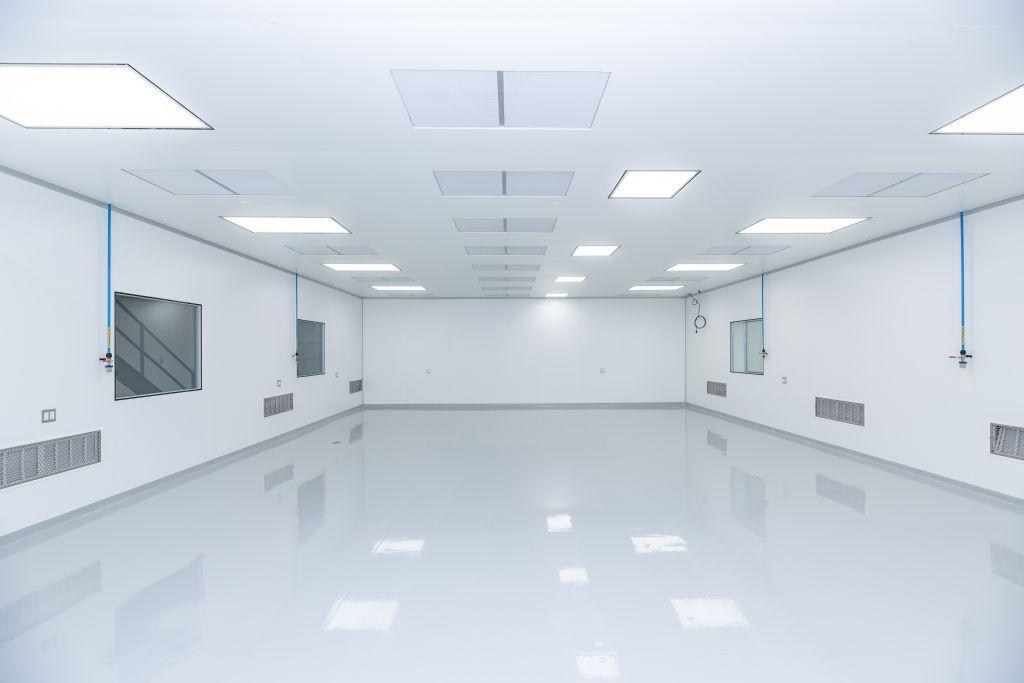
The ISO 7 buffer room is the core of every sterile compounding suite:
- USP <797>: the ISO 5 laminar flow hood or biological safety cabinet sits inside an ISO 7 buffer room, with at least 30 ACPH and positive pressure to the anteroom
- USP <800>: hazardous drugs are compounded in an ISO 7 buffer room held at negative pressure and externally exhausted
- Canada: the NAPRA Model Standards also call for an ISO Class 7 buffer room at 30 ACPH. See our guide to NAPRA compounding standards and pharmacy cleanroom design
Medical Device Manufacturing and ISO 13485
Medical device makers use ISO 7 to control bioburden before terminal sterilization:
- Assembly of devices such as surgical instruments, catheters, diagnostic components and Class II devices
- Packaging of devices before terminal sterilization
- Inspection and microbiological testing areas
ISO 13485 does not name a cleanroom class. It requires the manufacturer to define and control the work environment where contamination could affect the product. Many manufacturers choose ISO 7 or ISO 8, based on a risk assessment and on the bioburden limits their sterilization validation can handle.
Cleanroom Injection Molding
Medical and pharmaceutical parts such as syringe barrels, vials, closures and device housings are often molded in ISO 7 or ISO 8 cleanrooms. Molding presses add heat, oil mist and moving parts, so these rooms need extra air changes or local HEPA units over the mold, sealed press enclosures where possible, and careful routing of resin supply and finished parts. Cleanroom molding requirements are set by the customer’s specification and risk assessment rather than one fixed class.
Biotech, Electronics and Research
- Protein purification and formulation after initial fermentation
- Cell culture for research or therapy
- Electronics, optics and data center hardware assembly where particles cause defects
- Research labs that need contamination control for reproducible results
ACH ISO 7 Cleanroom Solutions
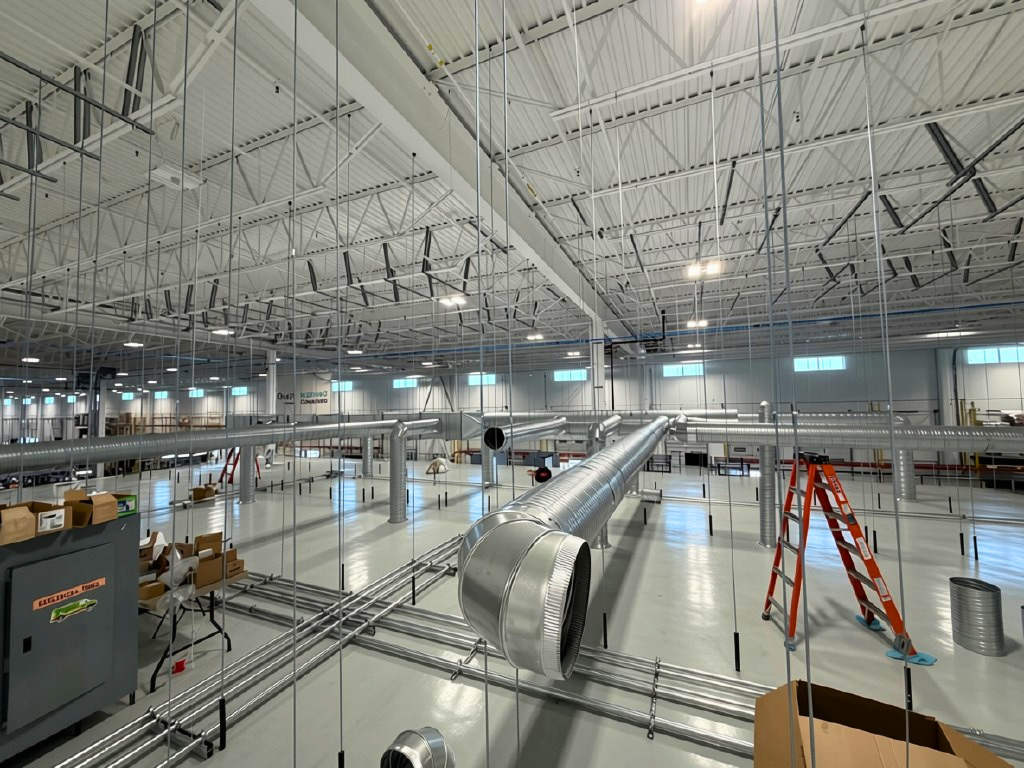
ACH designs, manufactures and installs modular ISO 7 cleanrooms for pharmaceutical manufacturers, compounding pharmacies, biotech companies, medical device producers, electronics makers and research laboratories across North America. Recent projects include an ISO Class 7 cleanroom expansion for data center manufacturing inside an existing warehouse in Calgary, Alberta, and a softwall-to-hardwall ISO Class 7 cleanroom replacement in Texas. See our cleanroom case studies.
ISO 7 Cleanroom Validation, Certification and Compliance
Validation Process: IQ, OQ, PQ
ISO 7 cleanrooms for regulated products go through formal qualification:
Installation Qualification (IQ):
| Stage | What It Covers |
|---|---|
| IQInstallation qualification |
|
| OQOperational qualification |
|
| PQPerformance qualification |
|
For the design and construction steps that lead up to qualification, see our ISO 14644-4 Cleanroom Design & Construction Guide.
Ongoing Certification and Testing Frequencies
| Test | Typical Frequency | Reference |
|---|---|---|
| Particle count classification | At least every 12 months | ISO 14644-2:2015 |
| Full room certification (airflow, HEPA integrity, particles, pressure) | Every 6 months | USP <797>, compounding rooms |
| Requalification | Every 12 months | EU GMP Annex 1, Grade C |
| HEPA filter leak test | Every 6–12 months, based on risk | Site program; USP <797> |
| Pressure differential | Continuous, with alarms | GMP practice |
| Microbial monitoring | Per the monitoring plan: daily, per batch or periodic | Site program; EU GMP Annex 1; USP <797> |
Documentation:
- Written cleaning, sanitization and maintenance procedures (FDA 21 CFR 211.42 and 211.67)
- Records showing ISO 7 is held under operating conditions
- Deviation investigations for any result outside specification
- Periodic trend reports on environmental data
Regulations and Standards That Reference ISO 7
- ISO 14644-1 and 14644-2: define the ISO 7 particle limits, how to test them and how often
- FDA cGMP (21 CFR 211) and FDA aseptic processing guidance: expect at least ISO 7 in areas next to aseptic processing
- EU GMP Annex 1 (2022) and Health Canada GMP: Grade C equals ISO 7 at rest; the 2022 revision strengthened contamination control strategy requirements
- USP <797> and <800>: ISO 7 buffer rooms for sterile and hazardous drug compounding
- NAPRA Model Standards: ISO 7 buffer rooms for Canadian compounding pharmacies
Common Challenges and Best Practices for ISO 7 Cleanrooms
Design Mistakes to Avoid
Air change rates set without data:
- Defaulting to a minimum ACPH without checking recovery time and heat load
- A common approach is to design for 40-50 ACPH, then validate whether a lower rate (not below any regulatory minimum) still holds the class
Unstable pressure cascade:
- Pressure reversals from unbalanced supply and return, or from doors opening
- Continuous monitoring with alarms, and airlocks sized for quick pressure recovery
Cramped gowning rooms:
- People brushing walls and benches while gowning carry contamination in
- Give each gowning position enough space and a clear clean/dirty separation
Poor filter and return placement:
- Dead zones where air does not sweep particles away
- CFD modelling during design to place HEPA filters and low-level returns
Maintaining Compliance After Construction
Once the room is built and qualified, four areas keep it in compliance.
Gowning procedures:
- People are the largest source of contamination in a cleanroom
- Validate the gowning procedure and train everyone before they enter
- Regular competency checks and retraining
Maintenance schedules:
- Preventive maintenance for HVAC, filters and monitoring equipment
- Cleaning performed to written SOPs
- Instruments calibrated on a defined schedule
Staff training:
- Qualification training for all cleanroom staff
- Ongoing education on contamination control
- Refresher training at least once a year
Environmental monitoring practice:
- Trend analysis to catch gradual drift before a failure
- Alert levels set below action limits so problems are caught early
- Regular review of monitoring data by quality assurance
Frequently Asked Questions About ISO 7 Cleanrooms
An ISO 7 cleanroom must hold airborne particles at or below 352,000 per m³ at ≥0.5 µm. In practice that takes HEPA-filtered supply air at typically 30-60 air changes per hour, a positive pressure of about 10-15 Pa to less clean areas, smooth cleanable surfaces, controlled gowning, and an environmental monitoring program covering particles and microbes.
ISO 14644-1 sets ISO Class 7 at 352,000 particles/m³ at ≥0.5 µm, 83,200 particles/m³ at ≥1.0 µm and 2,930 particles/m³ at ≥5.0 µm. That is about 10,000 particles per cubic foot at 0.5 µm.
Most ISO 7 cleanrooms are designed for 30-60 ACPH. USP <797> sets a minimum of 30 HEPA-filtered ACPH for ISO 7 compounding rooms. Manufacturing rooms are sized from heat load, occupancy and required recovery time, then confirmed by testing.
ISO 7 is the ISO 14644-1 equivalent of FS 209E Class 10,000. It matches EU GMP Grade C in the at-rest state. In operation, Grade C allows particle counts to the ISO 8 limit.
ISO 7 is ten times cleaner than ISO 8: 352,000 versus 3,520,000 particles/m³ at ≥0.5 µm. ISO 7 needs more air changes and tighter gowning and is used for buffer rooms and exposed processes. ISO 8 is typical for gowning rooms, anterooms and lower-risk packaging.
Pharmaceutical manufacturing, sterile compounding pharmacies (USP <797>/<800> and NAPRA), medical device assembly and molding, biotech, electronics and research laboratories all use ISO 7 cleanrooms for contamination-sensitive work.
Costs range from about $250-350 CAD/ft² for modular construction to $350-500 CAD/ft² for traditional stick-built rooms. Project size, HVAC complexity, the existing building and location all have a large effect on the final price.
USP <797> uses ISO 7 as the minimum class for buffer rooms and adds its own rules on top: at least 30 ACPH, +0.020 in. w.c. pressure between classified rooms, certification every 6 months, and ISO 7 met under operating conditions. USP <800> adds negative pressure and external exhaust for hazardous drugs.
After initial IQ, OQ and PQ, ISO 14644-2 requires classification at least once a year. Compounding rooms under USP <797> are certified every 6 months, and EU GMP Grade C areas are requalified at least every 12 months. Pressure is monitored continuously.
Achieve ISO 7 compliance with a custom cleanroom. Request a quote and our engineers will contact you within 24 hours with a tailored solution and pricing, or call +1-866-936-4439 or email sales@achengineering.com.
GET IN TOUCH
Complete the form below to get in touch with our team.