
Architectural Design Principles for High-Performance ISO Cleanrooms

ISO cleanroom design principles play a critical role in contamination control and facility efficiency. In high-stakes manufacturing environments—such as pharmaceuticals, semiconductors, and biotechnology—the architectural design of a cleanroom is not merely about creating a workspace; it is engineering as a precision instrument. A high-performance cleanroom relies on a symbiotic relationship between architectural geometry, material science, and mechanical systems.
While HVAC systems are often credited with the heavy lifting of air filtration, the cleanroom architecture provides a critical envelope that makes contamination control possible in air filtration. Cleanroom architecture provides a critical envelope that minimizes particle retention, regulates personnel flow, and ensures that the facility can maintain strict ISO standards without excessive energy consumption.
This article outlines the fundamental architectural principles required to design high-performance cleanrooms, with a focus on contamination control, facility integration, and compliance with ISO and regulated manufacturing standards.
ISO Cleanroom Design Principles
Contamination control is the primary directive of any cleanroom architecture. The physical layout must actively discourage the ingress of particulate matter and microorganisms. This is achieved through three primary architectural mechanisms: strategic zoning, controlled airlock systems, and defined personnel and material transition protocols.
ISO Cleanroom Design Principles in Zoning and Transition Logic
The layout must be designed with an “onion-peel” concept, moving from uncontrolled general access areas to progressively cleaner zones. Architects must designate:
Uncontrolled Zones
General corridors and offices.
Controlled Zones (CNC)Zones
Transitional areas that support gowning, material staging, and pressure cascades.
Classified Zones
The active cleanroom environment (e.g., ISO 7 or ISO 5).
To maintain the integrity of these zones, transitions must be seamless. Sharp corners, exposed ledges, and porous materials are potential reservoirs for contaminants. Therefore, architectural specifications should prioritize coved corners, flush-mounted glazing, and smooth, impervious wall systems that withstand aggressive cleaning agents and support cGMP operations.
Airlock Design: PAL and MAL
Airlocks function as the architectural and operational guardians of the cleanroom. They serve as buffer zones that maintain the pressure differential between the cleanroom and the external environment. High-performance design separates these into:
Personnel Airlocks (PAL)
Specifically designed for gowning protocols. These require adequate floor area for step-over benches, gowning storage, handwashing stations, and controlled circulation paths that enforce gowning compliance. These ISO cleanroom design principles ensure optimal airflow, contamination control, and long-term operational efficiency.
Material Airlocks (MAL)
Designed for the transfer of equipment and raw materials. These typically incorporate interlocked door systems to prevent simultaneous opening and loss of pressure integrity.
Architects must size these airlocks based on peak personnel movement and material throughput to prevent congestion that could compromise gowning discipline or pressure control. For more on optimizing these layouts, visit ACH Engineering.
ISO Cleanroom Design Principles for Facility Integration
A cleanroom does not exist in isolation; it must be deliberately integrated into the host facility’s architectural and mechanical framework.This integration presents unique structural and mechanical challenges that must be addressed during the early design phases.
Structural Impact and Load-Bearing Considerations
High-performance cleanrooms often utilize heavy-duty ceiling grids to support Fan Filter Units (FFUs) and lighting. The host building’s existing structure must be evaluated to ensure it can bear this additional static and dynamic load. In many regulated facilities, a “box-in-box” approach is adopted, creating a self-supporting cleanroom structure that isolates sensitive operations from building-induced vibration. This isolates the cleanroom from external vibrations—a critical factor for nanotechnology and microelectronics facilities.
HVAC and Mechanical Integration
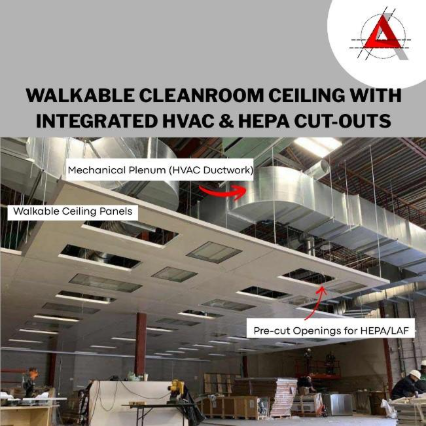
The architectural volume must account for significant mechanical overhead. Unlike standard office spaces, cleanrooms require massive ductwork for supply and return air.
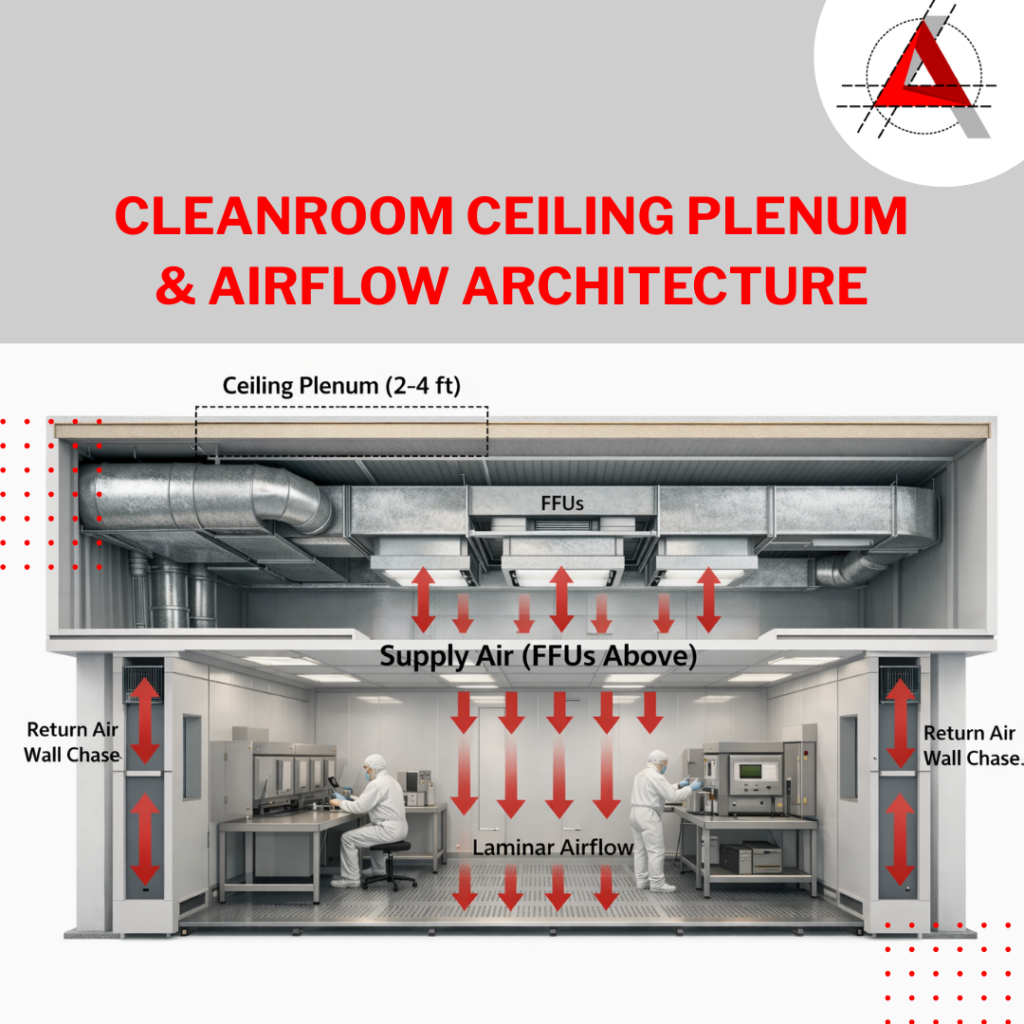
- Plenum Space: Architects must allocate sufficient ceiling plenum space—often 600 to 1200 mm (2–4 ft) or more—to accommodate ductwork, utilities, and uniform air distribution. Proper configuration of this space is especially critical in ultra-clean environments; for a detailed technical breakdown, see our existing guide on ISO 4 cleanroom plenum design.
- Return Air Walls: Integrating return air chases into the wall panels saves floor space and improves laminar flow but requires thicker wall profiles that impact the overall footprint.
For facilities considering retrofits, Modular Cleanroom Systems offer a distinct advantage, as their prefabricated nature allows for easier integration around existing columns and obstructions compared to traditional drywall construction.
ISO Cleanroom Classification Basics and Architectural Implications
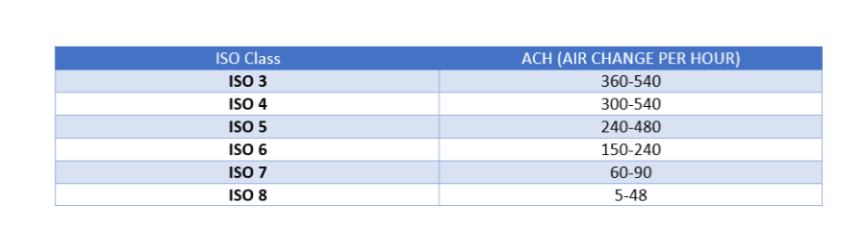
Architectural design requirements are directly driven by the target ISO cleanroom classification, as defined in ISO 14644-1. These ISO cleanroom design principles ensure optimal airflow, contamination control, and long-term operational efficiency. The lower the ISO number, the stricter the design parameters. Further details are available in our ISO Cleanroom Classification ISO Blog.
ISO 8 (Class 100,000) Architectural Requirements
Commonly used for gowning areas and packaging operations, with architectural emphasis on basic pressurization and durable, easy-to-clean surfaces.
ISO 7 (Class 10,000) Architectural Requirements
Widely applied in pharmaceutical and medical device manufacturing, requiring tighter architectural sealing, robust airlock systems, and typically 30–60 air changes per hour, which directly influence ceiling grid and filter layouts.
ISO 5 (Class 100) Architectural Requirements
This often necessitates unidirectional (laminar) airflow. Architecturally, this may require raised floors or low-level returns to facilitate airflow management, along with ceiling grids fully populated with HEPA or ULPA filters.
Architects must work closely with mechanical engineers to ensure envelope leakage rates are sufficiently low to maintain required pressure differentials without overtaxing HVAC systems. For detailed requirements, visit the International Organization for Standardization (ISO).
Real-World Engineering Case Study – Pharmaceutical Cleanroom
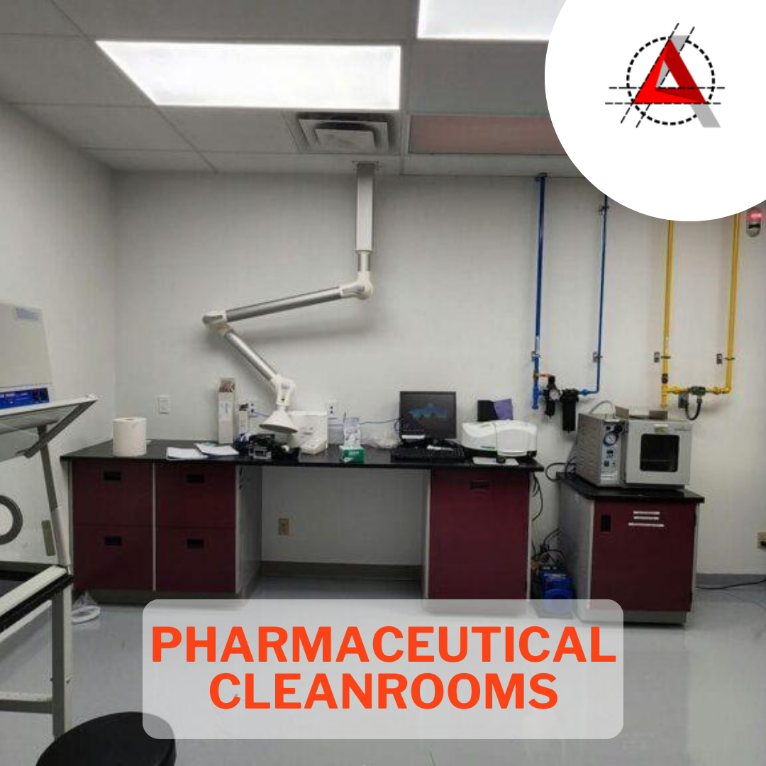
Theory is vital, but execution is paramount. A practical example of these architectural principles in execution is ACH Engineering’s pharmaceutical cleanroom project in Windsor, Ontario.
Project Overview
- Application: Pharmaceutical manufacturing and packaging (solid dose)
- Location: Windsor, ON
- Size: 31,500 sq. ft.
- ISO Classification: ISO 8
- Budget: $2 Million CAD
- Scope: Concept to Validation
Our team managed every phase—from site selection and evaluation for compliance with pharmaceutical manufacturing standards, through URS development, 3D engineering design, obtaining city permits, manufacturing modular structures, and full construction. This state-of-the-art facility was designed and constructed to support solid-dose pharmaceutical manufacturing and packaging, fully aligned with ISO 8 classification requirements and local building codes.
The Engineering Solution
The project leveraged modular architectural systems, including integrated wall and ceiling modules, flush glazing, and seamless utility routing. Airlocks for personnel and materials ensure proper zoning, supported robust pressure cascades, and maintained contamination control throughout operations.
Project Results and ROI
Delivered as a turnkey solution, the 31,500 sq. ft. ISO 8 facility progressed from concept through validation within a tightly managed budget and schedule. The project’s integrated design and use of modular technologies provided exceptional flexibility for future expansion, minimized operational disruptions, and supported fast regulatory approvals, maximizing the speed to market and ROI for our client.
Read the full project details here: Pharmaceutical Manufacturing Cleanroom Case Study.
Frequently Asked Questions (FAQ)
How does architectural design impact energy efficiency in a cleanroom?
A tight architectural envelope reduces air leakage. Because conditioning cleanroom air (temperature, humidity, and filtration) is energy-intensive, minimizing leakage through high-quality seals and doors directly reduces HVAC load and energy consumption.
What is the difference between stick-built and modular cleanroom architecture?
Stick-built construction refers to traditional drywall and stud systems, which are labor-intensive, difficult to modify, and generate significant site debris. Modular architecture uses prefabricated, pre-finished panels that are cleaner to install, more durable, and can be disassembled or reconfigured for future expansion.
Why are “coved corners” important in cleanroom architecture?
Standard 90-degree corners are difficult to clean thoroughly, allowing particles and microbes to accumulate. Coved (rounded) corners eliminate these crevices, ensuring cleaning protocols are 100% effective.
Do I need a raised floor for an ISO 7 cleanroom?
Typically, no. ISO 7 cleanrooms usually utilize low-wall air returns. Raised floors are generally reserved for ISO 5 or cleaner environments where vertical laminar flow is required to sweep particles directly downward.
GET IN TOUCH
Complete the form below to get in touch with our team.