
Data Center Cleanroom Design & Deployment Guide
Data Center Cleanroom Design & Deployment Guide
The architecture of the modern data center is undergoing a fundamental shift. As industry pivots toward AI-driven hyperscale density, traditional cooling methods are proving insufficient. When rack power densities exceed 50–100 kW, the volume of air required for thermal management increases exponentially.
This high-velocity airflow creates a specialized environmental challenge: microscopic contamination. In these high-stakes environments, a standard “server room” is a liability. An ISO-certified data center cleanroom is a necessity.
At ACH Engineering, we specialize in engineering and deployment of controlled environments that bridge the gap between industrial construction and precision laboratory standards. This guide provides a technical deep dive into why and how cleanroom technology is the future of data center uptime.
Data Center Cleanroom Risks in High-Density Environments
To understand the need for a cleanroom, one must first understand the physics of hardware failure in high-density environments. AI-ready GPU clusters (such as NVIDIA H100S) utilize high-RPM fans that act as powerful vacuums. If the air intake is not ISO-classified, it introduces “silent killers” into the circuitry.
AI GPU clusters contamination risk
High-performance computing generates immense heat. The powerful fans required for cooling these systems also pull in vast amounts of airborne particles. These contaminants pose a severe threat to sensitive electronic components. Without proper filtration, the risk of hardware failure and data corruption increases dramatically.
Zinc Whiskers: The Conductive Threat
Zinc whiskers are microscopic, conductive filaments that grow from surfaces plated with electro-galvanized zinc. These are commonly found in older raised floor tiles and cable management systems.
When these filaments break off and become airborne, they present a unique danger. They are small enough to bypass standard MERV-rated HVAC filters. However, they are large enough to bridge the gaps between traces on a printed circuit board (PCB). This causes catastrophic short circuits.
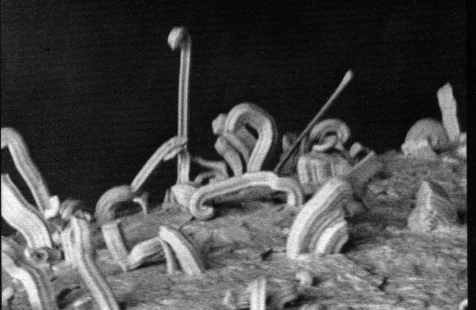
Reference: NASA NEPP Technical Research on Zinc Whiskers
Ionic Contamination and Creep Corrosion
In urban or industrial locations, airborne Sulphur and nitrogen compounds infiltrate the facility. In the presence of even moderate humidity (e.g., 40–60% RH), these compounds react to form corrosive acids.
This reaction leads to creep corrosion. During this process, copper traces on circuit boards begin to migrate and fail. This chemical breakdown is frequently the root cause of “Silent Data Corruption.”
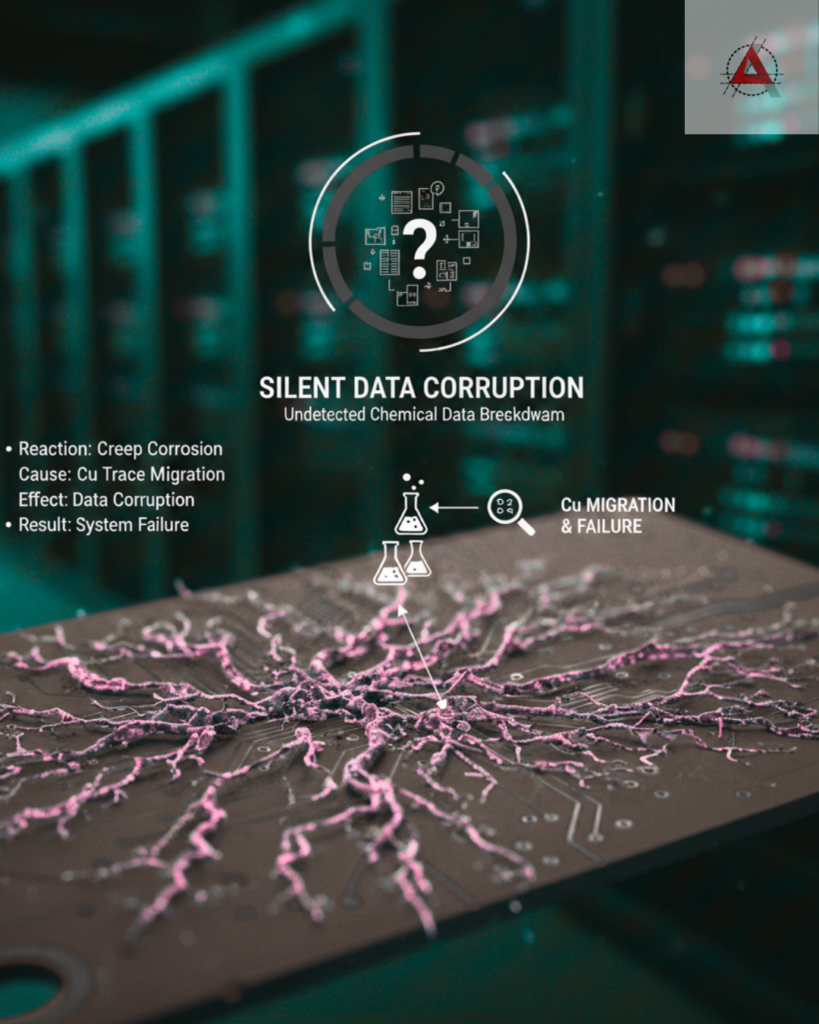
Understanding Silent Data Corruption:
Unlike a catastrophic power failure, silent corruption is insidious. It happens gradually and often goes undetected until it is too late.
- Chemical Reaction: Airborne contaminants mix with humidity to form acids on the PCB.
- Trace Migration: Copper atoms migrate across the board, narrowing the isolation between circuits.
- Signal Degradation: Electrical resistance changes, causing 0s to flip to 1s (or vice versa) during processing.
- System Failure: The hardware fails without a logged thermal event, leaving operators confused about the root cause.
Data Center Cleanroom Standards and Compliance
Building a “clean” environment is not a subjective goal; it is a measurable science. Most mission-critical facilities target ISO 14644-1 Class 8 standards. However, for Edge Data Centers located in industrial zones, ISO Class 7 is frequently mandated to mitigate external particulate ingress.
ISO 14644-1 Air Cleanliness Classification for Data Centers
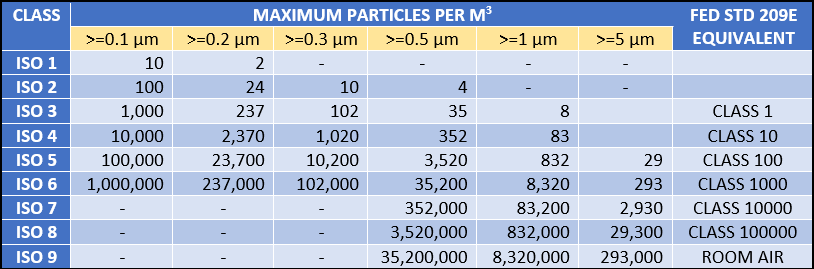
Reference: ISO 14644-1:2015 International Standard
By adhering to these metrics, ACH Engineering ensures compliance with ASHRAE TC 9.9 guidelines. This protects hardware warranties and satisfies the stringent requirements of Tier 3 and Tier 4 facility insurers.
Engineering and Consulting: The Foundation of Success
The effectiveness of a cleanroom is determined during the pre-construction phase. At ACH Engineering, we treat every data center as a unique fluid dynamics puzzle. For more insights into our technical methodology, please read our Engineering Blog.
Computational Fluid Dynamics (CFD)
We utilize CFD modelling to visualize how air interacts with high-density server racks. This allows us to identify “stagnant zones” where heat and particulates settle. By mapping the airflow virtually, we can optimize the physical design before a single panel is installed. Read more about it on our blog.
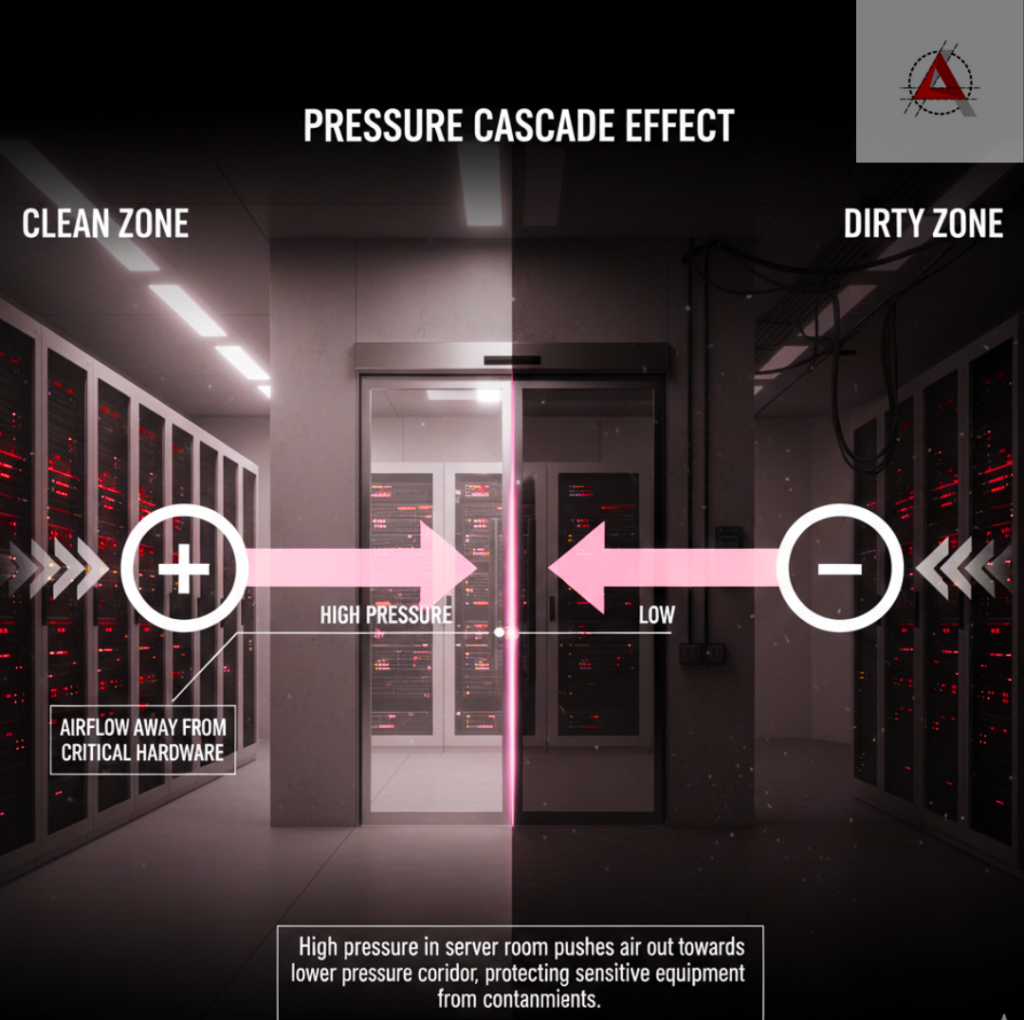
Positive Pressure Data Center Cleanroom Design
A critical component of our engineering strategy is the design of positive-pressure cleanrooms for data centers. We designed the HVAC system to ensure that the internal pressure of the cleanroom is higher than the surrounding corridors.
This pressure differential creates an invisible barrier. When a door is opened, air rushes out, preventing pollutants from entering the sterile space. This is the primary defense against external contamination in a busy facility.
Modular Cleanroom Infrastructure: Speed and Scalability
Traditional construction is inherently dirty and generates particulates. For active data centers, Modular Construction is the only viable path.
- Zero Construction Dust: Panels arrive pre-finished. This allows for installation in live environments without risking the health of existing servers.
- Rapid Deployment: Modular infrastructure can be commissioned up to 50% faster than traditional “stick-built” rooms.
- Futureproofing: Panels can be disassembled or expanded as AI clusters grow.
Discover our full range of Modular Cleanroom Solutions to see how we can customize a building for your specific facility needs.
HVAC and Filtration Solutions for Data Center Cleanroom Environments
A true ISO-certified room requires a dedicated HVAC loop featuring HEPA or ULPA filtration. HEPA filters capture 99.97% of particles as small as 0.3 microns.
The PUE Advantage:
Strategic filtration improves Power Usage Effectiveness (PUE). When server heat sinks remain free of dust, internal fans operate at lower RPMs. This significantly reduces “parasitic” energy draw, lowering operational costs over the life of the facility.
Project Management: Seamless Integration
Managing a cleanroom build in an active data center requires high-precision contamination control management. ACH Project Managers are trained in Contamination Control Plans (CCP).
We coordinate closely with facility stakeholders. We ensure that ceiling grids do not interfere with fire suppression systems (FM-200 or pre-action sprinklers) or existing cable trays. Our goal is a seamless “handover” that requires zero downtime for the client.
Validation and Compliance: IQ/OQ/PQ Protocols
A room is only a cleanroom once it has been validated under load. ACH Engineering provides a comprehensive documentation package to prove compliance. This process follows a strict linear progression to ensure every variable is accounted for.
The Validation Workflow:
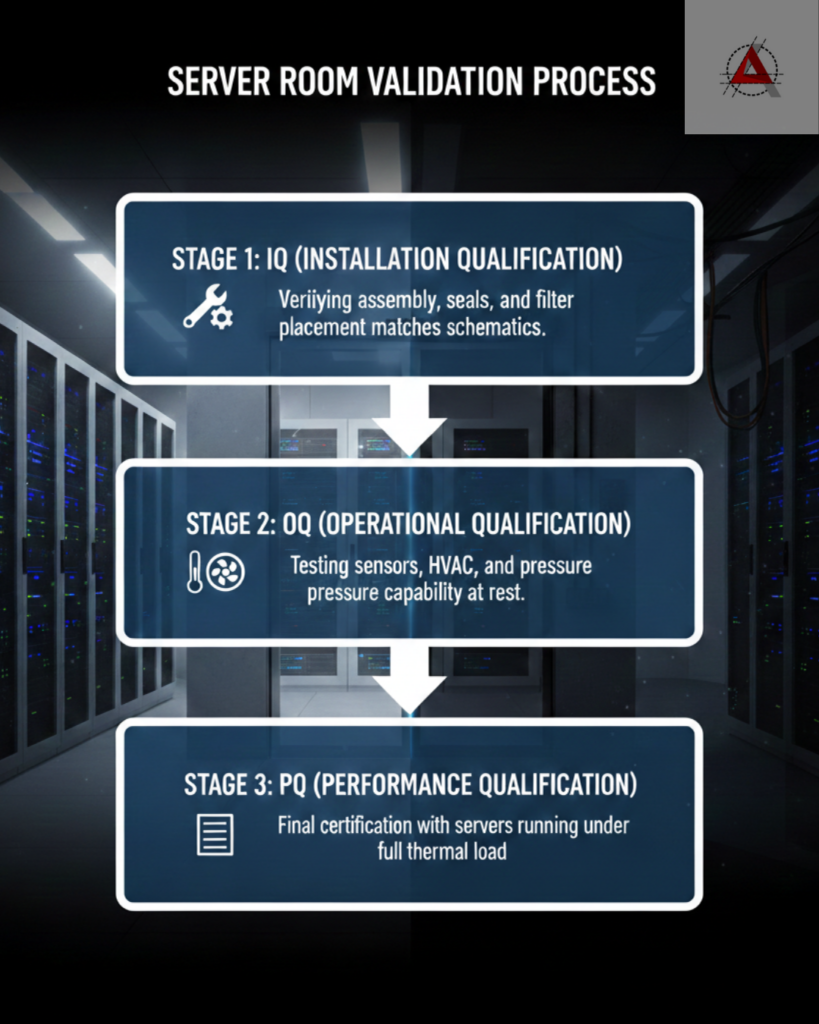
Performance Qualification (PQ) is the critical final step. We perform particle counts while the servers are operational to ensure the room maintains its ISO Class under real-world thermal loads.
Frequently Asked Questions (FAQ)
What is a Data Center Cleanroom?
A data center cleanroom is a controlled environment in which ISO 14644-1 Class 8 standards are maintained. It is designed to limit airborne particles and humidity to strictly defined levels, protecting hyperscale hardware from microscopic failure.
Why is ISO Class 8 the standard for data centers?
ISO Class 8 provides a measurable cleanliness level that prevents conductive failures. By maintaining this standard, facilities prevent issues like “Zinc Whisker” growth and “Ionic Contamination” that can short-circuit expensive components.
Can I install a cleanroom in an active data center?
Yes. Using ACH Modular Solutions, we can install pre-finished panels with zero construction dust. This methodology allows us to build the containment infrastructure while keeping your servers online and operational.
GET IN TOUCH
Complete the form below to get in touch with our team.