

Cleanroom Materials Guide: Approved and Prohibited Materials That Keep Your Classification Intact

Introduction
A single cardboard box wheeled into a pharmaceutical cleanroom can release thousands of cellulose fibres, and each one can carry bacterial or fungal spores. A wooden pencil in a technician’s pocket sheds graphite. One non-compliant material can undo months of careful contamination control, leading to failed certifications, deviations and product losses.
Cleanroom materials directly affect contamination control, product quality, worker safety and running costs. The wrong choice adds particles, chemical contamination or places for microbes to hide, and no HVAC or HEPA system can fully make up for that.
This guide explains which cleanroom materials are approved, and which are prohibited, why the rules exist, and how to choose cleanroom construction materials, furniture, consumables and cleaning supplies for your ISO class and industry.
Key Takeaways
- Cleanrooms need strict material control to prevent particle, chemical and microbial contamination
- Prohibited items include cardboard, wood, bare galvanized steel, regular paper, pencils, personal items and cotton rags
- Approved cleanroom materials are non-shedding, non-porous, easy to clean and compatible with your disinfectants
- Requirements tighten as the ISO class gets cleaner, and industry rules (FDA cGMP, USP <797>/<800>, SEMI) add more
- Wrong material choices are a common audit finding, and one of the easiest to prevent by specifying materials at the design stage
Cleanroom Construction Materials at a Glance
| Surface or Item | Approved Cleanroom Materials | Avoid |
|---|---|---|
| Wall panels | Powder-coated galvanized steel, stainless steel, HPL or uPVC faced modular panels; epoxy-coated drywall with sealed joints | Painted drywall with open joints, bare galvanized steel, wood, fabric |
| Ceilings | Walkable aluminium honeycomb panels, gasketed cleanroom ceiling grids, vinyl-faced or sealed cleanroom tiles | Standard acoustic (mineral fibre) tiles, open grids |
| Coving | Anodized or powder-coated aluminium coving, PVC coving, integral flooring cove | Square 90-degree corners, caulk-only joints |
| Flooring | Heat-welded sheet vinyl, epoxy or polyurethane resin, static-dissipative (ESD) vinyl or resin | Carpet, VCT tiles with joints, bare concrete |
| Doors and windows | Flush cleanroom doors (powder-coated steel, stainless steel or HPL), flush double-glazed vision panels, silicone gaskets | Wooden doors, raised frames and ledges, neoprene gaskets |
| Furniture | 304 or 316 stainless steel, powder-coated steel, polypropylene; cleanroom furniture with vinyl or polyurethane seats | Wood, particle board, fabric upholstery |
| Sealants | Low-VOC, neutral-cure silicone tested for cleanroom use | General construction caulk, acetoxy silicone near electronics |
| Consumables | Synthetic cleanroom paper, cleanroom pens, polyester wipes, cleanroom tape | Cardboard, regular paper, pencils, cotton rags, duct tape |
Surfaces in classified areas must be smooth, impervious and unbroken so they can be cleaned and disinfected effectively, with no recesses that collect particles. See EU GMP Annex 1, Health Canada GUI-0119 and ISO 14644-4:2022 for the governing requirements.
Understanding Cleanroom Material Requirements
Cleanroom material rules exist because of three contamination risks that threaten product quality and compliance.
- Particle generation: cellulose materials such as cardboard and paper shed fibres constantly, even when nobody touches them. Cotton lint is a direct carrier for microorganisms.
- Chemical contamination: some plastics, adhesives and sealants release volatile organic compounds (VOCs) that condense on wafers, optics or product. Corroding metals such as copper, brass and bare galvanized steel add metallic particles and residues.
- Microbial harboring: porous surfaces hold moisture and shelter bacteria, mould and spores where disinfectants cannot reach them.
How ISO Classification Affects Cleanroom Materials
ISO 14644-1:2015 defines air cleanliness classes from ISO 1 (cleanest) to ISO 9. Material requirements tighten as the class number goes down.
ISO Classes 3-5 (semiconductor fabs, aseptic processing zones) need materials with near-zero particle shedding and very low outgassing. Only hard, non-porous, abrasion-resistant materials can support the particle limits at sizes from 0.1 µm to 5 µm.
ISO Classes 6-8 (buffer rooms, support zones, device assembly, packaging) still need smooth, cleanable materials that add few particles, but the restrictions are less severe than in critical zones.
Industry Regulations That Add Material Requirements
ISO classification sets the baseline. Industry rules add more:
- FDA cGMP (21 CFR 211.42): aseptic processing areas must have floors, walls and ceilings of smooth, hard surfaces that are easily cleanable
- USP <797>: keeps particle-shedding items such as cardboard, pencils and cotton out of classified compounding areas, and requires smooth, cleanable surfaces
- USP <800>: surfaces in hazardous drug compounding rooms must be smooth, impervious, free of cracks and crevices, and non-shedding
- EU GMP Annex 1 and Health Canada GMP: exposed surfaces in clean areas must be smooth, impervious and unbroken, with no uncleanable recesses
- SEMI F21: classifies airborne molecular contamination for semiconductor manufacturing, which drives the choice of low-outgassing materials
Prohibited Materials in Cleanrooms
Knowing what to keep out matters as much as knowing what to bring in. The materials below are prohibited or restricted in most cleanrooms, from ISO 5 pharmaceutical suites to ISO 8 assembly areas.
Personal Items and Consumables
These items are banned because they generate particles, carry bacteria or release chemicals:
| Item | Why It Is Prohibited |
|---|---|
| Food, drinks, gum and tobacco | Organic particles, moisture and bacteria |
| Cosmetics, perfume and cologne | Particles and chemical residues that can affect sensitive processes |
| Jewellery (rings, watches, bracelets, earrings) | Can puncture gloves, traps microorganisms in crevices, sheds particles through friction |
| Personal phones, wallets and keys | Seams and surfaces that cannot be properly cleaned; only approved, disinfected cleanroom devices may enter |
Personnel are the largest source of contamination in a classified area, which is why entry controls, gowning and personal-item restrictions are set out in the site’s contamination control strategy. See EU GMP Annex 1 and Health Canada GUI-0119.
Prohibited Cleanroom Construction Materials
The construction materials you choose decide how well the room controls contamination for its whole life.
Construction materials to keep out:
| Material | Why It Is Prohibited | Use Instead |
|---|---|---|
| Cardboard | Sheds cellulose fibres even when undisturbed; known carrier of Bacillus and fungal spores | Plastic or stainless steel containers; unpack deliveries outside the cleanroom |
| Unsealed wood and particle board | Porous; microbes penetrate it and it cannot be sanitized to cGMP standards | Stainless steel, powder-coated steel or polypropylene cleanroom furniture |
| Bare galvanized steel | Zinc coating can flake and form white corrosion, releasing metal particles | Powder-coated galvanized steel (zinc sealed under the coating) or stainless steel |
| Untreated aluminium (in aggressively disinfected areas) | Can corrode under some sporicides | Anodized or powder-coated aluminium, as used in cleanroom coving |
| Exposed copper and brass | Corrode and add metallic contamination; copper is a serious contaminant in semiconductor fabs | Stainless steel hardware and fittings |
| Leather and fabric | Organic materials that shed and cannot be properly disinfected | Smooth vinyl or polyurethane |
| Standard acoustic ceiling tiles, painted drywall with open joints | Porous, shedding and hard to clean | Sealed cleanroom ceiling tiles or walkable ceilings; modular wall panels |
Materials in classified areas must present smooth, impervious and unbroken surfaces that withstand repeated cleaning and disinfection. See EU GMP Annex 1, Health Canada GUI-0119 and ISO 14644-4:2022.
Work materials to keep out:
| Item | Why It Is Prohibited | Use Instead |
|---|---|---|
| Regular paper and notebooks | Cellulose fibres shed with every page turn | Synthetic cleanroom paper (polyethylene or polypropylene) |
| Pencils | Graphite cores shed conductive particles | Cleanroom pens |
| Standard pens | Ordinary ballpoints can shed ink and plastic | Cleanroom pens tested for low particle generation |
| Erasers | Rubber crumbs contaminate surfaces and are hard to remove | Strike-through corrections, per your documentation SOP |
| Duct tape and cloth tape | Shed fibres and leave adhesive residue | Cleanroom tape |
| Aerosol sprays (unless approved) | Propellant and droplets spread uncontrollably | Trigger sprays or pre-saturated wipes |
| Loose EPS foam packaging and peanuts | Beads break apart and shed | Cleanroom-bagged parts in plastic or stainless containers |
Recording data in a classified area is still a GMP activity: the substitute must keep the record legible and permanent as well as low-shedding. Documentation practices are set out in EU GMP Annex 1 and Health Canada GUI-0001.
Prohibited Cleaning and Maintenance Materials
| Item | Why It Is Prohibited | Use Instead |
|---|---|---|
| Household vacuum cleaners | Blow fine particles back out through the exhaust | HEPA-filtered cleanroom vacuums |
| Cotton rags and towels | Release lint with every use | Low-lint polyester or microfibre cleanroom wipes |
| Abrasive pads (steel wool, scouring pads) | Scratch surfaces and leave metal or fibre particles | Non-abrasive cleanroom mops and wipes |
| Unapproved chemical cleaners | Can leave residues or damage cleanroom finishes | Disinfectants and detergents verified compatible with your surfaces |
A scratched or chemically damaged finish stops being cleanable, so disinfectant compatibility is checked against the installed surfaces before use, and the cleaning and disinfection programme is documented. See EU GMP Annex 1 and Health Canada GUI-0119.
Restricted Materials That Need Approval
Some materials are allowed only with cleanroom manager approval and under controlled conditions:
| Material | Allowed Only If |
|---|---|
| Adhesives for specific uses | Low-outgassing and tested for cleanroom use |
| Powders | Kept in sealed containers and opened only during controlled use |
| Open-cell foams | Fully contained; generally avoided because they trap particles |
| Books, manuals and reference documents | Laminated, printed on cleanroom paper, or replaced by digital versions where possible |
Any conditional material should be assessed and approved before entry, and the decision recorded in the site’s contamination control strategy. See EU GMP Annex 1 and Health Canada GUI-0119.
Approved Cleanroom Construction Materials
Cleanroom Wall Panels and Wall Systems
Cleanroom walls must be smooth, non-porous, sealed at every joint and able to handle daily disinfection.
Modular cleanroom wall panels are a factory-made sandwich of two facing skins bonded to a core.
Panel skin options:
| Skin Material | Strengths | Best For |
|---|---|---|
| Powder-coated galvanized steel | Durable, cost-effective, smooth sealed finish | Most pharmaceutical, medical device and electronics cleanrooms |
| Stainless steel | Highest resistance to corrosion and aggressive disinfectants | Wash-down areas, sterile suites, food processing |
| High Pressure Laminate (HPL) | Impact resistant, wide choice of colours and finishes | Labs, compounding pharmacies, visible client areas |
| uPVC | Chemical resistant, light, lower cost | Lower-class rooms, chemical handling, budget-sensitive projects |
The skin is the facing applied to the panel; coating thickness, substrate and colour options are specified per project. See ACH modular wall systems for the panel constructions these finishes are supplied on.
Panel core options:
| Core | Strengths | Best For |
|---|---|---|
| Aluminium honeycomb | Light, very flat and rigid | Walls and walkable ceilings |
| Flame-retardant expanded polystyrene (EPS) | Light, insulating, economical | General cleanroom walls, temperature-controlled rooms |
| Rockwool (mineral wool) | Non-combustible, fire ratings up to 2 hours | Fire separations and code-driven walls |
The core sits between the panel skins and determines rigidity, insulation and fire performance. Fire ratings are confirmed against the applicable building code for the project. See ACH modular wall systems for available panel constructions.
Epoxy-coated drywall is acceptable in lower classes if every joint is taped, sealed and coated, but it is harder to keep crack-free than modular panels. Whatever the wall system, electrical boxes, switches and pass-throughs must be set flush and sealed, with no gaps or ledges.
See our modular cleanroom wall panels and the Cleanroom Doors, Wall Panels and Ceilings Specification Guide for panel core and finish options.
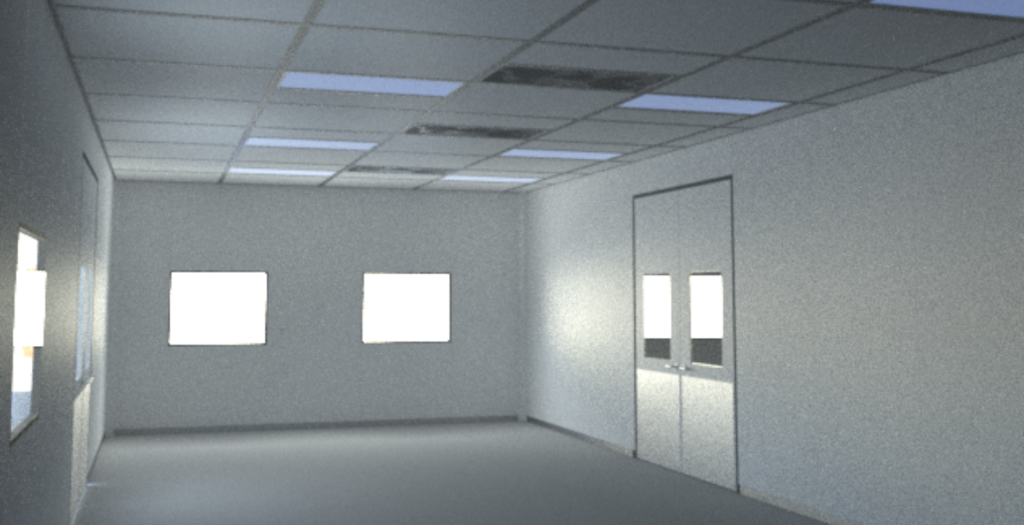
Hardwall vs. Softwall Cleanrooms
| Factor | Hardwall Cleanroom | Softwall Cleanroom |
|---|---|---|
| Construction | Rigid modular panels or sealed drywall | Clear or anti-static PVC curtains on a steel or aluminium frame |
| Pressure control | Holds a controlled pressure cascade | Cannot hold a controlled pressure differential |
| Cleaning | Takes daily aggressive disinfection | Curtains are harder to clean and wear out |
| Typical use | GMP pharmaceutical, medical device, sterile compounding | ISO 7 and ISO 8 work without GMP pressure control |
| Installation and flexibility | Longer install; permanent but reconfigurable | Fast to install and move |
| Cost | Higher | Lower |
Pressure control is usually the deciding factor: where a pressure cascade between graded areas is required, a softwall enclosure cannot meet it. See EU GMP Annex 1 and Health Canada GUI-0119.
Cleanroom Ceilings and Ceiling Panels
| Ceiling Option | What It Is | Best For |
|---|---|---|
| Walkable ceilings | Aluminium honeycomb panels strong enough to walk on | Servicing HEPA filters, lights and sprinklers from above without entering the cleanroom |
| Gasketed cleanroom ceiling grid | Sealed grid holding filters, lights and tiles with no air bypass | Rooms where above-ceiling access is limited |
| Cleanroom ceiling tiles | Vinyl-faced or sealed tiles rated for cleanroom use | Lower-class rooms; never standard mineral-fibre acoustic tiles |
Cleanroom Coving
Coving is a curved profile installed where two surfaces meet, so there is no sharp 90-degree corner for dust and microbes to collect in. Cleanrooms need coving because square corners cannot be cleaned reliably.
| Coving Type | Description | Best For |
|---|---|---|
| Aluminium coving (anodized or powder coated) | Rigid profiles for wall-to-floor, wall-to-wall and wall-to-ceiling joints | Most cleanrooms; durable and chemical resistant |
| PVC coving | Lower-cost plastic profiles | Lighter-duty areas |
| 3D coving corners | Pre-formed pieces where three surfaces meet | Fully radiused corners with no open seams |
| Integral flooring cove | Sheet vinyl or resin flooring turned up the wall, typically 4–6 inches high | Wall-to-floor joints with no seam at floor level |
Coving removes the square corners where particles collect and cleaning cannot reach, giving a continuous radiused transition between surfaces. See EU GMP Annex 1 and Health Canada GUI-0119 for the requirement that surfaces be unbroken and free of recesses.
Cleanroom Flooring
| Flooring Type | Strengths | Best For |
|---|---|---|
| Heat-welded sheet vinyl | Seamless, comfortable underfoot, easy to clean | Most pharmaceutical and compounding cleanrooms |
| Epoxy resin | Hard, seamless, chemical resistant | Heavy traffic, carts and equipment |
| Polyurethane (urethane cement) | Handles water, heat and thermal shock | Wet areas and wash-down rooms |
| Static-dissipative (ESD) vinyl or resin | Bleeds static safely to ground | Electronics and semiconductor, battery production |
Avoid carpet, joined floor tiles (VCT) and bare or sealed concrete in classified rooms. Finish the wall-to-floor joint with coving or an integral cove so there is no seam at floor level.
Cleanroom Paint and Coatings
Standard wall paint is not designed for daily disinfection and can chalk, crack and shed. Cleanrooms use epoxy or polyurethane coatings, or purpose-made cleanroom paints rated for repeated cleaning with alcohol, hydrogen peroxide and sporicides.
Cleanroom Doors, Windows and Vision Panels
| Component | Recommended | Avoid |
|---|---|---|
| Door leaf | Flush cleanroom doors in powder-coated steel, stainless steel or HPL; stainless steel for wash-down areas | Wood, raised mouldings |
| Gaskets and seals | Silicone gaskets, drop-down bottom seals | Neoprene, which breaks down under disinfectants |
| Vision panels | Flush, double-glazed vision panels set level with the wall on both sides | Sills and ledges that collect dust |
| Hardware | Stainless steel, interlock-ready for airlocks | Exposed brass or copper |
Doors are a weak point in the pressure envelope: gasket condition and seal compression are what hold the differential between graded areas. See EU GMP Annex 1 and Health Canada GUI-0119.
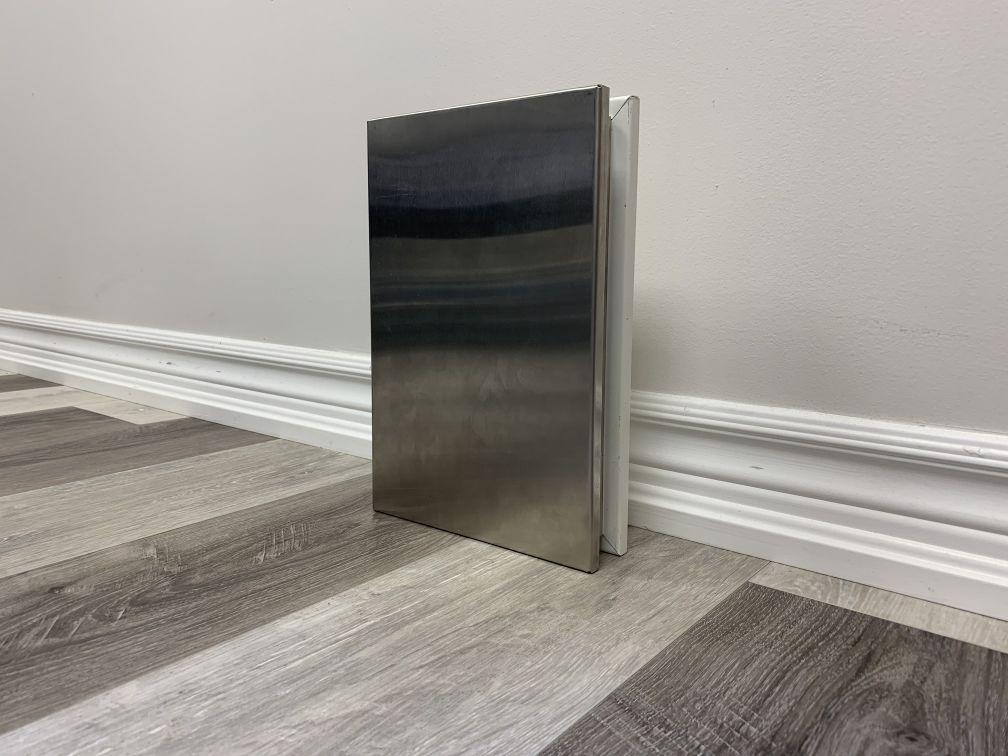
Stainless Steel and Other Approved Metals
Stainless steel:
| Grade or Finish | Use |
|---|---|
| Grades | |
| 304 stainless steel | Most cleanroom furniture, equipment and trim |
| 316 / 316L stainless steel | Wet areas, chlorides and aggressive sporicidal disinfectants |
| Surface finishes | |
| 2B mill finish | General-purpose surfaces |
| No. 4 brushed finish | Equipment and furniture |
| Electropolished | Lowest particle and microbial risk; critical and product-contact parts |
Welded and product-contact stainless steel is normally passivated, and electropolished for critical uses.
Other approved metals:
| Metal | Why It Is Approved | Watch Out For |
|---|---|---|
| Anodized or powder-coated aluminium | Sealed finish stops corrosion and particle release | Chips in the coating |
| Powder-coated galvanized steel | Standard for wall panel skins and frames | Damage that exposes the zinc |
| Chrome-plated metal | Smooth and easy to clean | Damaged plating can flake; use only where it will not be chipped |
Every metal here depends on its coating staying intact: once the finish is breached, the substrate beneath corrodes and sheds particles. Inspect coated surfaces as part of routine cleaning and repair damage promptly.
Sealants and Adhesives
- Use low-VOC, neutral-cure silicone sealants tested for cleanroom use
- Avoid acetoxy (vinegar-smelling) silicone near electronics and sensitive metals, because it releases acetic acid as it cures
- Check outgassing data for any adhesive used in semiconductor, optics or electronics rooms
Cleanroom Furniture
| Item | Approved | Avoid |
|---|---|---|
| Tables and benches | 304 or 316 stainless steel, powder-coated steel; perforated tops under laminar flow | Wood, particle board, laminate with exposed edges |
| Chairs and stools | Smooth vinyl or polyurethane seats; static-dissipative versions for electronics | Fabric upholstery, exposed foam |
| Shelving, carts and storage | Stainless steel or polypropylene, open designs that are easy to wipe | Closed wooden cabinets, cardboard bins |
Perforated bench tops let unidirectional airflow pass through rather than deflecting it back into the work zone. See ACH cleanroom and laboratory furniture for available configurations.
Polystyrene and Plastics in Electronics and LCD Cleanrooms
Polystyrene is acceptable in a cleanroom in some forms and not in others:
Polystyrene is acceptable in a cleanroom in some forms and not in others.
| Form of Polystyrene | Acceptable? | Why |
|---|---|---|
| EPS foam core inside sealed wall panels | Yes | Fully encased and never exposed to the room |
| Conductive or static-dissipative polystyrene trays and carriers | Yes, with control | Widely used to handle glass, LCD panels and electronic parts |
| Loose EPS foam packaging, beads and packing peanuts | No | Breaks apart and sheds |
Other cleanroom-grade plastics include polypropylene, polycarbonate and filler-free PVC. In electronics and flat-panel fabs, check every plastic for outgassing and static behaviour before approval.
Approved Cleanroom Consumables and Supplies
Cleanroom-Compatible PPE
PPE must be made for cleanroom use, not borrowed from general industry:
| PPE Item | Approved Cleanroom Version |
|---|---|
| Coveralls | Low-linting polyester or flash-spun polyethylene (such as Tyvek®), tested for particle shedding |
| Gloves | Powder-free nitrile or latex rated for cleanroom use |
| Hair and beard covers, hoods | Synthetic materials that fully contain hair |
| Face masks | Low particle-shedding cleanroom masks |
| Footwear | Dedicated cleanroom shoes or shoe covers |
Gowning requirements rise with the cleanroom grade, and the gowning procedure itself is qualified and periodically re-assessed for each person entering a classified area. See EU GMP Annex 1 and Health Canada GUI-0119.
Cleanroom-Approved Work Materials
| Item | Cleanroom Version | Why |
|---|---|---|
| Paper and notebooks | Synthetic cleanroom paper (polyethylene or polypropylene) | No cellulose fibres; can be wiped with disinfectant |
| Pens | Cleanroom pens | Tested for low particle generation |
| Tape | Cleanroom tape | No residue, no fibres |
| Adhesives and labels | Low-outgassing cleanroom grades | No VOCs condensing on product |
| Containers and trays | Static-dissipative plastic or stainless steel | Protects electronics, easy to clean |
Cleanroom-grade supplies are specified by the facility and brought in through the material airlock after cleaning or wipe-down; nothing enters a classified area in its outer packaging.
Approved Cleaning Supplies
| Supply | Purpose |
|---|---|
| HEPA-filtered cleanroom vacuum | Captures particles without blowing them back into the room |
| Low-lint polyester or microfibre wipes | Surface cleaning without leaving fibres |
| Cleanroom mop system (low-lint heads or pre-saturated mops) | Floors and walls, with controlled amounts of cleaning agent |
| Compatible disinfectants (IPA, hydrogen peroxide, quats, phenolics, sporicides) | Routine and sporicidal disinfection |
| Low-residue cleanroom detergents | Removing dirt and disinfectant residue |
Disinfectants are rotated and verified compatible with the installed finishes before use: sporicides in particular can attack untreated aluminium and some coatings. Cleaning and disinfection programmes are documented and reviewed, per EU GMP Annex 1 and Health Canada GUI-0119.
Approved Chemicals and Process Materials
Every chemical brought into a cleanroom should meet these criteria:
| Criterion | Requirement |
|---|---|
| Documentation | A current Safety Data Sheet (SDS) |
| Storage | Approved containers that do not shed or leach |
| Designated use areas | Fume hoods or controlled zones where safety requires it |
| Compatibility | Confirmed safe with the room’s surfaces and finishes |
In Canada, suppliers of hazardous products must provide a compliant SDS under the Hazardous Products Act and Hazardous Products Regulations, administered by Health Canada through WHMIS. Compatibility is checked against the installed finishes before a chemical is approved for use in a classified area.
Critical Factors for Cleanroom Material Selection
Particle Generation and Shedding
Particle shedding is the first test for any cleanroom material. It must release very few particles under normal use, friction and wear.
How shedding is assessed:
| Standard | What It Covers |
|---|---|
| ISO 14644-14Check ISO for the current edition | Particle emission from equipment and materials used in cleanrooms |
| ISO 14644-15Check ISO for the current edition | Contribution of equipment and materials to airborne chemical contamination (outgassing) |
| IEST-RP-CC003 | Cleanroom garment systems (older specifications may cite ASTM F51) |
| IEST-RP-CC004 | Cleanroom wipers |
| ASTM E595 / ASTM E1559 | Vacuum outgassing of materials for aerospace and space use |
Even materials that look smooth can shed too many particles once they are scrubbed or flexed every day.
Chemical Compatibility and Outgassing
Materials must survive repeated contact with your cleaning and disinfecting agents:
| Agent | Typical Use | Material Cautions |
|---|---|---|
| Isopropyl alcohol (IPA), usually 70% | Routine wipe-down of surfaces and gloves | Not sporicidal; repeated use can craze polycarbonate and acrylic |
| Hydrogen peroxide (liquid and VHP) | Disinfection and whole-room decontamination | Can degrade some elastomers; absorbed by paper and cardboard |
| Quaternary ammonium compounds (quats) | Routine disinfection of floors and walls | Not sporicidal; builds up a residue film that must be removed |
| Phenolics | Broad-spectrum disinfection | Leave residue; can affect some plastics and rubbers |
| Sporicides (peracetic acid, sodium hypochlorite) | Periodic sporicidal cleaning | Corrode bare aluminium, carbon steel, copper and brass; hypochlorite can pit stainless steel if not rinsed |
No single agent does everything: routine disinfectants are rotated with a periodic sporicide, and residue-forming agents are followed by a low-residue detergent rinse. Confirm each agent against the installed finishes before use — anodized or powder-coated panel and coving systems tolerate sporicides that attack bare metal. Disinfection programmes are documented per EU GMP Annex 1 and Health Canada GUI-0119.
Outgassing is a separate risk that is easy to overlook. Some plastics, sealants and adhesives release VOCs that:
- Condense on wafer surfaces and cause defects
- Contaminate pharmaceutical products
- Interfere with analytical instruments
Review data sheets for outgassing. ISO 14644-15 covers testing equipment and materials for their contribution to airborne chemical contamination, and ISO 14644-8 classifies the resulting air chemical cleanliness (ACC).
Surface Finish and Cleanability
Cleanroom materials need smooth, non-porous surfaces that do not trap particles or microbes:
| Requirement | Why It Matters |
|---|---|
| Low surface roughness (low Ra value) | Fewer places for particles and microbes to cling |
| Seamless construction | No joints where particles collect |
| Coved corners | Rounded joints that can be wiped clean, instead of square corners |
| Durability | No cracking, chalking or shedding after years of cleaning |
FDA cGMP requires smooth, hard, easily cleanable surfaces in aseptic processing areas, and the same principle appears in EU GMP Annex 1 and Health Canada GUI-0119. These requirements are met in practice through modular wall systems and coving.
Electrostatic Properties
Electronics, semiconductor and battery manufacturing:
| Requirement | Typical Value or Rule |
|---|---|
| Material type | Static-dissipative or conductive, to prevent electrostatic discharge (ESD) damage |
| ESD control program | ANSI/ESD S20.20 |
| Worksurface resistance to ground | Below 1.0 × 10⁹ ohms |
| Isolated conductors near sensitive parts | Below 35 volts |
ESD control applies across the whole room, not just the worksurface: flooring, seating, garments and packaging all form part of the grounded path. See semiconductor and electronics cleanrooms for ESD-safe room construction.
Pharmaceutical and life science cleanrooms:
- Static attracts particles to surfaces, so static control still matters
- It must be balanced against chemical resistance and cleanability
Industry-Specific Material Requirements
FDA-regulated industries need materials that:
- Meet cGMP requirements
- Do not release extractables or leachables into product
- Support cleaning validation and verification
Aerospace and defence cleanrooms may need vacuum outgassing testing to ASTM E595 or ASTM E1559.
Semiconductor manufacturing needs materials that meet SEMI standards for airborne molecular contamination and particle generation.
Because requirements differ between industries, and even between sites in the same industry, validate every material choice against your ISO class, regulations and process chemicals before finalizing the specification.
How ACH Helps with Cleanroom Material Selection
ACH designs, manufactures and installs controlled environments, and specifies compliant materials from first design to final validation.
Material specification during design: ACH specifies wall, ceiling, floor, door and coving materials at the design stage, so every finish supports your ISO 14644 classification from the start. Our team also handles sourcing, vendor coordination and pricing.
Modular cleanroom systems with proven materials:
| Material | Benefit |
|---|---|
| High Pressure Laminate (HPL) wall panels | Durability and custom finishes |
| Powder-coated galvanized steel panels | Corrosion-resistant, cost-effective construction |
| uPVC panels | Chemical resistance and value |
| Stainless steel framing, trim and doors | Wash-down and aggressive-chemical areas |
| Aluminium coving and walkable aluminium honeycomb ceilings | Cleanable corners and service access from above |
HPL, powder-coated steel and uPVC are panel skin options on the same modular wall system, specified per project alongside the core, coating thickness and colour.
Components are prefabricated offsite for consistent quality, which shortens on-site installation to a few weeks after delivery. Each system is built to the ISO class your process requires and designed to meet FDA cGMP and Health Canada GMP expectations.
Operational materials guidance: ACH also advises on PPE suited to your ISO class, disinfectants that are safe for your wall and floor finishes, and approved work materials and packaging.
Industry experience: pharmaceutical, biotech, medical device, electronics, battery, food and beverage, and healthcare, including:
- Health Canada GMP and FDA cGMP pharmaceutical manufacturing
- USP <797>/<800> and NAPRA compounding pharmacies
- ESD-safe rooms for semiconductor, electronics and battery dry rooms
- Biosafety requirements for biotech labs
- Food safety requirements for processing facilities
End-to-end compliance:
| Phase | What ACH Does |
|---|---|
| 1.Design and engineering | Specifies materials for your ISO class and regulations |
| 2.Procurement | Sources materials from vetted vendors |
| 3.Construction oversight | Checks compliant installation on site |
| 4.Validation | Confirms materials and finishes meet the specification before sign-off |
For the full design and build process, see our ISO 14644-4 Cleanroom Design & Construction Guide.
Conclusion
Good cleanroom operation starts with strict material control. Every item that enters the room either supports your contamination control or works against it.
There is no single checklist for every room. Your ISO class, industry rules and process decide what is acceptable. For example:
- An ISO 7 medical device assembly room tolerates materials that an ISO 4 semiconductor fab, with tight airborne molecular contamination limits, would reject
- Materials approved for general pharmaceutical manufacturing may not survive the vaporized hydrogen peroxide cycles used in sterile areas
- Static properties that hardly matter in a biotech lab become critical in battery dry rooms and electronics manufacturing
Balancing particle shedding, chemical resistance, cleanability, static control and regulations is complex work. ACH Engineering helps pharmaceutical, semiconductor, medical device and other regulated manufacturers choose compliant, durable cleanroom materials the first time.
Frequently Asked Questions About Cleanroom Materials
Modular wall panels with powder-coated steel, stainless steel, HPL or uPVC faces; walkable aluminium honeycomb ceilings or gasketed ceiling grids; aluminium or PVC coving; seamless sheet vinyl or epoxy flooring; flush doors and vision panels; and low-VOC silicone sealants. All of them are smooth, non-porous, non-shedding and resistant to disinfectants.
Cardboard, wood and particle board, regular paper, pencils, erasers, cotton rags, duct tape, bare galvanized steel, leather and fabric, loose foam packaging, food and drink, cosmetics and jewellery. Each one sheds particles, harbours microbes or releases chemicals.
Cardboard is fibrous and sheds cellulose particles even when undisturbed, and it is porous, so it holds moisture that supports bacteria and mould. Unpack deliveries outside the cleanroom and transfer items into cleanroom-approved plastic or stainless-steel containers.
Coving is a curved profile fitted where a wall meets the floor, ceiling or another wall. It replaces sharp 90-degree corners, where dust and microbes collect and cleaning tools cannot reach, with a smooth radius that can be wiped clean. Cleanrooms typically use aluminium or PVC coving, or flooring that is turned up the wall as an integral cove.
Heat-welded sheet vinyl with an integral coved base is the most common choice. Epoxy suits heavy equipment and traffic, polyurethane (urethane cement) suits wet and wash-down areas, and static-dissipative vinyl or resin is used where electronics are handled.
Modular cleanroom wall panels have two smooth facing skins, usually powder-coated galvanized steel, stainless steel, HPL or uPVC, bonded to a core of aluminium honeycomb, flame-retardant EPS or rockwool. The core is chosen for weight, stiffness and fire rating.
No. 300-series stainless steel is preferred. 304 suits most furniture and equipment, and 316 or 316L is better in wet areas or with aggressive disinfectants. Lower-grade stainless steel can corrode and shed under cleanroom cleaning.
Cleanroom paper is made from synthetic materials such as polyethylene or polypropylene, so it does not shed cellulose fibres like regular paper. It is tested for particle generation and can be wiped with disinfectant.
Ask the manufacturer for particle shedding and outgassing data (for example ISO 14644-14, ISO 14644-15 or IEST test results), then confirm it tolerates your cleaning agents. ACH Engineering can assess any material against your ISO class and regulatory requirements.
No. Household cleaning supplies shed lint, may leave residues that damage cleanroom finishes, and have no particle testing. Use cleanroom-grade supplies only: HEPA-filtered vacuums, low-lint wipes and mops, and approved disinfectants.
Need help choosing cleanroom materials? Request a quote and our experts will contact you within 24 hours with tailored solutions and pricing or call +1-866-936-4439 or email: sales@achengineering.com.
GET IN TOUCH
Complete the form below to get in touch with our team.