
Cleanroom Electrical Design Guide: Power Distribution, Safety, and GMP/ISO Compliance
Cleanroom electrical design is an exercise in precision where controlled environments demand a zero-tolerance approach to contamination and safety risks. For engineers in GMP and ISO-regulated sectors, this infrastructure is a critical component of a facility’s contamination-control strategy.
Designing electrical systems for clean rooms is an exercise in precision. Unlike standard commercial environments, controlled environments demand a zero-tolerance approach to contamination, failure, and safety risks. For electrical engineers and facility managers operating in GMP (Good Manufacturing Practice) and ISO-regulated sectors, the electrical infrastructure is not just a utility; it is a critical component of the contamination control strategy.
A power fluctuation that might be a minor nuisance can result in loss of pressure cascade within seconds and require full environmental requalification. It can depressurize rooms, compromise HEPA filtration, destroy pharmaceutical batches, or damage semiconductor wafers. To ensure operational integrity, electrical design must seamlessly integrate robust power distribution with strict cleanliness protocols.
This guide outlines five critical pillars of advanced cleanroom electrical design required for ISO 14644 and GMP compliance, ensuring your facility meets the rigorous demands of ISO 14644 and GMP standards. Beyond compliance, a single power event can cause hundreds of thousands of dollars in lost yield and weeks of decontamination.
Core Cleanroom Electrical Design Requirements for GMP
Cleanroom electrical design is the specialized engineering of power systems to ensure they do not introduce particles, can withstand rigorous sanitization, and maintain environmental stability in controlled spaces. The foundation of any cleanroom electrical design lies in its ability to support cleanliness classifications. GMP electrical compliance requires every conduit, outlet, and fixture to minimize particle generation and retention.
Minimizing Surface Contamination and Particle Retention
| Specification | Requirement/Best Practice |
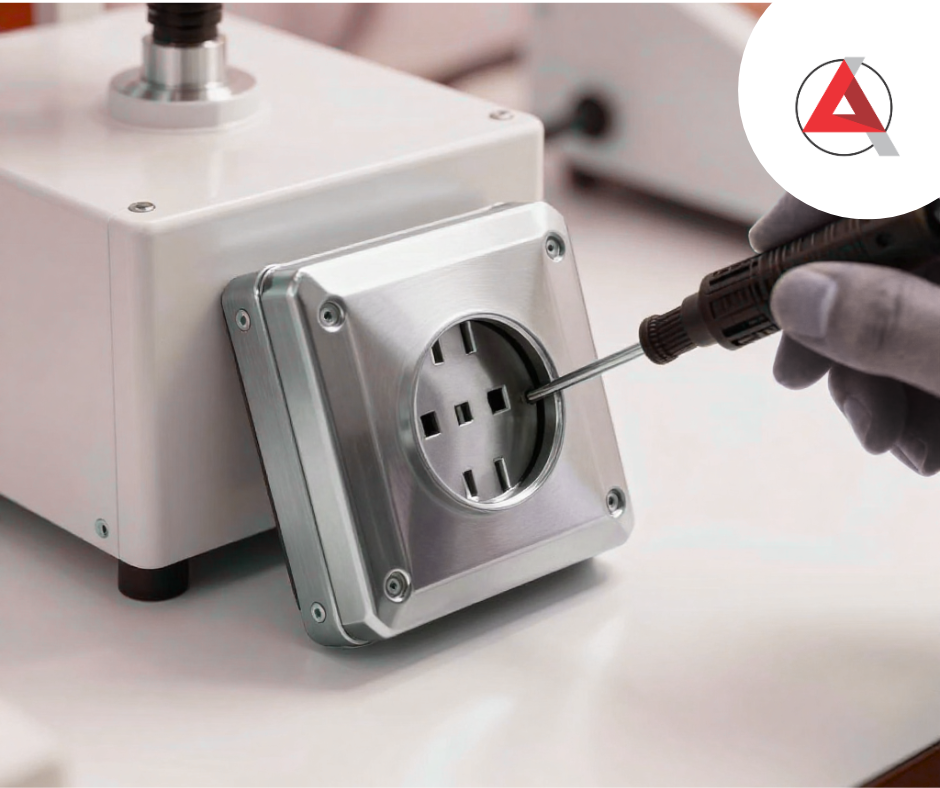
| Device Mounting | All switches and outlets must be flush-mounted to wall panels to eliminate ledges where dust can settle. |
| Material Choice | Use 304 or 316-grade stainless steel faceplates to resist corrosion from frequent cleaning with harsh chemicals. |
| Conduit Entry | All conduits entering the cleanroom must be sealed air-tight to prevent the ingress of unconditioned air. |
All conduits entering the cleanroom must be sealed air-tight with non-outgassing silicone or specialized gaskets to prevent the ingress of unconditioned air and chemical vapors.
IP Ratings and Washdown Protection Standards
| Criteria | Details |
| IP Ratings | Specify enclosures and fittings with IP65/IP66 ratings to withstand washdowns and chemical wiping without shorting. |
| Geometry | Fittings should have sloped tops or rounded edges to prevent liquid pooling and facilitate cleaning. |
By prioritizing these physical characteristics, you ensure that the electrical infrastructure supports the facility’s primary goal: contamination control. For comprehensive planning assistance, explore our cleanroom solutions to see how integrated design impacts compliance.
Power Distribution Planning for Critical Equipment
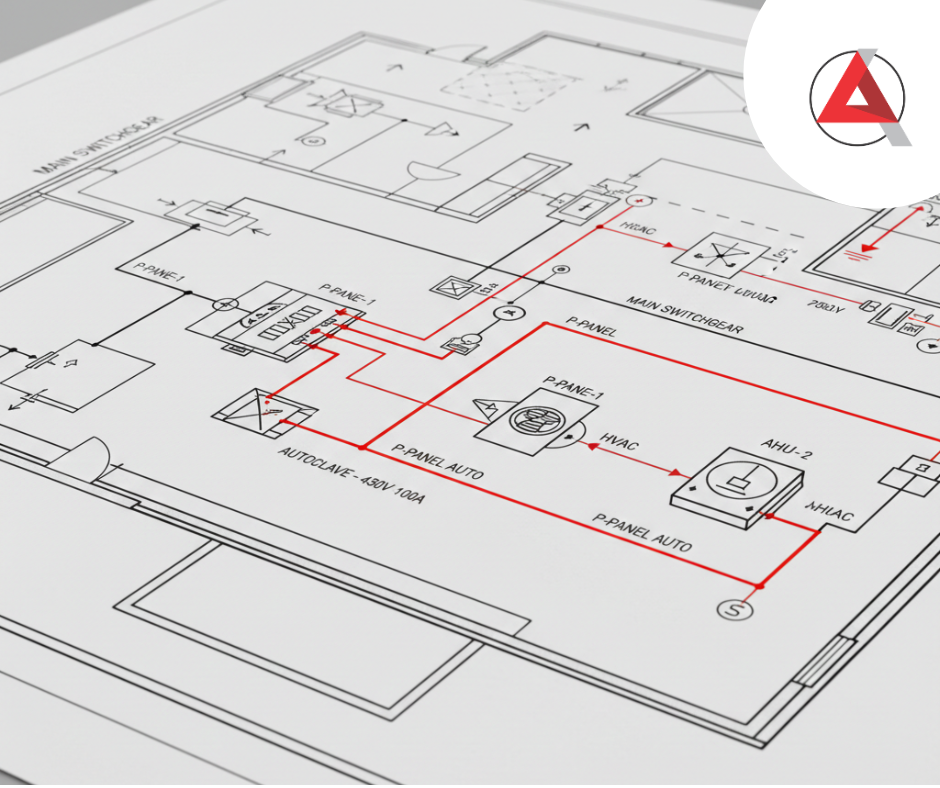
The electrical load in a cleanroom is dense and dynamic. Unlike general manufacturing, where loads are relatively predictable, cleanrooms house energy-intensive equipment like autoclaves, dehydrogenation tunnels, and massive HVAC air handling units (AHUs) that run 24/7.
Critical Load Categorization: Life Safety vs. Process
| Load Type | Description | Examples |
| Life Safety & Environmental | If these fail, cleanroom status is lost immediately. | HVAC systems, environmental controls |
| Process Critical | Power loss equals immediate product loss. | Bioreactors, autoclaves, lyophilizes |
| Process Critical Support & Utility | General operational support, less critical. | Lighting, convenience outlets |
High-Density Distribution and Dedicated Circuit Strategies
| Consideration | Implementation |
| Dedicated Circuits | High-draw equipment like autoclaves require dedicated feeders to prevent voltage drops on sensitive instrumentation. |
| Harmonic Mitigation | Incorporate filtration for VFDs to prevent “dirty power” and protect sensitive control systems. |
| Panel Location | Distribution panels should be in the grey space/tech corridor to allow maintenance without gowning disruption or contamination risk. |
The Necessity of N+1 Redundancy and UPS Integration
In pharmaceutical and semiconductor manufacturing, uptime is not a luxury; it is a financial and regulatory necessity. Redundant power for cleanrooms ensures that a single component failure does not cascade into a facility-wide shut down.
N+1 Redundancy: Ensuring Facility Uptime
| Redundancy Element | Description | Role in Uptime |
| Parallel Feeds | Dual feeders or independent utility sources are available. | First layer of external grid failure protection. |
| Generator Backup | Diesel or natural gas, online within seconds. | Runs facility during major outages. |
| UPS Integration | Online double-conversion protects critical systems. | Bridges the power gap and maintains control/data systems. |
Continuous Data Logging: UPS systems should follow IEEE 446 (Orange Book) reliability principles.
The Role of UPS in Maintaining Compliance Data
| System | UPS Coverage Needed? | Importance |
| BMS/EMS | Yes | Maintains compliance records |
| HVAC Control Circuits | Yes | Ensures negative pressure/controlled shutdown |
Reliability is central to our approach in controlled environments, ensuring that your facility remains operational even during external grid instability.
Specialized Grounding and Bonding: ESD and Contamination
Static electricity presents a significant reliability and contamination risk. In electronics manufacturing, an Electrostatic Discharge (ESD) event can destroy a wafer. In pharmaceutical powder processing, static can cause powder to cling to surfaces (reducing yield) or, worse, ignite combustible dust.
Equipotential Bonding and Static Control
| Grounding Feature | Purpose | Application Area |
| Equipotential Bonding | Eliminates voltage potential difference between conductive surfaces | Raised floors, wall panels, equipment |
| Isolated Grounds | Prevents electrical noise interference | Sensitive instrumentation racks |
| Static Dissipative Flooring | Safely conducts static charges to ground | All personnel and equipment zones |
| Ionization Systems | Neutralizes static on non-conductive surfaces | Areas with plastics/packaging |
Cleanroom electrical design ensures stable environmental control, regulatory compliance, and operational continuity through specialized power distribution, redundancy, grounding, and validation-ready infrastructure.
According to the ESD Association, effective control programs can significantly reduce product failure rates, making specialized grounding a high-ROI activity in facility design. Is your facility protected against silent ESD failures? Schedule a Cleanroom Grounding Audit with our specialists.
Future-Ready Cleanroom Electrical Design and Modular Expansion
A cleanroom is rarely a static entity. Technologies evolve, and production needs scale. Electrical systems must be designed with the foresight for future validation and expansion without requiring major demolition that would violate clean protocols.
Supporting IQ/OQ Validation Through Smart Design
| Solution | Description | Benefit |
| Pre-Fabricated Wiring | Modular, pre-terminated wiring reduces on-site debris | Clean build & easy maintenance |
| Accessible Test Ports | Testing without exposing or opening live panels in clean rooms | Supports IQ/OQ validation |
| Spare Capacity Design | aligned with NEC and future load diversity planning. | Easier upgrades and scalability |
| Overhead Busways | Track systems for plug-and-play power drops | Expansion without construction dust |
Conclusion
Cleanroom electrical design is a discipline that merges rigorous safety standards with the delicate requirements of contamination control. By focusing on hygienic installation details, robust power redundancy, specialized grounding, and future-ready flexibility, engineers can build facilities that not only meet current GMP and ISO standards but also stand the test of time.
Whether you are retrofitting an existing lab or building a greenfield pharmaceutical plant, the electrical backbone is what keeps your critical environment running. Ensure your design is as clean as the room it serves.
Proper grounding mitigates Electrostatic Discharge (ESD). Static charge attracts particulate matter (a phenomenon called electrostatic attraction), making it harder to keep surfaces clean. Effective grounding helps surfaces repel dust and prevents damage to sensitive equipment.
Generally, no. Standard outlets have recesses and ledges that trap dust and are difficult to clean. GMP cleanrooms require pharmaceutical-grade, flush-mounted outlets, often made of stainless steel, that can withstand frequent chemical sanitization.
A UPS (Uninterruptible Power Supply) provides immediate, short-term power during a grid failure, bridging the gap until the backup generator starts. It protects critical control systems (BMS/EMS) and data integrity, ensuring that environmental monitoring records are not lost during a power outage.
GET IN TOUCH
Complete the form below to get in touch with our team.