

EU GMP Annex 1 Grades Vs ISO 14644 Classes: How To Map Your Cleanroom
EU GMP Annex 1 grades and ISO 14644 classes are related, but they are not the same thing. Annex 1 Grades A, B, C, and D describe cleanroom expectations for sterile pharmaceutical manufacturing, while ISO 14644 classes define airborne particle cleanliness under specified test conditions. We work on pharmaceutical cleanroom projects where grade mapping connects layout, HVAC, qualification, and monitoring decisions from the earliest design phase.
As a practical starting point, Grade A aligns with ISO 5 conditions at rest and in operation for the 0.5 µm particle limit. Grade B aligns with ISO 5 at rest and ISO 7 in operation. Grade C aligns with ISO 7 at rest and ISO 8 in operation. Grade D aligns with ISO 8 at rest, while its in-operation limit is not predetermined and should be based on risk and routine data where applicable. Health Canada’s Annex 1 guidance sets out the official at-rest and in-operation particle concentration limits that these mappings are built on.
At A Glance
- GMP grades are process-risk zones; ISO classes are particle cleanliness classifications.
- At-rest and in-operation states must be treated separately.
- A grade map should drive layout, pressure cascade, airflow, HVAC, qualification, and monitoring.
- RABS and isolators can change background expectations, but they still need documented risk-based design.
Why GMP Grades And ISO Classes Are Not Interchangeable
GMP grades and ISO classes are often placed in the same table, which makes them look interchangeable. They are not. ISO 14644 tells you how clean the air is by particle concentration under defined conditions. GMP Annex 1 tells you what the cleanroom or clean zone means in a sterile manufacturing process.
The safest way to use the map is to treat ISO classification as one measurable output of a larger GMP design decision. The grade assignment still needs to reflect product exposure, critical operations, airflow protection, transfer risk, contamination control strategy, and how the room will be used in operation.
What EU GMP Annex 1 Grades Mean
EU GMP Annex 1 grades describe the expected level of environmental control for sterile medicinal product manufacturing. Grade A is the critical zone for high-risk operations, such as aseptic filling points, open primary packaging, stopper bowls, and aseptic connections under first-air protection. Grade B is commonly the background cleanroom for Grade A aseptic processing where an isolator strategy is not used. Grades C and D are used for less critical stages or support areas, depending on the process and technology.
The important point is that a GMP grade is not only a particle-count target. It represents a process-risk zone, including personnel access, material transfer, cleaning, pressure relationships, airflow behaviour, and how the area supports the contamination control strategy.
What ISO 14644 Classes Mean
ISO 14644 classes describe airborne particle cleanliness. They help teams classify cleanrooms and clean zones using defined particle concentration limits and test conditions. This is essential for cleanroom qualification, but it does not explain the full GMP operating model by itself.
For example, a room described only as “ISO 7” leaves several questions unanswered. Is it a Grade C room at rest? A Grade B background in operation? A support room with different monitoring expectations? A side-by-side view of GMP and ISO classifications for cleanrooms makes it easier to see what each label actually defines and where the two frameworks overlap.
Why The Mapping Is Useful But Not A Substitute For Risk Assessment
Mapping GMP grades to ISO classes is useful because it gives architects, HVAC engineers, QA, validation, and operations a common language. It turns grade expectations into measurable classification targets and helps the project team define room boundaries, pressure cascades, and monitoring points.
However, a table cannot assign the right grade by itself. Two rooms can share the same ISO class and still require different airflow patterns, transfer controls, cleaning frequencies, or personnel restrictions. Use the map as a starting point, then confirm the decision through the contamination control strategy, process risk assessment, and intended operating state.
Annex 1 Grades To ISO 14644 Classes At A Glance
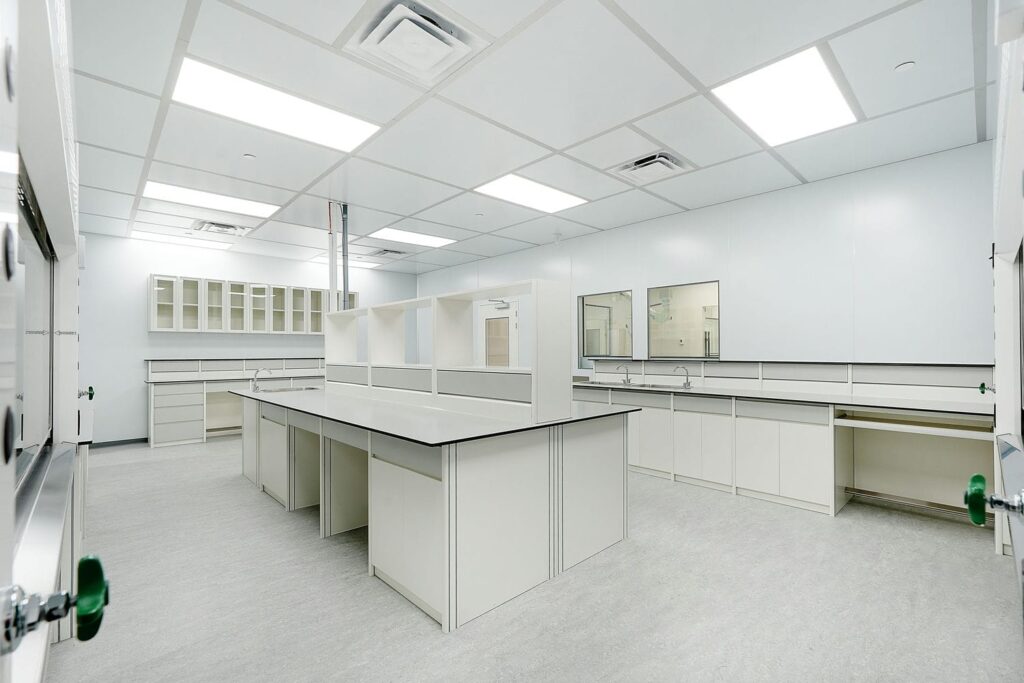
Annex 1-style grades commonly map to ISO 14644 classes at the 0.5 µm particle limit, but the mapping should be treated as a planning aid for design and qualification rather than the sole basis for any facility decision.
| GMP Grade | Typical Role In Sterile Manufacturing | Practical ISO Mapping At Rest | Practical ISO Mapping In Operation | Key Caveat |
| Grade A | Critical zone for high-risk operations, usually protected by unidirectional airflow, RABS, or isolator technology | ISO 5 | ISO 5 | 5.0 µm classification limits are not specified unless considered through CCS or historical trends |
| Grade B | Background cleanroom for Grade A aseptic preparation and filling where not using an isolator approach | ISO 5 | ISO 7 | In-operation state is materially different from at-rest state |
| Grade C | Less critical cleanroom stages or support/background areas depending on the process | ISO 7 | ISO 8 | Process role and operating state drive the final design expectation |
| Grade D | Lower-grade clean area for less critical stages or support/background use | ISO 8 | Not predetermined | In-operation limits should be set from risk assessment and routine data where applicable |
How To Read The Table
Read the table from process risk to measurable target. The GMP grade explains why the space exists and what level of control it supports. The ISO class gives the particle cleanliness target that can be tested during classification.
The next step is to confirm the operating state. Grade B at rest and Grade B in operation do not map to the same ISO level. The same is true for Grade C. If a team ignores the operating state, the layout may look correct on paper but fail to support the qualification and monitoring expectations that QA needs.
Why At Rest And In Operation Both Matter
“At rest” means the cleanroom installation is complete, the HVAC system is functioning, and the main manufacturing equipment is installed but not operating, with no personnel present. “In operation” means the installation is complete, HVAC is operating, equipment is functioning in its defined operating mode, and the maximum number of personnel are performing or simulating routine work. Cleanroom classification should be carried out in both states because the room behaves differently in each.
This distinction matters because a room that passes at rest may not perform the same way in operation. People, carts, door events, interventions, equipment heat loads, and cleaning activity can all change particle generation and airflow behaviour.
How Particle Sizes Affect The Mapping
The Annex 1-style classification table focuses on particles equal to or greater than 0.5 µm and 5.0 µm. However, some 5.0 µm classification limits are listed as “not specified” or “not predetermined,” with additional consideration based on the contamination control strategy, historical trends, risk assessment, and routine data where applicable.
This is why older one-line equivalency charts can create confusion. A current grade map should show grade, ISO target, particle size, operating state, test intent, and the rationale behind the decision.
Where Each Annex 1 Grade Is Usually Used
Grade assignment should follow the process, not the room name. A filling line, transfer step, or aseptic connection may need one grade at the point of risk and a different background environment around it. A useful map shows where the critical operation occurs, how it is protected, and what background controls support it.
This is also where barrier technology, room interfaces, and material flow become part of the discussion. The grade map should help the team understand not only the cleanest area, but also the supporting areas that prevent contamination from reaching it.
Grade A: Critical Zone For Highest-Risk Operations
Grade A is used where exposed sterile product, sterile components, containers, closures, or critical surfaces need direct protection. Common examples include aseptic filling points, open primary packaging, stopper bowls, and aseptic connections performed under first-air protection.
Grade A is usually achieved through localized protection, such as unidirectional airflow, RABS, or isolator technology. The grade map should identify exactly where Grade A exists. Marking an entire room as Grade A can create unnecessary design burden unless that is truly the intended risk control strategy.
Grade B: Background For Grade A Aseptic Processing
Grade B commonly serves as the background cleanroom for Grade A aseptic processing when Grade A is not inside an isolator approach. It supports the critical zone by controlling the environment around it, including personnel movement, material handling, pressure relationships, and routine interventions.
Designers should treat Grade B as a high-control area, not as a generic support room. Because its at-rest and in-operation mapping differs, the qualification and monitoring strategy should reflect how the area behaves during real work, not only during a static test.
Grade C And Grade D: Less Critical Stages And Support Areas
Grades C and D are used for less critical sterile manufacturing stages or support/background areas depending on the product and process. They may support component preparation, staging, terminal sterilization-related activities, isolator backgrounds, or controlled support steps that feed higher-grade areas.
These areas still matter because they shape what enters higher-grade spaces. Weak Grade C or D controls can increase contamination pressure upstream, even if the Grade A point is well protected. A good map considers how materials, equipment, personnel, samples, and waste move through these areas.
RABS And Isolator Backgrounds
RABS and isolators can change background expectations because they physically separate the Grade A environment from the surrounding room. That can reduce the burden on the background space, but it does not remove the need for documented risk-based design, transfer control, and qualification evidence.
The grade map should define the Grade A zone, barrier technology, background grade, transfer interfaces, glove interventions, maintenance states, and decontamination strategy. Annex 1-style guidance describes RABS and isolators as beneficial for assuring required conditions and minimizing microbial contamination from direct human interventions, and ties their use to the contamination control strategy.
How To Map A Cleanroom Step By Step
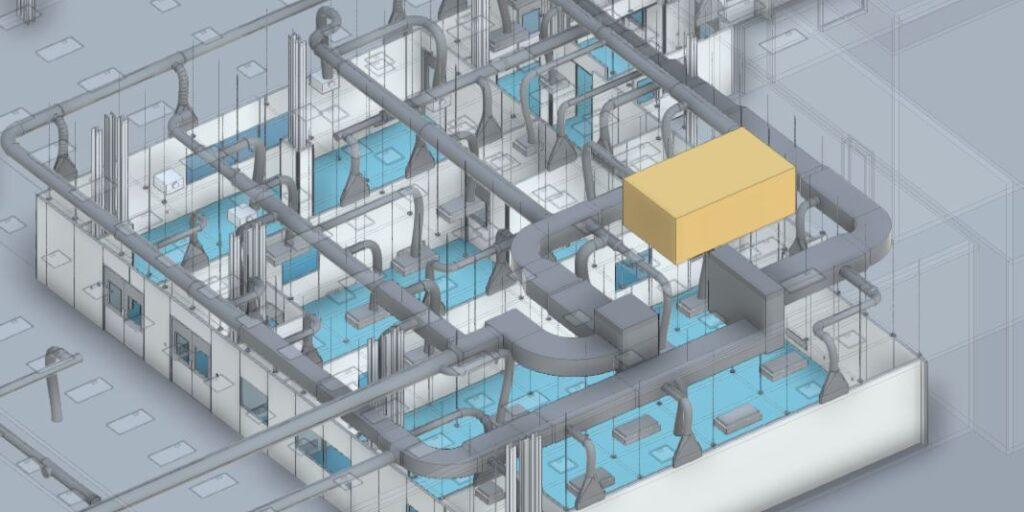
A cleanroom grade map is most useful when it is built from the process outward. Start with the product and critical surfaces, then define the grade at each point of risk. After that, translate the grades into layout, pressure, HVAC, qualification, and monitoring requirements.
This step-by-step approach prevents a common design failure: labelling rooms first, then trying to force the process into the labels afterward.
Step 1: Define The Process And Product Exposure
Start by mapping where product, sterile components, containers, closures, and critical surfaces are exposed. Include routine operations, interventions, set-up, line clearance, component transfer, sampling, and waste removal. The highest-risk points should be visible before any room grade is assigned.
The map should follow exposure risk. If a critical aseptic connection happens at one point in the suite, the design question is how that point is protected and supported. The answer may be Grade A protection with a suitable background, not a broad room label that misses the actual process risk.
Step 2: Assign GMP Grades By Operation
Next, assign a GMP grade to each operation or clean zone based on contamination risk and sterile manufacturing expectations. This should include critical processing areas, background rooms, preparation spaces, staging locations, transfer routes, airlocks, and support areas.
The final map should show grade boundaries clearly. It should also show whether the room or zone is intended to be classified at rest, in operation, or both. If “in operation” applies, define the operating scenario, including personnel count, equipment status, and typical interventions.
Step 3: Translate Grades Into ISO Classification Targets
Once the GMP grade is assigned, translate it into ISO classification targets for the relevant state. This gives the engineering, QA, validation, and certification teams a measurable target for cleanroom classification.
The ISO target is only one output of the grade map. The same map should also inform airflow, pressure cascade, filtration, temperature and humidity control where relevant, monitoring points, personnel movement, and cleaning controls.
Step 4: Build The Pressure Cascade And Transfer Strategy
The grade map should become a pressure and transfer map. It should show how people, materials, waste, samples, equipment, and components move between grades. It should also identify airlocks, pass-throughs, interlocks, door sequencing, and any paths where simultaneous movement creates risk.
Grade boundaries often fail at doors. Door design, cleanability, sealing, and interlock behaviour all influence pressure separation and transfer control. Carefully specified pharmaceutical cleanroom doors are often the difference between a pressure cascade that holds in operation and one that collapses at every transition.
Step 5: Connect The Map To Qualification And Monitoring
The final grade map should not sit only on a drawing. It should connect directly to qualification protocols, classification testing, airflow visualization, environmental monitoring, pressure monitoring, requalification, and change control.
Once the grade map is approved, the monitoring plan should show how the facility will confirm continued control. A clear ISO 14644-2 monitoring and requalification plan keeps the room performing after initial classification, particularly when layout, process, or HVAC changes are introduced.
Design Implications: Turning The Map Into A Real Suite
A good grade map should change design decisions. It should influence where rooms sit, how doors work, where airlocks belong, how HVAC is zoned, and how people and materials move. If the map does not affect design, it is probably not detailed enough.
The best projects use the grade map as a coordination tool across architectural, mechanical, HVAC, electrical, QA, validation, and operations teams. That keeps the cleanroom from becoming a collection of compliant parts that do not work together.
Layout And Room Adjacency
A pharmaceutical cleanroom suite often starts with the Grade A critical zone and builds outward. Grade B, C, and D areas should support the process flow while reducing unnecessary crossings, backtracking, or traffic near critical operations.
Room adjacency should make the intended behaviour easy. Personnel routes, material routes, sample routes, waste routes, and maintenance access should be mapped before construction. When the layout supports the process, procedures are easier to follow and contamination control is easier to maintain.
Pressure Cascade And Airlocks
Pressure cascade design helps protect cleaner areas and control movement between grades. Cleanrooms should have filtered air supply that maintains positive pressure and airflow relative to lower-grade backgrounds under all operational conditions, and adjacent rooms of different grades typically use an air pressure difference of at least 10 Pa as a guidance value.
Pressure cascade is not just a number on a drawing. It is a control strategy that must work during door openings, material transfer, interventions, cleaning, and normal use. Airlocks, interlocks, warning systems, and door discipline all affect whether the grade map works in practice.
Airflow, First Air, And Visualization
Grade mapping must connect to airflow behaviour. Grade A protection depends on first air and stable airflow at the critical location. Background grades should support that protection, not push contamination toward the critical zone.
Annex 1-style guidance expects airflow pattern studies both at rest and in operation, including simulated operator interventions, with video recordings retained and outcomes documented. The results should also feed directly into the environmental monitoring program.
HVAC, Filtration, And Cleanability
The grade map should inform HVAC capacity, HEPA filtration strategy, recovery expectations, pressure control, temperature and humidity control where relevant, and maintainability. Higher-grade areas usually require more disciplined air delivery and tighter control of room behaviour.
Cleanability also matters. Smooth, impervious, unbroken surfaces and sealed ceilings support the expected grade over time. The design should reduce dust accumulation, awkward ledges, difficult-to-clean recesses, and interfaces that trap particles or residues.
Pharmaceutical Project Context
Grade mapping becomes more reliable when pharmaceutical manufacturing layout, engineering, and qualification planning are handled together rather than as separate workstreams. A real pharmaceutical manufacturing cleanroom project shows how room function, process flow, and controlled environments come together when the disciplines are coordinated from the start.
Classification, Monitoring, And Qualification

Classification, monitoring, and qualification are connected, but each serves a different purpose. Classification assesses air cleanliness against a defined specification. Qualification confirms the cleanroom and clean air equipment meet required characteristics. Monitoring helps the facility confirm continued performance during routine operation.
When these activities are aligned to the same grade map, the facility has a stronger evidence base. When they are disconnected, QA and operations can end up debating what the room was designed to do after it is already built.
Classification Is Part Of Qualification
Cleanroom classification is part of cleanroom qualification. Annex 1-style guidance describes classification as a method of assessing air cleanliness against a specification by measuring total particle concentration. Qualification may also include filter integrity, airflow, pressure difference, airflow direction, microbial contamination, temperature, humidity, recovery, and containment leak testing where applicable.
This is why a grade map should not stop at “ISO 7” or “Grade C.” It should connect to the tests and evidence required to show the room performs as intended.
Monitoring Confirms Continued Control
Monitoring is how the facility watches the room after qualification. It should be risk-based and tied to critical locations, process flow, airflow behaviour, pressure relationships, and routine operation.
This monitoring plan should not be copied blindly from another facility. The locations, frequency, limits, and response rules should reflect the approved grade map and how the room is actually used. That makes monitoring more useful for investigations and more defensible during review.
Requalification After Changes
Requalification should be triggered when changes can affect the grade map or room performance. Examples include HVAC changes, filter changes, pressure cascade adjustments, room layout changes, equipment changes, and process changes that alter occupancy, heat load, or particle generation.
Annex 1-style guidance also sets maximum requalification intervals of 6 months for Grade A and B areas and 12 months for Grade C and D areas, with additional requalification after remedial action, facility changes, equipment changes, or process changes.
Common Mapping Mistakes That Create Rework
Most grade-map rework happens because a team simplifies the map too early. They treat grade and ISO class as the same thing, focus only on at-rest results, or map room labels before understanding product exposure and transfer risk.
These mistakes are preventable. The solution is to document the process risk, operating state, grade boundary, ISO target, and lifecycle evidence before design decisions are locked.
Treating GMP Grade And ISO Class As The Same Thing
The most common mistake is treating “Grade C” and “ISO 7” as interchangeable labels. They overlap in a mapping table, but they answer different questions. ISO class tells you airborne particle cleanliness under a defined state. GMP grade tells you what the space means in the sterile manufacturing process.
This mistake creates rework because a room may pass a particle classification test but still fail a design or QA review. Pressure cascade, transfer control, first-air protection, monitoring logic, intervention risk, and cleanability all matter.
Ignoring The In-Operation State
Another common mistake is designing around at-rest classification only. At-rest testing is important, but it is not the same as the room’s real operating condition. In operation, personnel, equipment, carts, doors, and interventions can change particle generation and airflow stability.
If the process runs in operation, the grade map should be tested and managed in operation. The operating scenario should be defined before qualification, not argued over afterward.
Using Old Equivalency Charts Without Checking Current Expectations
Older charts often simplify Grade A to ISO 5 and may include assumptions about 5.0 µm limits that do not match current Annex 1-style tables. That can create confusion during QA review, especially when the contamination control strategy or historical trends point to a different interpretation.
Before locking the URS or qualification approach, check the current standard, site quality system, and contamination control strategy. The mapping table should support the project, not replace the rationale behind it.
Mapping Rooms Instead Of Process Risk
A grade map should not begin by labelling rooms from left to right. It should begin with product exposure and critical operations. If the map starts from room names instead of risk, the layout can miss the points that need the highest protection.
Map exposed product, sterile components, personnel interventions, transfer steps, waste paths, and equipment states before assigning grades. This gives the design team a more accurate basis for layout and HVAC decisions.
Forgetting Doors, Pass-Throughs, And Material Flow
Grade boundaries fail most often at transitions. Doors, pass-throughs, carts, airlocks, and material staging can all create contamination risk if they are not included in the grade map.
A useful map should be readable by both the design team and the people who operate the suite. If operators cannot use the map to understand movement and restrictions, it will not support daily control.
Canada And USA Planning Context
EU GMP Annex 1 is European guidance, but its cleanroom concepts matter well beyond Europe. Many pharmaceutical companies supply global markets, align internal standards to international GMP expectations, or use Annex 1 as a benchmark for sterile manufacturing design and contamination control strategy.
For Canada and USA projects, Annex 1 mapping should be treated as a planning and alignment tool. It should support design clarity, QA review, and qualification planning, while still being checked against the applicable local and project-specific requirements.
Why EU GMP Annex 1 Still Matters Outside Europe
EU GMP Annex 1 matters outside Europe because sterile manufacturing expectations are increasingly global. The European Commission’s EudraLex Volume 4 lists Annex 1 for the manufacture of sterile medicinal products and identifies it as fully applicable since 25 August 2024.
For manufacturers that supply or plan to supply international markets, a clear Annex 1 grade map can help align internal stakeholders. It also helps vendors, engineers, QA teams, and validation teams speak the same language during early design.
How To Align Multi-Jurisdiction Cleanroom Expectations
When a facility serves multiple markets, the grade map should be documented in a way that engineering, QA, validation, and regulatory teams can all understand. That means showing GMP grade, ISO class, operating state, process use, pressure direction, monitoring expectations, and qualification evidence.
The practical goal is fewer late changes. A clear map reduces vendor ambiguity, helps prevent design gaps, and makes qualification easier to plan because each space has a defined purpose and evidence pathway.
Plan A GMP Grade Map That Supports Design, Qualification, And Operations
A strong GMP grade map gives the project team a shared language for layout, HVAC, pressure cascade, airflow, qualification, and monitoring. It helps prevent the common failure where a room is built to an ISO class but does not support the sterile process, the contamination control strategy, or the operating state that QA expects.
ACH Engineering supports pharmaceutical cleanroom projects with turnkey cleanroom design, supply, and installation, integrated in-house engineering across architectural, mechanical, HVAC, and electrical disciplines, and experience delivering ISO- and GMP-aligned cleanroom environments. If you are mapping Annex 1 grades to ISO classes for a new build, retrofit, or qualification package, get in touch with our pharmaceutical cleanrooms team to translate your grade map into layout, HVAC, pressure cascade, qualification, and monitoring decisions.
Frequently Asked Questions
EU GMP Annex 1 grades describe sterile manufacturing cleanroom zones based on process risk and contamination control needs. ISO 14644 classes describe air cleanliness by airborne particle concentration under defined test conditions.
For the 0.5 µm particle limit, Grade A aligns with ISO 5 at rest and in operation. The full Grade A expectation also includes critical-zone protection, airflow behaviour, process controls, and contamination control strategy.
Grade B typically maps to ISO 5 at rest and ISO 7 in operation based on Annex 1-style classification limits.
Grade C typically maps to ISO 7 at rest and ISO 8 in operation. Grade D typically maps to ISO 8 at rest, while in-operation limits are not predetermined and should be defined using risk assessment and routine data where applicable.
Use both where they apply. At-rest classification shows the room baseline, while in-operation classification reflects equipment, personnel, workflow, and simulated routine operations.
No. ISO classification is only one part of the evidence. Annex 1 alignment also depends on process risk, contamination control strategy, airflow, pressure cascade, environmental monitoring, qualification, and ongoing control.
RABS and isolators can change the required background environment, but the decision should be based on risk assessment, transfer strategy, barrier performance, interventions, and the contamination control strategy.
Update the map when the process, equipment, layout, HVAC strategy, barrier technology, pressure cascade, room use, or monitoring strategy changes in a way that could affect contamination control or qualification.
GET IN TOUCH
Complete the form below to get in touch with our team.