

Cleanroom ACPH Formula & Calculation Guide

What is ACPH?
Air Changes Per Hour (ACPH) simply tells you how many times all the air in a room gets replaced with clean, filtered air in one hour. So, if a room has an ACPH of 40, that means the air in that room is completely swapped out 40 times every hour.
$$\text{ACPH} = \frac{\text{CFM} \times 60}{\text{Room Volume (cu. ft.)}}$$ACPH = Air changes per hour
CFM= Cubic feet per minute
Example:
Let’s say:
- The room is 20 ft long, 15 ft wide, and 10 ft high
→ Room Volume = 20 × 15 × 10 = 3,000 cubic feet - The HVAC system supplies 500 CFM
Now plug into the formula:
This matters a lot in places where clean air is super important – like in hospitals, labs, factories that make electronics, or any cleanroom setup. Keeping the air fresh and moving helps reduce dust, germs, and other particles, making the space safer and healthier to work in.
How to Calculate Required Airflow (CFM) for a Target ACPH
In cleanroom HVAC design, facility engineers often know their required ISO classification and target ACPH first, and need to calculate the necessary airflow in Cubic Feet per Minute (CFM) to properly size Air Handling Units (AHUs) and Fan Filter Units (FFUs).
Reverse CFM Formula:
CFM = (Target ACPH × Room Volume in cu. ft.) ÷ 60
Step-by-Step Calculation Example:
Suppose you are designing an ISO Class 7 cleanroom requiring 40 ACPH with room dimensions of 20 ft (L) × 15 ft (W) × 10 ft (H):
- Step 1: Calculate Room Volume
20 ft × 15 ft × 10 ft = 3,000 cubic feet - Step 2: Apply the Reverse CFM Formula
CFM = (40 ACPH × 3,000 cu. ft.) ÷ 60 - Step 3: Solve
CFM = 120,000 ÷ 60 = 2,000 CFM
Result: Your HVAC system must supply a minimum of 2,000 CFM of clean, filtered air to maintain 40 air changes per hour in this space.
Guidelines
The required ACH can vary depending on the cleanliness class or classification of the cleanroom, which is determined by the industry and specific application. Here are some general guidelines for ACH in cleanrooms based on ISO standards:
- ISO 14644-1: This standard provides cleanliness classes for cleanrooms, and it is commonly used as a reference for ACH requirements. The ACH requirements vary depending on the class, with higher classes requiring more frequent air changes to maintain cleanliness.
- USP 797 and USP 800: These are guidelines provided by the United States Pharmacopeia for pharmaceutical compounding cleanrooms. USP 797 outlines ACH requirements for sterile compounding areas, and USP 800 specifies ACH requirements for hazardous drug compounding areas.
- GMP (Good Manufacturing Practice): ACH requirements for cleanrooms in the pharmaceutical industry are often determined by GMP regulations, which can vary by region and country. These regulations may specify ACH based on the type of operation being conducted.
Note: ISO 14644-1 regulates maximum particle concentration levels rather than enforcing static airflow rates. The ACH values below represent established engineering design guidelines based on IEST-RP-CC012 standards and FDA Aseptic Processing Guidance.
| ISO Class | Equivalent Class (FED STD 209E) | Recommended ACH Range | Airflow Pattern Type |
|---|---|---|---|
| ISO Class 8 | Class 100,000 | 10 – 30 ACH(FDA min. 20 ACH for sterile support) | Non-Unidirectional (Turbulent) |
| ISO Class 7 | Class 10,000 | 30 – 60 ACH(USP <797> requires ≥30 ACH) | Non-Unidirectional / Mixed |
| ISO Class 6 | Class 1,000 | 60 – 180 ACH | Mixed / Unidirectional |
| ISO Class 5 | Class 100 | 150 – 300+ ACH(or 0.35–0.51 m/s airflow velocity) | Unidirectional (Laminar Flow) |
| ISO Class 3 – 4 | Class 1 – 10 | 300 – 600+ ACH | Full-Coverage Unidirectional Flow |
ACPH and Air Flow Rate Optimization in Controlled Environments
Maintaining a certified controlled environment depends heavily on establishing the correct Air Changes Per Hour (ACPH). The proper air flow volume dilutes airborne particulates and flushes contaminants toward low-wall return grilles. Higher ISO classifications require elevated ACPH rates paired with unidirectional air streams.
The Role of ACPH
Air Changes Per Hour is of paramount importance in cleanrooms, where stringent environmental control is necessary to prevent contamination and maintain important levels of cleanliness. Here’s why ACPH is crucial in cleanroom environments:
- Contamination Control: Cleanrooms are designed to limit particulate and microbial contamination to protect sensitive processes and products. Air Changes Per Hour ensures a constant flow of clean, filtered air into the cleanroom, reducing the concentration of airborne contaminants. This frequent air exchange helps maintain the required cleanliness levels for various cleanroom classifications, as defined by ISO standards.
- Particle Removal: Particles in the air, even those invisible to the naked eye, can compromise the quality and integrity of products manufactured in cleanrooms. ACPH plays a vital role in removing these particles by continuously cycling in fresh, filtered air. Higher ACPH values result in more effective particle removal, which is crucial for industries like semiconductor manufacturing and pharmaceutical production.
- Temperature and Humidity Control: In addition to cleanliness, some cleanrooms require precise temperature and humidity control. ACPH assists in distributing conditioned air evenly throughout the cleanroom, helping maintain the desired environmental conditions.
- Worker Safety: Cleanrooms may be used for hazardous processes or materials, such as those involving toxic chemicals or biohazardous substances. Sufficient ACPH helps protect workers by continually diluting and removing potentially harmful substances from the air.
- Product Quality and Yield: In industries like semiconductor manufacturing and biotechnology, where product quality is critical, ACPH contributes to consistent production outcomes. A clean and stable environment with the right ACPH minimizes the risk of defects and ensures high product yields.
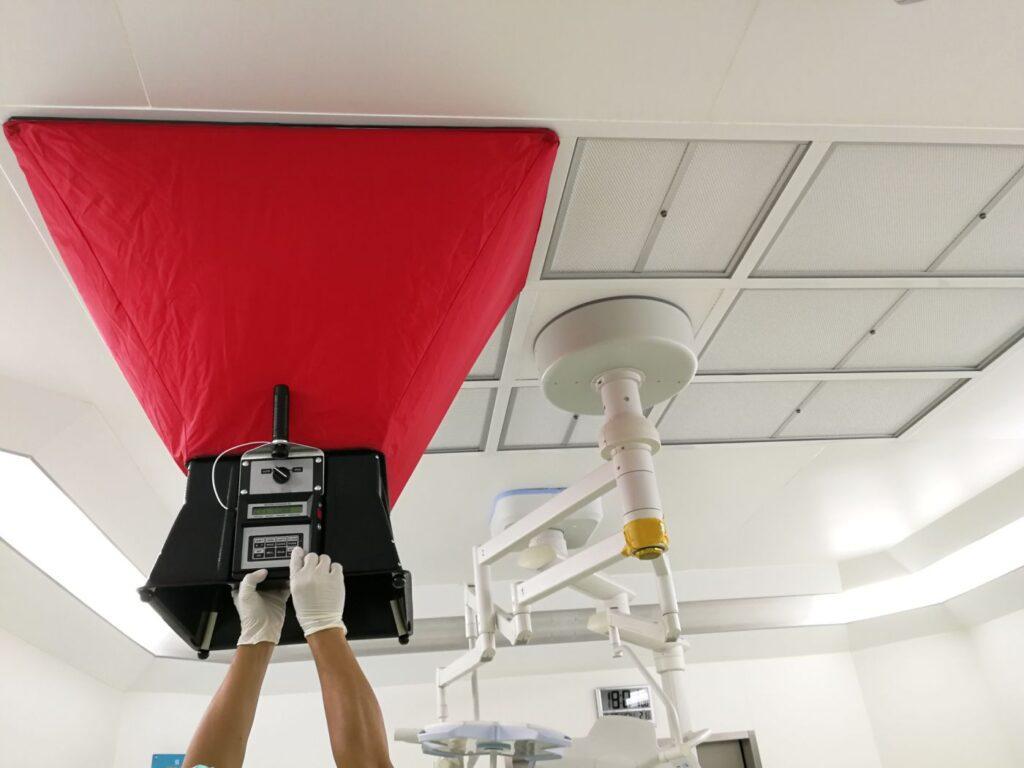
Factors Influencing ACPH
Several factors influence the calculation of ACPH:
- Room Size: Larger cleanrooms typically require more air changes to maintain uniformity in air quality.
- Type of Product and Industry: Industries such as biotechnology, semiconductor manufacturing, and pharmaceuticals demand elevated cleanliness standards, necessitating correspondingly higher ACPH values.
- Cleanliness Level: The industry and the class of cleanroom (ISO Class 1 to ISO Class 9) will determine the required ACPH.
- Processes: Certain processes generate more contaminants, necessitating higher ACPH to maintain desired cleanliness levels.
- HEPA/ULPA Filters: The efficiency of air filtration systems plays a significant role. High-efficiency filters can reduce the required ACPH.
- Personnel: The number of personnel working in the cleanroom can contribute to particle generation and influence ACPH calculations.
Air Changes Per Hour (ACPH) is a critical metric for maintaining the purity and precision of cleanrooms. It is a testament to the commitment of industries to meet stringent quality and safety standards. Understanding the specific ACPH requirements for your cleanroom is essential for ensuring the integrity of your processes and the reliability of your products. As technology continues to advance, the optimization of ACPH will remain central to the evolution of cleanroom technology, enhancing the capabilities of industries that rely on these controlled environments.
Planning to design a cleanroom with a well-balanced Air Changes Per Hour (ACPH) and require expert assistance, please do not hesitate to contact us. We are here to help you create a cleanroom environment that meets your specific needs and cleanliness requirements. Contact us now for a consultation!
Frequently Asked Questions (FAQ)
What is Air Changes Per Hour (ACPH) and why does it matter?
Air Changes Per Hour (ACPH) measures how often the air inside a room is completely replaced with clean, filtered air in one hour. For example, if a room has an ACPH of 20, all the air in that space is swapped out 20 times every hour. This is critical in environments like cleanrooms, pharmaceutical labs, hospitals, and electronics manufacturing where keeping the air free of dust, germs, and chemicals is essential for product safety and regulatory compliance.
How do I calculate ACPH for a room or facility?
To calculate ACPH, you need your room dimensions and your HVAC system’s airflow rate. Use the formula: ACPH = (CFM × 60) ÷ Room Volume, where Room Volume is calculated as Length × Width × Height (in feet) and CFM represents the airflow rate in cubic feet per minute.
What ACPH level do I need for an ISO 7 or ISO 8 cleanroom?
Recommended cleanroom ACPH levels depend on the ISO classification. An ISO Class 7 cleanroom typically requires between 30 and 60 ACPH, while an ISO Class 8 cleanroom usually falls between 15 and 30 ACPH. The exact requirement depends on particle generation, process sensitivity, occupant density, and room design.
Does higher ACPH mean better cleanliness?
Not necessarily. While higher air exchange rates clear contaminants faster, true cleanliness depends on overall system design—including unidirectional vs. turbulent airflow patterns, filter quality, and positive pressure differentials. Running an HVAC system at an excessively high ACPH wastes energy without providing additional contamination control if airflow dynamics are poorly optimized.
What’s the difference between ACPH and CFM?
CFM (Cubic Feet per Minute) measures the volume rate of air moving through your HVAC system every minute. ACPH (Air Changes Per Hour) measures how many times the total volume of air in a specific room is completely replaced within 60 minutes. You must know both the system CFM and the room volume to determine ACPH.
Need Help Sizing or Optimizing Your Cleanroom Airflow?
Get a Quote / Schedule an HVAC ConsultationGET IN TOUCH
Complete the form below to get in touch with our team.