

Commissioning Vs Qualification Vs Validation: IQ/OQ/PQ For Cleanrooms
Commissioning proves your cleanroom systems are installed, integrated, and operating as designed. Qualification (IQ/OQ/PQ) documents that the room and its utilities meet defined requirements, operate within limits, and perform under expected conditions. Validation shows your overall process can consistently deliver compliant outcomes in that environment. When those terms get blended together, projects stall at turnover, QA review slows down, and teams repeat testing they assumed was already complete. ACH Engineering’s cleanroom engineering services cover planning and execution support across all three phases.
You do not need perfect terminology to run a good project. You do need clarity on scope, sequence, and evidence.
Key Definitions At A Glance
- Commissioning: proves systems function and controls are stable.
- IQ: proves installation matches approved design and documentation.
- OQ: proves operation stays within defined limits and alarms protect control.
- PQ: proves performance under real-use conditions.
- Validation: proves the process and controls consistently meet quality outcomes.
Commissioning, Qualification, And Validation In One Minute

Commissioning, qualification, and validation are related, but they are not interchangeable. Each phase answers a different question, and each produces a different evidence set. When you treat them as one activity, you either over-test early or under-document late.
The fastest way to reduce confusion is to define the purpose of each phase and align it to who owns it, what gets signed, and what “done” looks like.
Clean Definitions That Stop Scope Creep
Commissioning focuses on function. It proves your HVAC, controls, alarms, and critical utilities operate as designed and can hold stable setpoints under expected operating conditions. You use commissioning to remove instability before you ask QA to sign qualification evidence.
Qualification (IQ/OQ/PQ) focuses on documented proof against requirements. IQ confirms the installation and documentation baseline. OQ confirms the system operates within defined limits and protective controls work. PQ confirms performance under expected real-use conditions, including occupancy and operational scenarios where applicable.
Validation focuses on consistent outcomes. In regulated environments, validation usually refers to the process and its controls, supported by a qualified facility. A qualified cleanroom reduces variability, but validation typically demonstrates that your process remains capable and controlled over time.
Why Projects Get Stuck When Terms Are Mixed
Projects commonly get stuck when OQ starts before commissioning has stabilised controls and balancing. Teams then chase “failures” that are really unfinished tuning, incomplete punch lists, or inconsistent setpoints. That creates retesting, schedule churn, and avoidable tension between engineering and QA.
Another common issue is treating a single cleanroom certification report as the full qualification package. Certification results can be valuable, but qualification usually needs controlled protocols, traceable prerequisites, deviations management, and formal approvals. When those elements are missing, the gap often shows up right before go-live.
| Phase | What It Proves | Typical Owner | Typical Evidence |
| Commissioning | Systems function as designed and are stable | Engineering / Commissioning | Functional tests, control sequences, balancing readiness, deficiency closeout |
| IQ | Installation matches approved design and records | Engineering + QA oversight | As-builts, equipment lists, calibration status, installation checks |
| OQ | Operation stays within limits and protective controls work | QA / Validation with Engineering support | Test protocols, alarm/interlock checks, pressure and control stability evidence |
| PQ | Performance under expected operating conditions | QA / Validation with Operations input | “At rest” and “in operation” evidence where required, operational scenarios, results and conclusions |
| Validation | Process consistently meets quality outcomes | QA / Validation | Process evidence, ongoing monitoring plans, change control linkage |
Where Each Phase Fits In A Cleanroom Project Timeline
Cleanroom delivery is smoother when you treat commissioning and qualification as planned gates, not as a scramble at the end. A clear timeline also makes budgeting more accurate because you can separate mechanical completion work from qualification work and operational readiness work.
A practical schedule is less about rigid templates and more about dependencies. Commissioning must stabilise the system before qualification can produce defensible results. Qualification must establish the baseline before you can meaningfully demonstrate ongoing control.
From Design Intent To Operational Control
Most projects move from design intent to installed reality to stable operation to documented proof, then into routine operation and change control. If you skip a step, the next step becomes harder and more expensive. For example, if you push qualification before controls are stable, you pay for repeated testing and repeated QA review.
A useful way to frame the timeline is: define requirements (URS and risk), build and document, commission for stability, qualify for proof, then hand off into a controlled operating state with monitoring and change control.
Common Gate Reviews That Should Exist
A “ready for commissioning” gate typically confirms installation is complete enough to test, drawings are current enough to troubleshoot, and major construction dust and open works are controlled. This gate prevents functional testing from turning into basic installation verification.
A “ready for qualification” gate typically confirms controls are stable, balancing is complete, instruments are calibrated, protocols are approved, and prerequisites are closed or formally deferred. A “ready for operations” gate confirms training, SOPs, monitoring readiness, and ownership transfer are complete so the qualified state is maintainable.
Commissioning: Proving Systems Work Before Qualification Starts
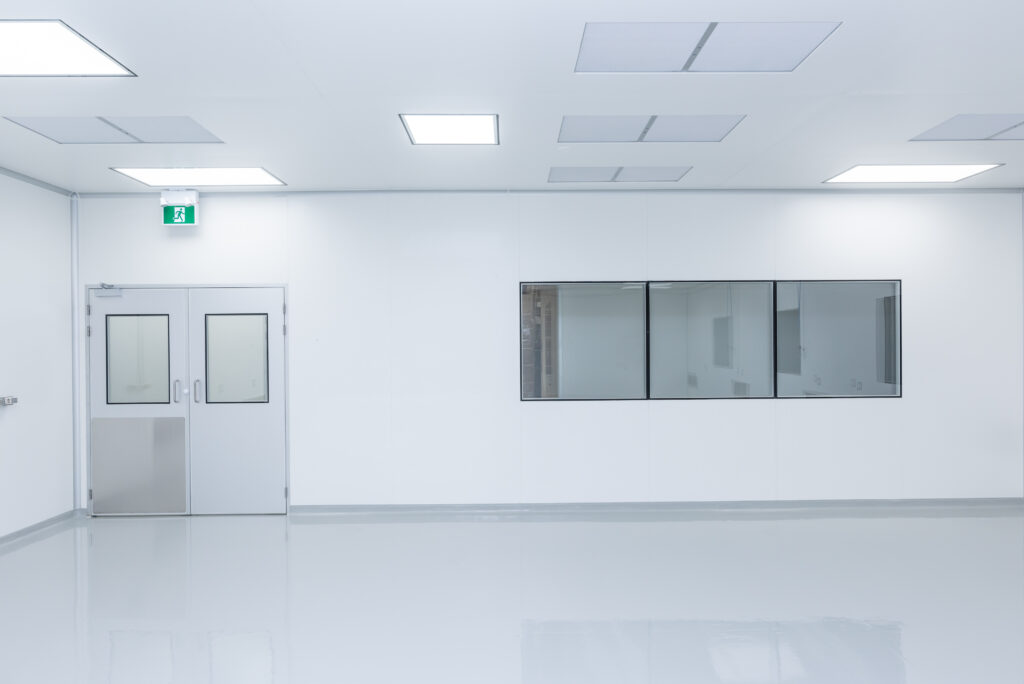
Commissioning is where the room becomes predictable. It is the phase that turns equipment and ductwork into a controllable environment. If commissioning is rushed, qualification becomes a moving target because setpoints drift, alarms change, and room performance varies from day to day.
Good commissioning does not need to be complicated. It needs to be complete, documented, and aligned to the design intent and user requirements that matter to the facility.
What Commissioning Covers In Cleanrooms
Commissioning commonly covers HVAC control sequences, pressure cascade logic, alarm and interlock function, and the ability to maintain stable setpoints for the room’s intended use. It also includes verifying that control sensors read correctly, trends make sense, and the building automation system behaves the way operators will rely on it.
In many cleanroom projects, commissioning also confirms that airflow balancing is achievable and repeatable. If dampers, VAV boxes, or control loops fight each other, you want to find that before you run qualification protocols.
Typical Commissioning Outputs
Typical commissioning outputs include functional test records, a deficiencies log with closures, finalised sequences of operation, and an “as-left” setpoint record. These documents become the baseline evidence that qualification can build on without re-proving basic function.
A clean closeout package also helps operations. When a setpoint changes later under change control, you can compare it to the commissioned baseline rather than relying on tribal knowledge.
Where Commissioning Ends And Qualification Begins
Commissioning ends when the system is stable enough that qualification can test against acceptance criteria without chasing changes. That does not mean the room is perfect. It means it is predictable, controllable, and ready for documented proof.
Qualification begins when protocols and acceptance criteria are approved and prerequisites are met. If you cannot hold pressure relationships for a full shift, or alarms change weekly, qualification will cost more and take longer than planned.
Cleanroom Qualification Explained: IQ, OQ, And PQ
IQ, OQ, and PQ are not just labels for “tests we run.” They are structured phases of evidence. Each phase answers a different question and should have clear prerequisites, boundaries, and approvals.
A well-structured IQ/OQ/PQ package also reduces audit stress because it shows what you intended to prove, how you proved it, and what actions you took when results did not meet expectations.
Installation Qualification: What “Installed Correctly” Means
IQ focuses on confirming that the installation matches approved drawings, specifications, and design intent. It typically verifies that critical components are present, installed correctly, and documented properly. In a cleanroom context, that can include key HVAC components, terminal filters and housings, monitoring points, and room finishes that affect cleanability.
IQ is also where documentation discipline matters. If drawings are not current, equipment tags do not match records, or calibration status is unknown, IQ becomes a clean-up exercise instead of a controlled confirmation.
Operational Qualification: What “Operates Within Limits” Means
OQ focuses on demonstrating that the cleanroom systems operate within defined limits and that protective functions work. This often includes confirming pressure relationships, verifying control stability, and checking alarms and interlocks that protect the environment. The goal is to prove the room can stay “in control” under defined operating ranges.
OQ is also where you prove the system responds correctly to normal disturbances. That might include confirming that the room recovers after door cycles, that pressure alarms trigger reliably, and that control loops do not overshoot into unstable behaviour.
Performance Qualification: What “Performs In Real Use” Means
PQ focuses on performance under expected operating conditions. That means testing the cleanroom the way it will be used, with the expected people, equipment heat loads, workflow, and operational activities that could influence the environment. For some operations, “at rest” evidence is not enough because the real risk happens during interventions and occupancy.
A practical PQ approach defines scenarios up front. You decide what “real use” means for your process and then demonstrate that the room maintains required control under those conditions. This prevents last-minute debates about whether a result “counts” because the scenario was not defined.
Qualification Vs Certification: The Common Confusion
Cleanroom certification often refers to a defined set of tests performed at a point in time, frequently by a third-party certifier, depending on your scope and standard. Qualification is the broader, QA-governed documentation package that connects prerequisites, protocols, results, deviations, approvals, and change control into one traceable record.
Teams that need to reconcile standards vocabulary, understand the difference between ISO classification and GMP expectations, or clarify how certification is typically reported will find ACH Engineering’s guide to cleanroom certifications and regulations a useful reference.
What Tests Typically Belong In Cleanroom IQ/OQ/PQ
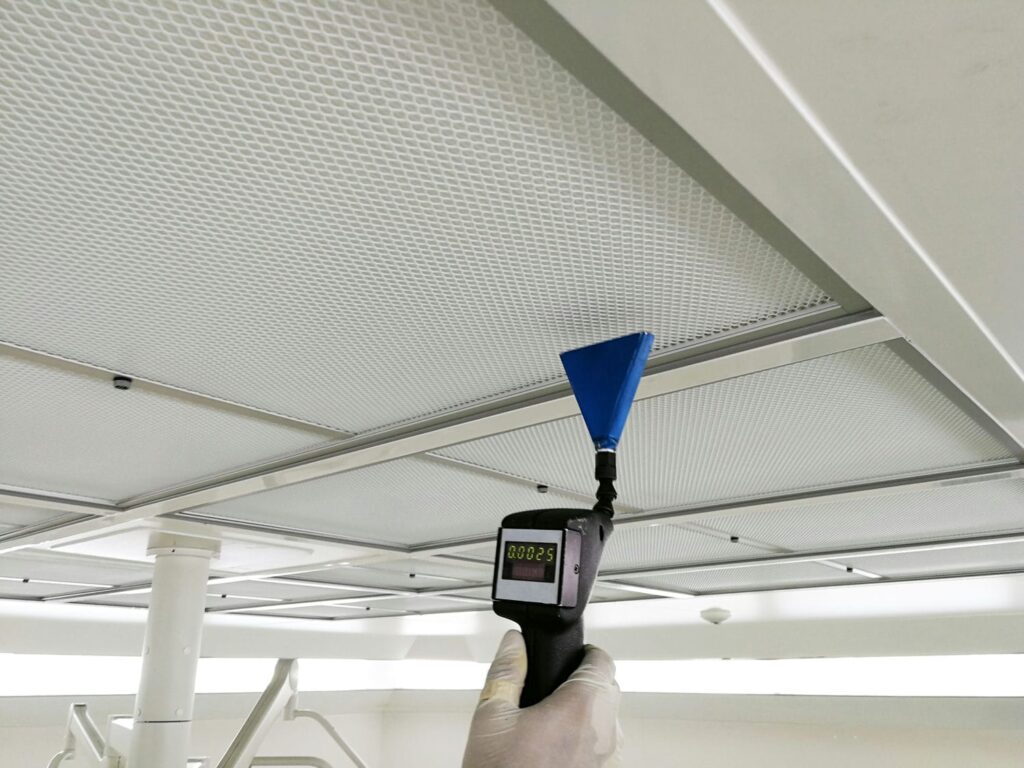
Test placement varies by industry, risk assessment, and your URS, but the logic is consistent. OQ tends to focus on control functions and operating limits. PQ tends to focus on real-use performance. IQ tends to confirm the documented baseline and prerequisites.
The key is not memorising a universal list. The key is defining what you need to prove and making sure the test supports that proof at the right time in the lifecycle.
Room And HVAC Tests Commonly Tied To OQ
OQ commonly includes pressure differential verification, directional airflow checks, control stability evidence, and alarm and interlock verification. It often includes filter integrity verification and other tests that confirm the cleanroom can hold the environmental conditions required for your intended use.
OQ is also where teams confirm that monitoring points are functional and that the room behaves consistently enough to make later performance testing meaningful. If you cannot hold stable pressure relationships during OQ, PQ results are harder to interpret and harder to defend.
Tests That Often Show Up In PQ Or “In Operation” Work
PQ often includes performance evidence under occupancy and operational scenarios. That can include the impact of personnel, door cycles, equipment heat loads, and workflow on room stability. The goal is to demonstrate the environment supports the process when it matters most, not only under ideal conditions.
Airflow visualisation can be part of this performance story when you need to show how air behaves at critical work zones, especially during interventions or under worst-case scenarios. When airflow behaviour is a key risk driver, smoke studies and airflow visualisation can help scope when they are useful and how results are interpreted.
Utilities And Monitoring Systems That Need Clear Ownership
Cleanroom performance often depends on utilities and monitoring that sit outside the room itself. Temperature and humidity monitoring, differential pressure monitoring, building automation trends, and alarm response procedures all influence whether the qualified state is maintained.
Clear ownership prevents gaps. Decide who owns calibration, who reviews trends, who responds to alarms, and how changes are assessed for requalification. When these responsibilities are unclear, the room can drift out of control without anyone noticing until a deviation occurs.
Validation: What Is Actually Being “Validated” In Cleanroom Work
Validation is often the most misunderstood term in cleanroom projects because people use it to mean “the room is good” and “the process is proven.” In most regulated environments, validation is about demonstrating consistent, controlled outcomes over time, supported by qualified equipment and qualified facilities.
Cleanroom work supports validation by reducing environmental variability and providing controlled, documented evidence that the environment can support the process consistently.
Cleanroom Validation Vs Process Validation
Cleanrooms are typically qualified environments that support validated processes. Process validation focuses on proving that a manufacturing or compounding process can consistently produce output that meets requirements when run within defined controls.
The FDA’s process validation guidance frames validation as a lifecycle covering process design, process qualification, and continued process verification, which reinforces the idea that control is maintained over time, not proven once.
How Cleanroom Qualification Supports Validation Outcomes
A qualified cleanroom provides documented evidence that critical environmental controls are in place and operating within limits. That evidence supports investigations, audits, and change control because it establishes what was verified and when.
Health Canada’s validation guidance describes installation, operational, and performance qualification as part of a broader validation approach, reinforcing the linkage between qualified facilities and validated outcomes.
Where Ongoing Monitoring Fits After PQ
After PQ, the work shifts from proving performance to maintaining it. That is where monitoring, trending, and change control keep the room in a qualified state and support continued process control.
ACH Engineering’s overview of cleanroom validation covers how documentation and evidence sets are typically structured for regulated environments.
Documentation That Prevents Delays At Turnover

Many cleanroom go-live delays are documentation delays, not construction delays. The room may be physically complete, but the evidence package is incomplete, approvals are unclear, or prerequisites are missing. A well-planned documentation set reduces rework and keeps the approval pathway predictable.
Documentation works best when it is built as the project runs. If you attempt to create the full evidence package at the end, you spend more time reconstructing decisions than proving performance.
Core Documents Teams Expect To See
Most teams expect a clear line from requirements to evidence. That typically includes URS or design intent, risk assessments, commissioning records, qualification protocols, executed test records, deviations and corrective actions, and final reports with approvals. As-built drawings, sequences of operation, and equipment lists help anchor the package to the installed state.
Calibration evidence matters too. If critical instruments are not calibrated or calibration records are missing, QA often cannot accept the results even if the room performed well during testing.
Practical Acceptance Criteria: What Makes Testing Defensible
Acceptance criteria should be measurable, aligned to intended use, and agreed before execution. If acceptance criteria are vague, teams end up negotiating “pass” and “fail” after the fact, which slows review and creates inconsistent decision-making.
A practical approach is to define acceptance criteria at the level of what you need to control, then link each criterion to a test and a document that proves it. This keeps scope tight and reduces the risk of discovering new requirements late in the schedule.
How Project Management Keeps IQ/OQ/PQ On Track
Project management keeps commissioning and qualification on track by controlling dependencies, coordinating gate reviews, tracking deficiencies to closure, and managing document flow so approvals do not become the critical path. This is especially important when multiple trades, vendors, and certifiers contribute evidence.
Teams that need structured schedule and deliverables control across design, build, and turnover can benefit from ACH Engineering’s project management services, which are built around cleanroom delivery and maintaining a single source of truth for closeout.
Common Failure Modes And How To Avoid Rework
Most rework comes from timing and scope, not from technical difficulty. When teams test too early, results change. When teams document too late, evidence gaps appear. The fix is usually a clearer gate structure and stronger prerequisite control.
These failure modes show up across industries because they are driven by the same pressures: schedule compression, unclear ownership, and assumptions about what other teams are delivering.
Starting OQ Before The Room Is Stable
When OQ starts before the room is stable, teams repeat tests because controls drift, balancing changes, or setpoints are still being tuned. This creates “false failures” that are really incomplete commissioning. It also burns QA review capacity on results that will not remain valid.
A practical prevention step is to require a commissioning stability window before OQ execution, with clear evidence that critical setpoints and alarms remain consistent over that period.
Treating A Single Certification Report As Full Qualification
Certification reports can be an important input, but they are not the full qualification story in most regulated environments. Qualification typically requires approved protocols, executed records with traceability, documented prerequisites, deviations management, and formal approvals.
To avoid gaps, decide early what certification will cover and what your internal protocols will cover. Then make sure those pieces align and do not duplicate effort or leave unowned requirements.
Missing “In Operation” Reality In PQ
Cleanrooms can pass “at rest” testing and still struggle during real operations. Door cycles, occupancy, equipment heat loads, and workflow can change stability, especially in pressure relationships and airflow behaviour. If PQ does not reflect real use, you can go live with an environment that looks compliant on paper but creates recurring excursions.
The simplest fix is defining operational scenarios up front and testing the room under those conditions. That gives you evidence that matches how the space will actually run.
A Practical Planning Checklist Before You Start IQ/OQ/PQ

A checklist will not replace engineering judgement, but it will prevent common misses that slow qualification execution. The goal is readiness: stable systems, controlled documents, and clear acceptance criteria before the first protocol is executed.
Use the checklist below as a planning tool, then tailor it to your URS, risk assessment, and industry requirements.
Before You Write Protocols
Confirm intended use, critical quality risks, and the acceptance criteria you need to demonstrate. Identify which systems and utilities sit inside the qualification boundary and which sit outside it. Assign ownership and define who approves protocols, who executes tests, and who reviews results.
Also confirm your deviation process and closeout expectations. A clean deviation workflow prevents small findings from turning into major schedule slips.
Before You Execute OQ
Confirm commissioning is complete for the systems you are testing and that controls and balancing are stable. Verify calibration status for critical instruments and confirm that drawings, sequences, and equipment lists match the installed state. Make sure access panels, test points, and safety requirements are ready so execution does not stall in the field.
Confirm prerequisites in writing. When prerequisites are implied, teams argue about readiness while the schedule slips.
Before You Execute PQ
Define operational scenarios: staffing, equipment state, door use, and workflow patterns. Confirm SOPs, training, and monitoring readiness so the operational test reflects real use. If PQ includes “in operation” activities, confirm who will perform them and how the scenario will be repeated consistently.
Plan the handoff. PQ should end with a clear transition into routine operation, including monitoring, trending, and change control expectations that maintain the qualified state.
Plan Cleanroom Commissioning And IQ/OQ/PQ With Fewer Surprises
Commissioning, qualification, and validation move faster when you treat them as connected phases with clear gates and clear evidence sets. That reduces retesting, reduces QA rework, and makes it easier to defend the final state during audit and investigation.
ACH Engineering supports cleanroom projects with integrated in-house engineering across architectural, mechanical, HVAC, and electrical disciplines, turnkey cleanroom design and installation support through turnover, and experience delivering ISO- and GMP-aligned environments. Teams that need help defining scope, aligning documentation, and planning a cleanroom IQ/OQ/PQ package can engage ACH’s cleanroom engineering services to match the package to their intended use.
Frequently Asked Questions
No. Commissioning confirms systems function as intended and are stable. Qualification (IQ/OQ/PQ) documents that the installed cleanroom and its systems meet defined requirements and perform within limits under defined conditions.
IQ verifies the installation and documentation baseline. OQ verifies operation within defined limits and that protective controls work. PQ verifies performance under expected operating conditions, often including real-use scenarios.
Ownership varies by organisation, but engineering typically drives commissioning, while qualification execution and final approval are usually controlled through QA and validation governance with defined sign-offs.
Certification often refers to a defined set of cleanroom tests performed at a point in time. Qualification is the broader, controlled evidence package that links protocols, prerequisites, results, deviations, and approvals, and then ties it into change control.
If your only requirement is an ISO classification snapshot, you may not need full PQ. If you operate in a regulated or high-risk environment, PQ is often used to demonstrate performance under the way the space is actually used, not only at rest.
Requalification is commonly triggered by changes that can affect airflow, pressure, filtration, controls, utilities, or room use. Manage triggers through change control and risk assessment so you re-test what matters without duplicating work.
Health Canada’s validation guidance discusses installation, operational, and performance qualification within a broader validation approach for regulated operations.
GET IN TOUCH
Complete the form below to get in touch with our team.