
Introduction
Food safety violations cost the industry billions annually, with roughly 500 food product recalls logged each year in the US — and that number doesn't account for incidents caught before they reach the public. For food manufacturers across North America, the core challenge is consistent: controlling contamination where ready-to-eat foods, minimally processed products, and sensitive ingredients are exposed to airborne particles, microbes, and allergens.
Cleanrooms are specialized controlled environments designed to help food manufacturers meet FSMA, HACCP, and ISO 14644 standards while protecting product integrity. Unlike standard food-safe areas that rely on enhanced sanitation alone, cleanrooms maintain measurable air quality parameters — particle concentration, temperature, humidity, and pressure — all held to specified, verifiable limits.
This guide explains the three main types of food manufacturing cleanrooms — softwall, hardwall, and rigidwall — their specific requirements, and how to select the right solution for your facility's contamination control needs.
Key Takeaways
- HEPA filtration and controlled air pressure keep airborne particles and microbial contamination out of food production areas
- Three cleanroom types exist for food manufacturing: softwall (low cost, relocatable), hardwall (permanent, tight contamination control), and rigidwall (modular panels, mid-range performance)
- Product risk level, regulatory requirements, and budget determine which type fits your operation
- ISO 14644 and food safety regulations (FDA FSMA, CFIA SFCR) set classification benchmarks from ISO Class 5 to ISO Class 8
What Is a Food Manufacturing Cleanroom?
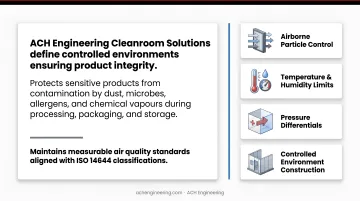
A food manufacturing cleanroom is an designed space where airborne particle concentration, temperature, humidity, and pressure are held to specified limits. Its purpose is straightforward: protect sensitive products from contamination by dust, microbes, allergens, and chemical vapours during processing, packaging, and storage.
Unlike standard food-safe areas, cleanrooms maintain measurable air quality standards aligned with ISO 14644 classifications. Food manufacturing facilities typically require ISO Class 5 to ISO Class 8 environments, depending on product sensitivity and exposure risk.
ISO 14644-1 Classification Standards for Food Applications:
| ISO Class | Maximum Particles/m³ (≥0.5 µm) | Typical Food Application |
|---|---|---|
| ISO 5 | 3,520 | Aseptic processing, filling lines |
| ISO 6 | 35,200 | High-care zones, exposed RTE foods |
| ISO 7 | 352,000 | General production, packaging |
| ISO 8 | 3,520,000 | Low-risk zones, background areas |
Achieving these classifications depends on the filtration system. HEPA (High-Efficiency Particulate Air) filters are the industry standard, capturing 99.97% of particles 0.3 micrometres in diameter. They work alongside controlled pressure differentials and environmental monitoring systems to maintain specified cleanliness levels throughout production.
Why Cleanrooms Are Critical in Food Manufacturing
The explosive growth of ready-to-eat foods, refrigerated meals, and minimally processed products has increased contamination risks that standard sanitation cannot fully address. These products receive minimal or no heat treatment before reaching consumers, making environmental contamination control essential.
Regulatory Drivers
FDA's Food Safety Modernization Act (FSMA) Rule 21 CFR Part 117 requires facilities to maintain sanitary operations and implement risk-based preventive controls, including environmental pathogen evaluation for ready-to-eat foods. HACCP protocols demand systematic hazard control through documented critical control points.
Specific FSMA requirements include:
- Sanitary Operations: Buildings and fixtures must be maintained in cleanable condition to prevent adulteration
- Hazard Analysis: Facilities must evaluate environmental pathogens, particularly for RTE foods exposed to the environment before packaging
- Preventive Controls: When hazards are identified, facilities must implement controls to significantly minimize or prevent contamination
Business Consequences
Inadequate contamination control creates cascading consequences that extend well beyond the initial incident:
- Product recalls and regulatory violations
- Direct financial losses from destroyed inventory and remediation costs
- Consumer health risks that trigger liability exposure
- Brand damage that can take years to recover in market position
Operational Benefits
Cleanrooms deliver measurable operational value beyond regulatory compliance:
- Extended shelf life through reduced microbial loads in the production environment
- Consistent product quality through temperature, humidity, and particulate control
- Compliance with international food safety standards, including increasingly strict export requirements
- Hygienic zoning that separates raw materials from finished products, reducing cross-contamination risk in multi-process facilities
Types of Food Manufacturing Cleanrooms
Food manufacturing cleanrooms come in three primary structural types, each suited to different operational needs, budgets, and levels of environmental control. All three can meet appropriate ISO classifications when properly designed — the differences lie in construction method, flexibility, and long-term cost.
Softwall Cleanrooms
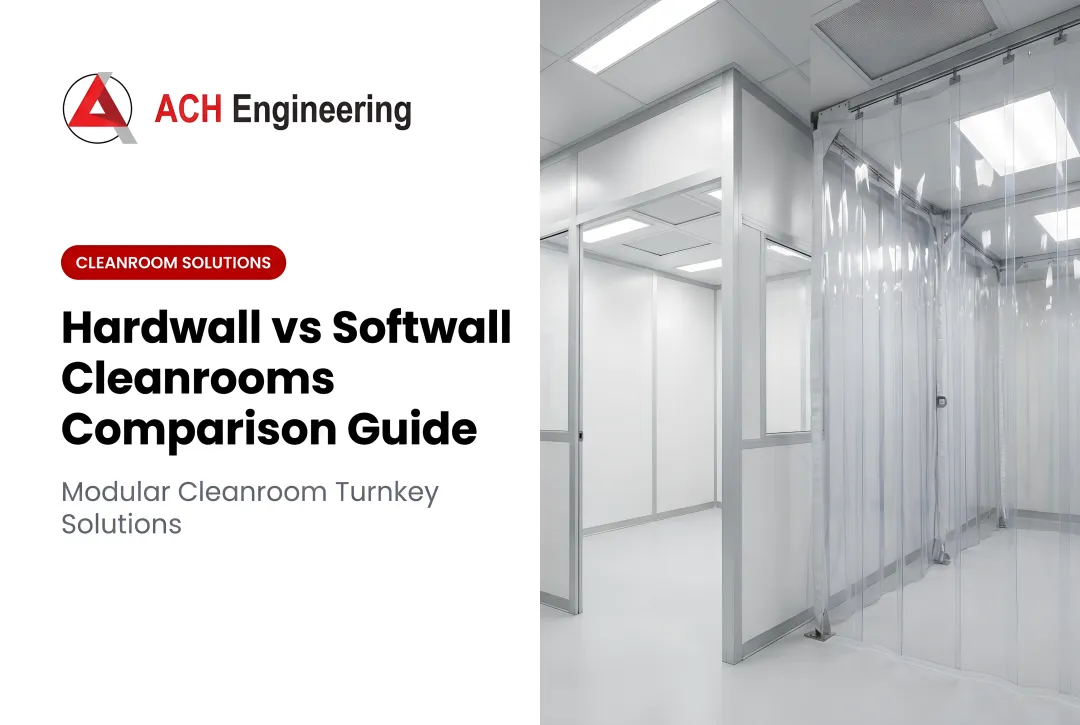
Softwall cleanrooms use flexible vinyl or PVC curtain panels suspended from an aluminium or steel framework. Because they rely on flexible barriers rather than rigid walls, they're the most economical option — with installation times of 1–3 days rather than weeks.
Best suited for:
- Temporary production areas or seasonal operations
- Packaging zones for lower-risk products
- Facilities needing to scale operations quickly
- Operations that may relocate cleanrooms between sites
Strengths:
- Cost-effective (typically 30–50% less than hardwall)
- Rapid deployment with minimal facility disruption
- Easy reconfiguration or expansion as needs change
Limitations:
- Reduced control over pressure differentials compared to hardwall
- Less effective sound dampening
- Potentially shorter lifespan in high-traffic environments
- Limited environmental stability for strict temperature/humidity control
Hardwall Cleanrooms
Hardwall cleanrooms are permanent structures built with solid wall panels — vinyl, fibreglass, aluminium, or stainless steel — that can be freestanding or integrated into an existing building. This construction method delivers the highest degree of environmental control, with superior sealing, pressure management, and dedicated HVAC integration for precise temperature and humidity regulation.
Best suited for:
- Aseptic processing requiring maximum sterility
- Dairy production and meat processing
- Allergen-controlled environments
- High-risk RTE foods requiring ISO Class 5–6 standards
Strengths:
- Exceptional control over pressure differentials for directional airflow
- Superior temperature and humidity precision
- Maximum durability for 24/7 operations
- Direct integration with existing facility utilities
Limitations:
- Highest upfront investment cost
- Longest installation timeframe
- Limited flexibility for reconfiguration once built
- Challenges if production needs change significantly
Rigidwall (Modular) Cleanrooms
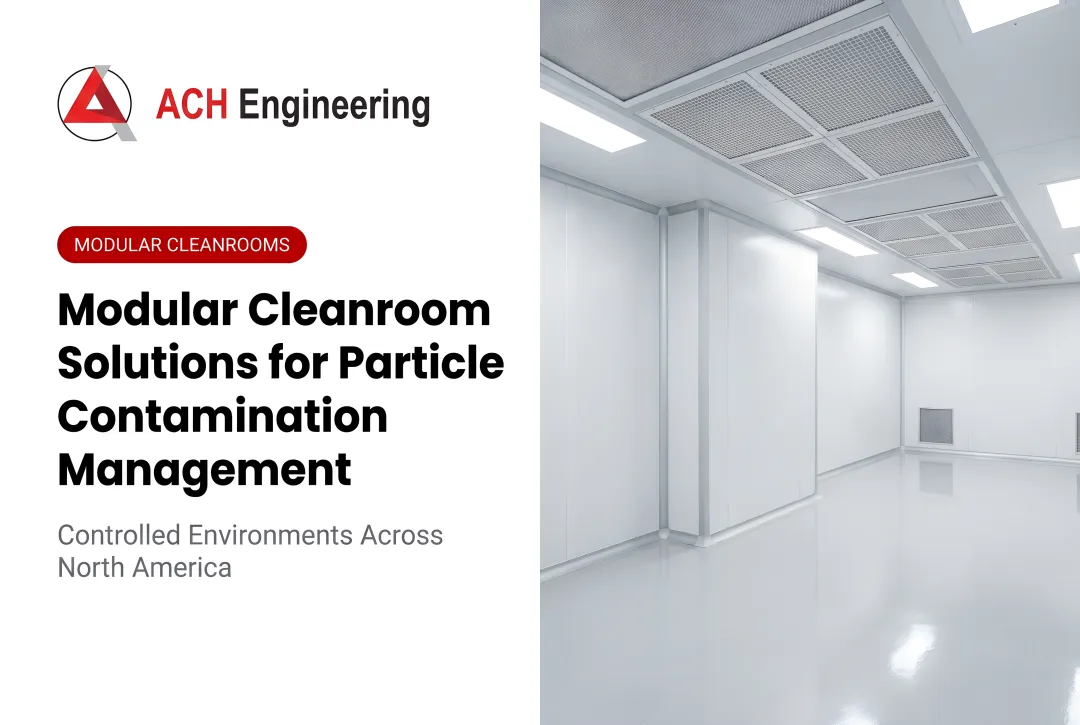
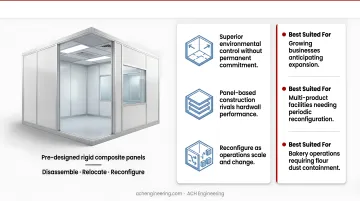
Rigidwall cleanrooms use pre-designed rigid composite panels — solid enough to rival hardwall performance, yet modular enough to disassemble, relocate, and reconfigure as needs change. For facilities that want better environmental control than softwall without committing to a permanent structure, this is the practical middle ground.
Best suited for:
- Growing businesses anticipating expansion
- Multi-product facilities needing periodic reconfiguration
- Bakery operations requiring flour dust control
- Nutraceutical production
- Companies balancing performance requirements with budget constraints
Strengths:
- Professional appearance with good environmental control
- Reusability of components when facility needs change
- Moderate cost compared to hardwall
- Faster installation than permanent hardwall construction
Limitations:
- While more controllable than softwall, may not achieve the same pressure precision as purpose-built hardwall systems
- Higher cost than softwall options
How to Choose the Right Cleanroom Type
Choosing a cleanroom type comes down to four practical factors: your product's risk level, the regulations you must meet, your budget, and how much your operations are likely to change. Matching these factors to construction type — hardwall, rigidwall, or softwall — prevents costly overbuilding and avoids compliance gaps.
Product Risk Assessment
Evaluate your product categories first. High-risk RTE foods, dairy, meat products, and allergen-sensitive items typically require hardwall construction for maximum environmental control. Packaging operations or lower-risk products may succeed with softwall or rigidwall systems.
Regulatory and ISO Classification Requirements
Identify applicable standards including FDA FSMA preventive controls, HACCP critical control points, and ISO 14644 classifications. Match cleanroom type to required air quality levels and environmental monitoring needs. For example, aseptic processing requiring ISO Class 5 typically necessitates hardwall construction, while ISO Class 7-8 packaging zones can often use rigidwall or softwall systems.
Budget and Total Cost of Ownership
Initial construction is only part of the equation. Factor in ongoing operational expenses:
- Energy consumption for HVAC systems
- Filter replacement frequency and costs
- Maintenance requirements
- Potential reconfiguration costs as needs evolve
Operational Flexibility and Growth Planning
Assess whether your production needs are stable (favouring hardwall) or likely to change (favouring rigidwall or softwall). If relocation or capacity expansion is likely within 3-5 years, modular rigidwall or softwall systems offer a significant advantage over permanent construction.
Integration with Existing Infrastructure
Evaluate how cleanroom construction will interface with current HVAC systems, electrical capacity, and floor loading limits. Determine whether your facility can support dedicated systems or whether the cleanroom design must work with existing utilities.
Common Mistakes When Selecting a Cleanroom Type
Avoiding these pitfalls before committing to a cleanroom type can save significant time, budget, and rework down the line.
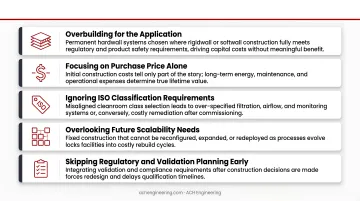
- Overbuilding for the application — Many facilities invest in permanent hardwall systems when rigidwall or softwall construction would fully meet regulatory and product safety requirements, driving up capital costs without meaningful benefit.
- Focusing on purchase price alone — Initial construction costs tell only part of the story. Long-term expenses for energy, maintenance, filter replacement, and environmental monitoring routinely exceed the upfront investment.
- Locking in a layout too early — Choosing a permanent hardwall system when business growth or product diversification will require reconfiguration within 3–5 years effectively wastes the original build budget.
- Underestimating environmental control systems — Cleanroom structure is only half the equation. HEPA/ULPA filtration, pressure differential management, and appropriate air change rates must be designed correctly regardless of which cleanroom type you select.
Conclusion
Food manufacturing cleanrooms play an essential role in meeting modern food safety standards, protecting consumers, and ensuring regulatory compliance in an increasingly scrutinized industry. The three cleanroom types—softwall, hardwall, and rigidwall—each serve distinct operational needs, and understanding these differences enables food manufacturers to make confident, well-grounded decisions that balance safety, compliance, budget, and operational flexibility.
Choosing the right cleanroom type is only the starting point. Working with experienced specialists — like ACH Engineering, who handle food and beverage cleanroom projects from initial design through construction and validation — ensures your facility addresses HVAC integration, filtration systems, and certification requirements, not just the walls and floors. Getting that full picture right from the start saves significant time and cost down the line.
Frequently Asked Questions
What is a cleanroom in the food industry?
A cleanroom in the food industry is a controlled environment where airborne contaminants, temperature, humidity, and pressure are regulated to protect food products from contamination during processing, packaging, and storage. Cleanliness levels are measured against ISO 14644 standards, typically ranging from ISO Class 5 to ISO Class 8 depending on product risk.
What are the cleanroom requirements for the food industry?
Key requirements include ISO 14644 classification (typically ISO 5–8), HEPA/ULPA filtration capturing 99.97% of particles, controlled pressure differentials, environmental monitoring, and proper gowning protocols. Facilities must also comply with applicable food safety regulations such as HACCP principles and regional standards like FDA FSMA (US) or CFIA/SFCR (Canada).
What is hygienic zoning in food manufacturing?
Hygienic zoning separates production areas into distinct risk-based zones—from raw material handling to finished product areas. Cleanrooms are used in high-care zones, where physical barriers and pressure cascades prevent cross-contamination and maintain product safety.
How often do food manufacturing cleanrooms need to be certified?
Most food manufacturing cleanrooms undergo initial qualification followed by recertification every 6–12 months, depending on risk level and regulatory requirements. Continuous environmental monitoring between formal events tracks pressure differentials, particle counts, and other critical parameters.
What is the difference between a cleanroom and a clean area in food manufacturing?
Cleanrooms are classified controlled environments meeting specific ISO 14644 standards with measurable particle counts and validated environmental controls. Clean areas are hygienic spaces with enhanced sanitation practices but without the formal classification, monitoring, and validation requirements of true cleanrooms.
Can existing food manufacturing facilities be retrofitted with cleanrooms?
Yes, existing facilities can be retrofitted with cleanrooms, particularly using modular softwall or rigidwall systems that integrate with existing structures. Assessment of HVAC capacity, structural loading, and utility infrastructure is essential to determine the most appropriate cleanroom type and ensure successful implementation with minimal operational disruption.