This year marks a pivotal shift in how the industry approaches construction methodology. Modular and prefabricated cleanroom solutions now command between 39.5% and 56.2% of the market, fundamentally changing project economics and timelines. AI-driven environmental monitoring, sustainable design practices, and energy-efficient technologies have transitioned from competitive differentiators to baseline requirements.
In this comprehensive industry update, we'll examine market projections across key sectors, explore the technology innovations reshaping cleanroom operations, analyze the modular construction revolution, review sustainability initiatives, and highlight major company developments driving North American market expansion.
TLDR: Key Takeaways from 2025 Cleanroom Construction Industry
- Cleanroom construction market valued at $6.2–$6.9 billion in 2025, projected to reach $11.7–$12.0 billion by 2030 with 6.9–11% CAGR
- Modular solutions now hold up to 56% of market share, cutting project timelines by 60% and costs by up to 50%
- AI environmental monitoring delivers 20% reduction in contamination incidents and 15% decrease in energy consumption
- Semiconductor sector leads demand at 8.28% CAGR, backed by over $200 billion in new facility investments
- North America holds 33.62% of global market, driven by CHIPS Act incentives and pharmaceutical expansion
Table 1: Modular vs. Traditional Cleanroom Construction — Key Comparisons for Facility Teams
| Factor | Modular Construction | Traditional Stick-Built |
|---|---|---|
| Timeline | 3-6 months | 12-18 months |
| Cost per sq ft (USD) | $200-$400 | $400-$700 |
| Market share (2025) | Up to 56% | Declining |
| Schedule reduction vs. traditional | ~60% faster | Baseline |
| Reconfiguration ability | High | Very limited |
| On-site contamination risk | Low (factory prefab) | Higher (on-site cuts/dust) |
Cleanroom Construction Market Outlook and Growth Projections for 2025
The cleanroom construction industry is experiencing strong expansion across multiple verticals, with market research firms reporting strong growth trajectories through 2035. Current market valuations place the global cleanroom construction sector at approximately $6.2 billion to $6.94 billion in 2025, with forecasts projecting growth to $11.74 billion to $12.0 billion by 2030-2035.
Sector-Specific Demand Drivers
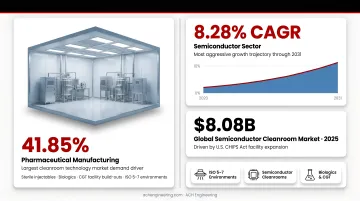
Pharmaceutical manufacturing remains the largest demand driver, accounting for 41.85% of the cleanroom technology market. This dominance stems from stringent sterile injectable guidelines, biologics expansion, and cell and gene therapy (CGT) facility build-outs requiring ISO 5-7 environments.
The semiconductor sector exhibits the most aggressive growth trajectory, with an 8.28% CAGR projected through 2031. The global semiconductor cleanroom market reached $8.08 billion in 2025, driven by U.S. CHIPS Act incentives and the ongoing push to address critical chip shortages.
Two additional sectors are accelerating demand:
- Biotech and life sciences are expanding manufacturing capacity for advanced therapies, including mRNA platforms and personalized medicine requiring ultra-clean production environments.
- Aerospace is growing due to contamination control requirements for satellite assembly and precision aircraft component manufacturing.
Modular Construction Adoption Rates
Prefabrication is now the dominant methodology in cleanroom construction. Modular cleanrooms now command between 39.5% and 56.2% of total market share, with modular hardwall solutions leading due to their structural integrity and simplified regulatory validation.
This shift reflects the industry's recognition that modular approaches can reduce project schedules by up to 60% compared to traditional stick-built methods, while lowering capital costs and improving quality control through factory-based manufacturing.
Global Events Shaping Investment Patterns
Several macroeconomic factors are accelerating cleanroom construction investments:
- Semiconductor reshoring initiatives: The U.S. CHIPS Act has catalyzed projects adding over 3 million square feet of ISO 4 cleanroom space
- Pandemic preparedness: Post-COVID requirements for vaccine production capacity and flexible manufacturing infrastructure continue driving pharmaceutical investments
- Space exploration programs: Growing aerospace demand for contamination-controlled satellite and precision component manufacturing
- Supply chain resilience: Strategic efforts to reduce dependence on Asian manufacturing for critical technologies and active pharmaceutical ingredients (APIs)
North American Regional Growth
North America captures 33.62% of the global cleanroom technology market, underpinned by over $200 billion USD in announced semiconductor and biotech facility investments. The region is characterized by "megaprojects" in semiconductor manufacturing and a robust biologics pipeline, though growth faces some constraints from a shortage of ISO-certified installers and specialized contractors.
Regional activity is concentrated in established pharmaceutical hubs (New Jersey, Massachusetts, California), emerging semiconductor corridors (Arizona, Texas, New York, Ohio), and expanding biotech clusters across both coasts.
Technology Innovations Reshaping Cleanroom Construction in 2025
In 2025, cleanrooms are no longer just controlled spaces — they are data-driven systems that actively prevent contamination, cut energy costs, and reduce dependence on human activity inside the facility.
AI-Based Environmental Monitoring Systems
Artificial Intelligence has shifted contamination control from reactive response to predictive prevention. AI-driven monitoring systems have demonstrated a 20% reduction in contamination incidents and a 15% decrease in energy consumption in pharmaceutical deployments.
Modern AI platforms integrate real-time particle counting with predictive modeling, analyzing temperature, humidity, pressure differentials, and particulate data to forecast equipment failures and process deviations before they reach the sterility threshold.
IoT Sensors and Data Analytics Integration
Internet of Things (IoT) sensors have become standard infrastructure for continuous compliance monitoring. These connected devices track critical parameters in real-time, automatically logging data to ensure data integrity for GMP audits and regulatory inspections.
The analytics layer built on IoT data enables predictive maintenance — scheduling interventions during planned downtime rather than reacting to failures. Key components monitored include:
- Fan filter units and airflow performance
- HVAC components and refrigerant system trends
- Filtration pressure drop and media loading rates
Robotics and Automation for Material Handling
Building on reduced human touchpoints that IoT monitoring supports, facilities are taking the next step: removing personnel from material transport entirely.
Automated Guided Vehicles (AGVs) and Autonomous Mobile Robots (AMRs) now handle material transport in ISO 3-8 environments. For example, KUKA offers AMRs certified for ISO-3 cleanroom operation, while semiconductor facilities report 35% increases in transport efficiency after deploying AGVs for wafer transport.
Modern charging solutions like inductive charging systems eliminate particle generation associated with traditional sliding contact chargers, maintaining contamination control even during robot recharging cycles.
Smart HVAC Systems with Variable Speed Drives
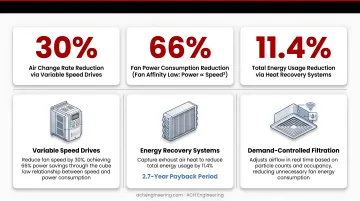
Energy-efficient HVAC systems represent one of the most impactful innovations in cleanroom design. Variable speed drives (VSD) that reduce air change rates by 30% can achieve a 66% reduction in fan power consumption due to fan affinity laws, where power consumption decreases with the cube of speed reduction.
Energy recovery systems that capture exhaust air heat have shown 11.4% reductions in total energy usage with 2.7-year payback periods. Demand-controlled filtration systems that adjust airflow based on real-time occupancy and particle counts deliver additional 4.4% energy reductions.
Advanced Filtration and UV-C Disinfection
ePTFE HEPA filters using expanded polytetrafluoroethylene instead of traditional fiberglass media reduce airflow resistance, enabling energy savings of up to 40.66% while maintaining identical filtration efficiency.
UV-C disinfection systems integrated into air handling units provide continuous airstream sterilization. ASHRAE recommends minimum UV-C doses of 1,500 µW·s/cm² for effective disinfection, with resilient microorganisms requiring higher cumulative doses achievable through continuous coil irradiation strategies.
Modular and Prefabricated Cleanroom Solutions: The New Standard
Modular construction has evolved from niche alternative to industry standard, fundamentally reshaping project economics and timelines across the cleanroom sector.
Timeline Advantages Over Traditional Construction
The speed differential between modular and traditional approaches is dramatic:
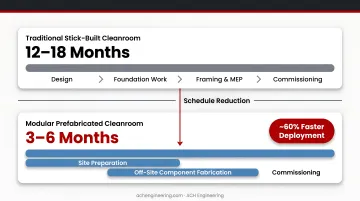
- Traditional stick-built cleanrooms: 12-18 months from design to commissioning
- Modular prefabricated cleanrooms: 3-6 months total project duration
- Schedule reduction: Approximately 60% faster deployment
This compression occurs because site preparation and off-site component fabrication happen simultaneously, eliminating the sequential dependencies inherent in traditional construction where foundation work, framing, mechanical systems, and finishes must occur in series.
Scalability for Rapidly Growing Sectors
Cell and gene therapy (CGT) and Advanced Therapy Medicinal Products (ATMP) manufacturers particularly benefit from modular approaches. These sectors face intense pressure to reach clinical trials and commercialization quickly, where every month of delay represents lost revenue and delayed patient access to potentially life-saving treatments.
Modular systems let facilities start with core manufacturing capacity and expand incrementally as product pipelines mature — avoiding the risk of building full-scale capacity against uncertain demand. This flexibility is equally valuable for nanotechnology and personalized medicine, where process requirements can shift rapidly between development phases.
Self-Supporting Systems for Existing Buildings
POD technology and self-supporting cleanroom designs eliminate the need for major structural modifications to host buildings. Vendors offer prefabricated units that can be installed inside existing shell buildings, becoming operational in as little as 6 months without requiring building permits for structural changes.
Mobile and portable cleanroom designs are growing at 7.74% CAGR, driven by semiconductor manufacturers needing temporary capacity during facility transitions and aerospace companies requiring flexible contamination control for varying project requirements.
ACH Engineering delivers modular cleanroom solutions across North America, prefabricating components off-site in controlled environments and completing on-site assembly in weeks rather than months. This approach minimizes disruption to ongoing operations — a practical advantage for facilities that cannot afford extended downtime.
Contamination Control Through Prefabrication
Off-site assembly in controlled factory environments reduces contamination risks compared to traditional on-site construction. The "dirty" processes of cutting, sanding, drilling, and finishing that occur during stick-built construction introduce countless particulate sources that must be thoroughly cleaned before commissioning.
Prefabricated components arrive at the site ready for assembly, with minimal cutting or modification required. Quality control happens in the factory — under consistent, measurable conditions — rather than on a job site where environmental variables are harder to manage.
Sustainability and Energy Efficiency Initiatives in Cleanroom Design
Cleanroom construction has moved well past voluntary green initiatives. Regulatory pressure, rising energy costs, and client demand have made sustainability a baseline expectation — not a differentiator.
Energy Consumption Baseline and Reduction Targets
Cleanrooms consume 10 to 100 times more energy than typical office buildings, with HVAC systems alone accounting for 36% to 67% of total facility energy use. This extraordinary consumption stems from continuous air filtration, precise environmental control, and the need to maintain pressure differentials 24/7/365.
The most effective energy reduction strategy involves optimizing air change rates (ACH) while maintaining ISO classification requirements. A 30% reduction in ACH yields a 66% reduction in fan power due to the cubic relationship between fan speed and power consumption.
Energy Recovery and LED Integration
Modern cleanroom designs integrate multiple energy-saving technologies:
- Heat recovery systems: Capture thermal energy from exhaust air to precondition incoming fresh air
- LED lighting: Reduces lighting energy consumption by 50-70% compared to fluorescent systems while generating less heat load for HVAC systems to remove
- Optimized airflow patterns: Computational fluid dynamics (CFD) modeling identifies the minimum airflow required to maintain ISO classification, eliminating over-ventilation
Green Building Certifications
High-profile projects are achieving prestigious sustainability certifications. Bayer's Cell Therapy Launch Facility in Berkeley, California, achieved LEED v4 Platinum certification in 2025, becoming the first industrial manufacturing facility in the western United States to reach this benchmark.
Earning LEED certification in a cleanroom context means reconciling strict contamination control with sustainability targets — tighter air change rates, low-emission materials, and energy recovery systems all have to work together without compromising ISO classification.
Sustainable Materials and Low-VOC Finishes
The market is shifting toward environmentally responsible materials, including:
- GREENGUARD-certified FRP panels: Fiberglass Reinforced Plastic with verified low chemical emissions
- Recyclable wall panel systems: Designed for disassembly and reuse across future facility configurations
- Low-VOC coatings and sealants: Reduce volatile organic compound off-gassing and improve indoor air quality
Sustainability now shapes procurement decisions directly. Many pharmaceutical and biotech RFPs require carbon footprint analyses and documented sustainability commitments — and projects that can't demonstrate both are increasingly screened out at the bid stage.
Major Company Developments and Industry Investments
The 2024-2025 period has witnessed historic capital investment levels, particularly in semiconductor manufacturing infrastructure across North America.
Significant Facility Expansions and Groundbreakings
Semiconductor Megaprojects:
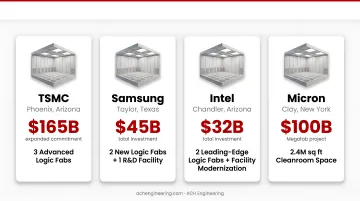
- TSMC (Phoenix, Arizona): Expanded investment commitment from $65 billion to $165 billion, with plans for three advanced logic fabs
- Samsung (Taylor, Texas): $45 billion investment for two new logic fabs plus one R&D facility
- Intel (Chandler, Arizona): $32 billion for two leading-edge logic fabs and modernization of existing facilities
- Micron (Clay, New York): $100 billion "Megafab" project featuring 2.4 million square feet of cleanroom space
Pharmaceutical and Medical Device Expansions:
- Averra Packaging (Salt Lake City, Utah): Doubled ISO Class 8 cleanroom capacity for medical thermoforming applications
- Stevanato Group (Germany): Expanded drug delivery system capacity with new ISO 8 cleanroom for injection molding and assembly operations
Strategic Acquisitions in Cleanroom Construction
The consolidation trend continues as larger engineering firms acquire specialized cleanroom contractors:
- Equans acquired AdvanceTEC to strengthen capabilities in modular and prefabricated cleanroom solutions
- Exyte acquired Kinetics Group to bolster global high-tech facility delivery capabilities and expand geographic reach
For facility owners, this consolidation means fewer independent specialists and more pressure to engage early — firms with niche cleanroom expertise are being absorbed faster than new ones emerge.
Global Fab Capacity Expansion
This acquisition wave is unfolding against a backdrop of record fab construction activity. Semiconductor fab capacity is projected to expand by 6% in 2024 and 7% in 2025, reaching a record high of 33.7 million wafers per month. That translates directly into significant volumes of new ISO 4-5 cleanroom space coming online — with North America accounting for a larger share of that growth than at any point in the past two decades.
North American Cleanroom Construction Market Updates
North America has emerged as the epicenter of cleanroom construction activity, driven by strategic government incentives and supply chain resilience initiatives.
Regional Investment Landscape
The region commands 33.62% of the global cleanroom technology market, with activity concentrated in established and emerging manufacturing corridors:
- Arizona: TSMC and Intel semiconductor megafabs
- Texas: Samsung's advanced logic manufacturing complex
- New York: Micron's unprecedented $100 billion investment
- Ohio: Intel's new semiconductor manufacturing ecosystem
- California, Massachusetts, New Jersey: Continued pharmaceutical and biotech expansion
CHIPS Act Impact and Government Incentives
The U.S. CHIPS and Science Act has fundamentally altered the economics of domestic semiconductor manufacturing. Notable federal awards include:
- TSMC: $6.6 billion in direct funding
- Samsung: $6.4 billion in incentives
- Intel: $8.5 billion in direct funding
These incentives directly subsidize the construction of millions of square feet of ISO-rated cleanroom space, fundamentally changing the cost structure that previously made Asian manufacturing locations more economically attractive.
Regional Growth Drivers
Three forces are pushing cleanroom construction demand across the continent:
- Reshoring initiatives reducing dependence on Asian supply chains for semiconductors and active pharmaceutical ingredients
- Pandemic preparedness requirements driving investment in flexible pharmaceutical manufacturing capacity
- Biotech clusters in Boston, San Francisco, San Diego, and Research Triangle Park expanding facilities for biologics and advanced therapies
This demand extends well into Canada. ACH Engineering has grown its operations from Ontario to Alberta to meet rising project volume across pharmaceuticals, aerospace, and semiconductor industries — serving clients throughout the North American market.
Frequently Asked Questions
What is driving the rapid growth in cleanroom construction in 2025?
Growth is driven by semiconductor manufacturing expansion (particularly CHIPS Act-funded projects), pharmaceutical capacity increases for biologics and cell therapies, and stricter contamination control requirements across multiple industries including aerospace and medical devices.
How much does modular cleanroom construction cost compared to traditional stick-built methods?
Modular cleanrooms typically cost $200–$400 USD per square foot versus $400–$700 USD per square foot for traditional construction. Final costs depend on ISO classification requirements, facility size, customization level, and integrated systems like specialized HVAC and filtration.
What are the key advantages of modular cleanrooms over traditional construction?
Modular cleanrooms reduce installation timelines by approximately 60% (3-6 months versus 12-18 months), minimize on-site disruption, provide superior quality control through factory assembly, and offer flexibility for future expansion, relocation, or reconfiguration without major reconstruction.
How is AI being used in modern cleanroom design and operations?
AI systems provide real-time environmental monitoring with predictive contamination control, with reported reductions in contamination incidents and energy consumption cited by early adopters. AI also enables predictive maintenance by forecasting equipment failures before they compromise cleanroom performance or regulatory compliance.
What ISO classifications are most commonly required for pharmaceutical and biotech cleanrooms?
ISO Class 5 (Class 100) is required for aseptic fill/finish operations, ISO Class 7 (Class 10,000) for cell culture and upstream bioprocessing, and ISO Class 8 (Class 100,000) for material airlocks, gowning rooms, and non-sterile manufacturing areas.
How long does it take to construct a modular cleanroom facility?
The process moves through three phases: design drawings completed within weeks, off-site panel and component fabrication, then on-site assembly. Each phase runs faster than traditional construction because work happens simultaneously rather than sequentially, keeping the full timeline to 3-6 months.